


Sam Pitroda's 'China not our enemy' remark stirs controversy, BJP reacts
Sam Pitroda's 'China not our enemy' remark has sparked a political firestorm, with the BJP accusing the Congress of appeasement and reviving allegations of its ties with China
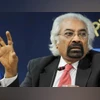 "Sam Pitroda")
Photo: PTI
Listen to This Article
Senior Congress leader Sam Pitroda, who heads the party’s overseas wing, has triggered a political storm with his latest remarks on China, suggesting that the perceived threat from the neighbouring country is “overstated”.
His comments, urging India to move away from a confrontational stance, have sparked a sharp rebuttal from the BJP, which accused the Congress of having an “obsessive fascination” with China.
Pitroda, known for his close association with Rahul Gandhi, echoed his leader’s recent claims in Parliament that India had lost land to China— an assertion firmly denied by the government. Speaking to news agency IANS, Pitroda questioned India's security concerns over China and called for a shift in perspective.
“I don’t understand the threat from China. I think this issue is often blown out of proportion because the US has a tendency to define an enemy. I believe the time has come for all nations to collaborate, not confront. Our approach has been confrontational from the very beginning, and this attitude creates enemies. We need to change this mindset and stop assuming that China is the enemy from day one,” he said in the interview.
Also Read

 "Sam Pitroda")
 "Sam Pitroda, Rahul Gandhi")
 "Sam Pitroda,Sam,Pitroda")
 "Rahul Gandhi, Rahul, congress leader")
His remarks came in response to a question on whether Prime Minister Narendra Modi and US President Donald Trump had effectively managed the challenge posed by China.
BJP slams Congress over 'China obsession'
The BJP was quick to retaliate, reviving allegations of Congress’ ties with China. The party cited a controversial 2008 Memorandum of Understanding (MoU) between the Congress and the Chinese Communist Party (CCP), alleging that it explained Congress’ repeated soft stance on China.
“Those who ceded away 40,000 square km of our land to China still see no threat from the Dragon. No wonder Rahul Gandhi is in awe of China and was rooting for BRI one day before the IMEEC was announced. The crux of Congress’ fascination for China lies in the mysterious 2008 Cong-CCP MoU,” said BJP spokesperson Tuhin Sinha.
The China debate: National security or political rhetoric?
China has remained a major geopolitical challenge for both the United States and India, especially in the wake of security concerns, trade disputes, and military tensions. India’s border dispute with China escalated into violent clashes in 2020, leading to casualties on both sides.
The Opposition, particularly the Congress, has accused the Modi government of losing land to China, with Rahul Gandhi recently claiming that Beijing now controls 4,000 square km of Indian territory— a statement strongly refuted by Defence Minister Rajnath Singh.
BJP leader Pradeep Bhandari went a step further, alleging that Sam Pitroda’s remarks reflected Congress’ pro-China stance and hinted at deeper international influences.
“Rahul Gandhi’s right-hand man Sam Pitroda: ‘China isn’t our enemy’! This man sings endless praises of China while the Congress-CCP MoU of 2008 reveals a cozy betrayal of India’s interests. Congress always finds a way to prioritise China and Pakistan over India,” he said.
Bhandari also alleged a global influence behind the Congress party, stating, “Rahul Gandhi’s remote control is in the hands of George Soros and China.”
More From This Section
 "Volkswagen")
 "Corruption, bribe")
 "Supreme Court, SC")

 "O Panneerselvam, Ex-CM of Tamil Nadu")
Topics : Sam Pitroda China Congress BJP BS Web Reports
Don't miss the most important news and views of the day. Get them on our Telegram channel
First Published: Feb 17 2025 | 1:28 PM IST