


PM Modi to inaugurate Navi Mumbai airport, India's first fully digital hub
Prime Minister Narendra Modi will inaugurate Navi Mumbai International Airport on October 8; India's first fully digital airport will start commercial operations in December
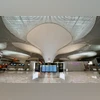 "Navi Mumbai International Airport")
Navi Mumbai International Airport (Photo: X/Devendra Fadnavis)
Listen to This Article
Prime Minister Narendra Modi will inaugurate the Navi Mumbai International Airport on Wednesday (October 8). With this launch, Mumbai joins global cities such as London, New York and Tokyo, which have more than one international airport.
The state-of-the-art greenfield airport has been developed under a public-private partnership between Adani Airport Holdings and the City and Industrial Development Corporation of Maharashtra Ltd (CIDCO). Commercial flight operations are expected to begin in December this year.
India’s first fully digital airport
The Navi Mumbai International Airport will be India’s first fully digital airport, equipped with advanced facilities for pre-booking parking slots, online baggage drop, and digital immigration services. The airport will feature an AI-enabled automated terminal designed to make air travel faster and smoother for passengers.
Capacity and economic impact
Spread over 1,160 hectares, the airport will initially handle 20 million passengers per year with one runway and terminal. Once fully operational, it will accommodate 155 million passengers annually through four terminals and two runways.
Also Read

 "Modi, Narendra Modi")
 "Modi, Narendra Modi")
 "Navi Mumbai airport, Navi Mumbai international airport")
 "Navi Mumbai Airport")
 "Modi, Narendra Modi")
Built at a cost of ₹19,650 crore, Navi Mumbai International Airport is expected to create over 200,000 jobs across sectors such as aviation, logistics, IT, hospitality and real estate.
ALSO READ | Adani Group to invest ₹30,000 cr more in Navi Mumbai airport expansion
Airlines and operations
Major carriers, including IndiGo, Air India Express and Akasa Air have announced plans to begin services from NMIA, connecting cities across India.
According to officials, commercial operations will start in December, with around 40 per cent international traffic, which will gradually rise to 75 per cent. Initially, the airport will operate for 12 hours a day, Hindustan Times reported.
Multimodal connectivity
The Navi Mumbai airport will be India’s first major aviation hub seamlessly connected to multiple transport systems, including expressways, metro lines, suburban rail and waterway services.
The airport is directly accessible via the Mumbai Trans Harbour Link, Sion-Panvel Highway, and the Ulwe Coastal Road, ensuring smooth connectivity from across the Mumbai Metropolitan Region (MMR).
Rail connectivity includes the operational Navi Mumbai Metro Line 1 (Belapur to Pendhar). The upcoming Mumbai Metro Line 8 will link Navi Mumbai International Airport to Chhatrapati Shivaji Maharaj International Airport. Plans are also underway for water taxi and high-speed rail connectivity.
Experience inside the terminal
The airport terminal houses 66 check-in counters, 22 self-baggage drop points, 29 aerobridges and 10 bus boarding gates. Passengers will experience digital art installations, interactive exhibits narrating the stories of Mumbai and Maharashtra, and a children’s play area in domestic departures.
There are lounges for 500 business and VIP travellers and an 80-room transit hotel for short or overnight stays, The Indian Express reported.
Baggage services include home delivery and repair, while retail facilities cover 5,000 sq m, including 1,800 sq m of duty-free shops at both departures and arrivals. Passengers can also order food digitally through a dedicated app and have it delivered anywhere in the terminal.
More From This Section
 "Sameer Wankhede")
 "Karnataka schools to remain closed from October 8–18 for 'Caste Survey'")
 "Indian police")
 "93rd IAF Day 2025")
 "Diwali Festival")
Topics : Narendra Modi Navi Mumbai international airport Navi Mumbai Mumbai airport BS Web Reports Adani Group
Don't miss the most important news and views of the day. Get them on our Telegram channel
First Published: Oct 08 2025 | 12:07 PM IST