


Several air monitoring stations not working: SC seeks CAQM report
The CAQM's lawyer said that the Central Pollution Control Board has the data and will file the relevant report, while CAQM has already submitted one on preventive actions
 "Supreme Court, SC")
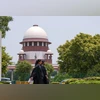
The order came after the top court was told that several air quality monitoring stations in Delhi are not working properly, making it hard to track pollution levels.(Photo:PTI)


Listen to This Article
The Supreme Court (SC) on Monday asked the Commission for Air Quality Management (CAQM) to file a report explaining the steps it has taken to prevent air pollution in Delhi-NCR from worsening, according to a Live Law report.
The order came after the top court was told that several air quality monitoring stations in Delhi are not working properly, making it hard to track pollution levels. It was also noted that out of 37 monitoring stations, only 9 were working properly on Diwali, raising concerns about how pollution data is being tracked.
The case was heard by Chief Justice B R Gavai and Justice K Vinod Chandran.
What did the Court ask the CAQM and CPCB to do?
Senior Advocate Aparajita Singh, who assists the Court, said that the CAQM must act before the air quality becomes severe and should file an affidavit immediately. The judges agreed and ordered the CAQM to submit details of the preventive steps it plans to take.
Also Read

 "Smog, Delhi Pollution, Delhi Air Quality, Pollution")
 "Smog, Delhi Pollution, Delhi Air Quality, Pollution")
 "Smog, Delhi Pollution, Delhi Air Quality, Pollution")
 "air pollution, AQI")
 "Smog, Delhi Pollution, Delhi Air Quality, Pollution")
The CAQM’s lawyer said that the Central Pollution Control Board (CPCB) has the data and will file the relevant report, while the CAQM has already submitted one on preventive actions.
The Court made it clear that both agencies must respond to the working conditions of monitoring stations and the preventive measures in place.
How has the Supreme Court addressed Delhi’s pollution recently?
The spike in pollution came as Delhi legally celebrated its first “green Diwali” in years. Ahead of the festival, the Supreme Court permitted the use of green crackers in the Delhi-NCR region between October 18 and 20, but only during two designated time slots: from 6 am to 7 am and 8 pm to 10 pm.
However, these restrictions were widely flouted, with residents bursting crackers well before and after the permitted hours.
Last month, the apex court had also asked the Central and State Pollution Control Boards to monitor air quality daily from October 14 to October 25 and submit a report.
How bad is Delhi’s air quality after Diwali?
According to data from the CPCB, the city’s Air Quality Index (AQI) crossed 450 in several areas after Diwali celebrations, driven by a mix of firecracker smoke and stubble burning in neighbouring states.
As per CPCB standards, an AQI of 0-50 is good, 51-100 satisfactory, 101-200 moderate, 201-300 poor, 301-400 very poor, and 401-500 severe.
What steps are in place under GRAP-II?
Delhi is currently under the Graded Response Action Plan (GRAP) Stage II (very poor), implemented on October 19 when the AQI reached 301-400. This stage includes several measures, like higher parking fees in parts of New Delhi and curbs on polluting activities.
More From This Section
 "In this screengrab from a video posted on Oct. 29, 2025, Prime Minister Narendra Modi addresses the gathering during the Maritime Leaders Conclave, in Mumbai. (@NarendraModi via PTI Photo)")
 "ECI, election commission of india, election commission")
 "In this screengrab from a video posted on Oct. 29, 2025, Prime Minister Narendra Modi addresses the gathering during the Maritime Leaders Conclave, in Mumbai. (@NarendraModi via PTI Photo)")
 "Mamata Banerjee, Mamata")
 "Asaduddin Owaisi, Asaduddin, Owaisi")
Topics : Air Quality Index Delhi air quality air pollution pollution Pollution Control Delhi Pollution BS Web Reports
Don't miss the most important news and views of the day. Get them on our Telegram channel
First Published: Nov 03 2025 | 3:35 PM IST