


Two Pak universities launch Sanskrit courses citing shared heritage
While the preparations started for the short duration courses last year, the year 2025 saw admissions to the first course
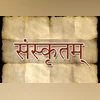 "Sanskrit")
Photo: Wikimedia Commons
Listen to This Article
First time after partition, two universities of Pakistan's Punjab have launched short courses in Sanskrit citing shared heritage and plan to teach Gita and Mahabharat in future.
The University of Punjab Lahore (public) and The Lahore University of Management Sciences (private) have launched a three-month course in this classical language.
The instructors are also banking on a significant archieval collection of Sanskrit manuscripts in the Punjab University for later research.
While the preparations started for the short duration courses last year, the year 2025 saw admissions to the first course.
The Lahore University of Management Sciences (LUMS) was the first to start the basic levels I and II followed by the Punjab University Lahore, Prof Dr Ashok Kumar of Hindi Department Punjab University told PTI exclusively on Saturday.
Also Read

 "Translation literature")
 "Twitter, X, social media")
 "Faiz Hameed")
 "f-16 jets, pakistan")
 "Pakistan economy, Pakistan, IMF")
The course offers basic know-how of the classical language. To have a grip of Sanskrit, a student needs to complete seven levels that would require at least three years, Kumar said.
Let's see if at some point of time, the varsity could offer the three-year full-fledged course to understand the classical language, he said and added that in the three-year course of the classical language the students would be able to read Gita and Mahabharata.
To a question about why the Punjab University (PU) or LUMS felt the need to launch Sanskrit course, Kumar said, After partition in 1947, there was hardly any person here who could teach this classical language as all those who knew it, left for India.
Since the Punjab University has vast literature of Sanskrit in archieves, our new dean decided to introduce this.
The Punjab University library houses one of the richest but least-studied Sanskrit archives, Kumar said, adding, none of the locals were using it till now and having Sanskrit-trained students may give us new insights into the region's ancient history.
Three students are currently enrolled in the Punjab University while in LUMS, there are some eight students currently enrolled for the Sanskrit course. Kumar said most students enrolled in Sanskrit in PU and LUMS are Muslims, having keen interest in learning of the language.
Dr Shahid Rasheed, Associate Professor of Sociology at Forman Christian College University, Lahore, in a talk with a local newspaper said: Classical languages contain much wisdom for mankind. I started with learning Arabic and Persian, and then studied Sanskrit.
The professor, who teaches at the LUMS, said he relied on learning through online platforms, studying under Cambridge Sanskrit scholar Antonia Ruppel and Australian Indologist McComas Taylor. It took almost a year to cover classical Sanskrit grammar. And I'm still studying it.
Rasheed said that people often question his choice to study Sanskrit. I tell them, why should we not learn it? It is the binding language of the entire region. Sanskrit grammarian Panini's village was in this region.
Much writing was done here during the Indus Valley Civilisation. Sanskrit is like a mountain a cultural monument. We need to own it. It is ours too; it's not tied to any one particular religion, he added.
Rasheed further said that South Asia will see a more cohesive state of affairs if people try to learn each other's classical traditions. Imagine, if more Hindus and Sikhs in India started learning Arabic, and more Muslims in Pakistan took up Sanskrit, it could be a fresh, hopeful start for South Asia, where languages become bridges instead of barriers.
About Hindi language, he said it is one of the 12 foreign languages the Punjab University has been teaching since 1947.
Let's learn Hindi; the language of love and harmony, the cultures and history of the communities of subcontinent, reads a sign board at the Punjab University, Institute of Languages. At present, we have 10 students in the Hindi language one-year diploma course, Kumar said.
The PU had also launched Greek, Latin and Hebrew after 2010, he added.
(Only the headline and picture of this report may have been reworked by the Business Standard staff; the rest of the content is auto-generated from a syndicated feed.)
More From This Section
 "IRCTC")
 "Smog, Delhi Pollution, Delhi Air Quality, Pollution")
 "Surya Kant")
 "Ricky Kej")
 "Nitish Kumar, Nitish")
Don't miss the most important news and views of the day. Get them on our Telegram channel
First Published: Dec 13 2025 | 9:35 PM IST