


Auto component sector margins to moderate amid West Asia conflict: Crisil
Operating margins of auto component makers are expected to decline by up to 150 basis points this fiscal year as higher raw material and freight costs weigh on profitability, according to Crisil
 "auto component industry, automobiles, car component, vehicles, auto manufacturers")
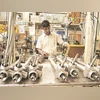
Raw materials represent nearly three-quarters of the total cost structure for auto component manufacturers. Representational image
Listen to This Article
Operating margins for the Indian auto component sector are projected to contract by 100 to 150 basis points this fiscal year, settling between 10.5 and 11 per cent, according to a report by credit rating agency Crisil. The anticipated moderation from last year's 12 per cent is primarily attributed to rising input prices and elevated freight costs driven by the ongoing conflict in West Asia.
Despite pressure on profit margins, the sector is expected to maintain revenue momentum. Stable demand from original equipment manufacturers (OEMs) and healthy corporate balance sheets are projected to cushion the impact on absolute operating profits and working capital requirements.
Raw materials represent nearly three-quarters of the total cost structure for auto component manufacturers. Recent sharp increases in the prices of steel and aluminium, which together constitute 50 to 60 per cent of input costs, have significantly heightened expenditure.
According to Anuj Sethi, senior director at Crisil Ratings, raw materials, employee expenses and power make up approximately 90 per cent of the sector's overall cost structure. "Input and energy prices have risen, with minimum wage revisions across several states adding further pressure," Sethi said. "OEMs, accounting for over two-thirds of revenues, typically offer a cost pass-through, though with a lag of one to two quarters and not always in full, thus moderating operating margins."
However, Sethi noted that expected revenue growth of 9 to 11 per cent should keep the overall impact on profitability contained.
Also Read

 "Partho Banerjee, Senior Executive Officer, Marketing & Sales, Maruti Suzuki India Limited")
 "Fire, Hospital fire")
 "BMW i7, luxury sedan")
 "Automakers, carmakers, auto industry")
 "tyres")
The primary revenue driver for the industry remains domestic OEM demand, which has maintained steady momentum following last year's Goods and Services Tax (GST) rate reduction. Sector tailwinds include a steady slate of new passenger vehicle launches, increased infrastructure-linked commercial vehicle activity, continued premiumisation in the two-wheeler market, and accelerating electric vehicle (EV) adoption across multiple segments.
The aftermarket segment remains stable, supported by the large volume of ageing vehicles currently on the road. Meanwhile, export revenues are projected to grow by 8 to 9 per cent year-on-year. This growth is partially aided by tariff corrections in the United States, the sector's largest export market, even as longer shipping routes around West Asia increase overall lead times.
The geopolitical situation in West Asia is causing manufacturers to adjust supply chain strategies. To safeguard production schedules against global shipping uncertainties, companies are maintaining larger buffer stocks.
This shift is expected to increase average inventory levels by 15 to 20 days, raising them from the current baseline of 80 to 85 days. The capacity to absorb the associated working capital pressure by stretching creditor terms is expected to vary, with larger players benefiting from superior scale and bargaining power.
Crisil's analysis, which covers rated component makers representing nearly half of the sector's Rs 9 lakh crore revenue, indicates that capital expenditure (capex) will rise by roughly 10 per cent year-on-year to approximately Rs 27,000 crore this fiscal. The spending will primarily target capacity expansion, including EV-related components.
Funding for this capex is expected to come from a combination of internal accruals and external borrowings. Despite the increase in debt, balance sheets are expected to remain adequate.
"Funded through a mix of internal accruals and external borrowings, interest coverage is expected at around seven times and debt-to-EBITDA at 1.5 to 1.7 times on an aggregate basis," said Poonam Upadhyay, director at Crisil Ratings. This compares with roughly 7.4 times and 1.4 times, respectively, recorded last fiscal year.
Industry analysts note that the future trajectory of the sector will depend closely on the duration of the West Asia conflict, the stabilisation of energy and freight costs, and the timing of cost pass-throughs to OEMs.
More From This Section
 "Tata")
 "TWO WHEELER")
 "electric vehicle, EV, e2W")
 "Hero MotoCorp")
 "Suzuki Japan's Fronx flexi fuel prototye")
Topics : Auto component Auto Components Auto industry
Don't miss the most important news and views of the day. Get them on our Telegram channel
First Published: Jun 03 2026 | 1:29 PM IST