


Decoded: Why beverage giants are pushing against govt's new PET bottle rule
Beverage manufacturers in India cites capacity constraints in recycling plastic waste and cost impact ahead of peak summer demand, as govt sets April 1 deadline for the use of 30 per cent rPET bottles
 "bottles, softdrink")
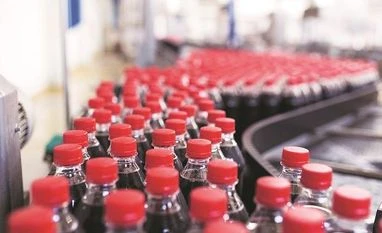
PET is a durable, lightweight plastic commonly found in beverage bottles | File Photo
Listen to This Article
Leading beverage manufacturers are considering legal options against the Indian government’s directive mandating the use of 30 per cent recycled food-grade PET (rPET) bottles starting April 1, 2025. Industry executives argue that the deadline is impractical, highlighting challenges such as recycling infrastructure, material shortages, and cost concerns, especially with peak summer demand approaching, according to a report by The Economic Times.
Beverage giants including Coca-Cola, Pepsi Co, Bisleri, and Parle Agro are all impacted by these stringent deadlines.
The Ministry of Environment, Forest and Climate Change (MoEFCC) issued this directive over two years ago as part of India’s Plastic Waste Management (PWM) Rules. However, beverage companies contend that the industry is not adequately prepared for the transition, despite the extended timeline.
PET vs rPET bottles
PET, or polyethylene terephthalate, and rPET (recycled polyethylene terephthalate) are both widely used in packaging and textiles, but they differ significantly in their environmental impact and production process.
PET is a durable, lightweight plastic commonly found in beverage bottles, food containers, and synthetic fibres. Its strength and recyclability make it a popular choice, but it is primarily produced from fossil fuels like petroleum and natural gas, making its manufacturing process resource-intensive and environmentally demanding.
In contrast, rPET is an eco-friendlier alternative derived from recycled PET products. Post-consumer PET waste, such as plastic bottles, is collected, cleaned, and processed into flakes, which are then melted and repurposed into rPET pellets or resin. These materials are used to create new products like rPET packaging, rPET sheets, and rPET polyester fabrics, reducing reliance on virgin plastics and minimising waste.
Also Read

 "China, Chinese, youth, workers, employment")
 "caste wealth analysis, upper caste, sc, st")
 "Long-term capital gains (LTCG) tax on equity funds increased from 10 per cent to 12.5 per cent in the budget while short-term capital gains (STCG) tax increased from 15 to 20 per cent. “While the 33 per cent increase in STCG tax may seem high, it sho")
 "Donald Trump, Volodymyr Zelenskyy")
 "Mumbai Metro Line 3: Aqua Line")
What is the govt mandate on PET bottles?
To incentivise domestic recycling, India banned the import of plastic waste, including PET bottles in 2015. By 2016, however, the ban was amended, allowing plastic waste imports only for units located in special economic zones (SEZs).
The Plastic Waste Management (PWM) Rules, 2016 banned plastic sachets used for gutkha, tobacco, and pan masala due to high littering potential. Additionally, states/UTs were asked to form special task forces for eliminating single-use plastics (SUPs).
Plastic packaging producers, e-commerce firms, and major SUPs users were directed to phase out SUPs. Compliance varied by state/UT, with some implementing partial bans while others enforced a complete ban.
In 2019, the Environment Ministry imposed a full ban on plastic waste imports to strengthen India’s waste management system and prevent the country from becoming a dumping ground. The Pandit Deendayal Upadhyay Smriti Manch (PDUSM) campaign played a role in advocating for this decision.
India allows PET waste imports
The ban on PET bottle imports was lifted in 2021 after industries processing plastic waste reported shortages in India. Seven Indian companies applied to import 93,000 tonnes of PET bottle waste from the US, Canada, and Germany, citing insufficient domestic supply.
The Ministry of Environment, Forest and Climate Change mandates that beverage makers use 30 per cent recycled plastic in rigid packaging, like PET bottles, starting April 1, 2025 with annual increases of 10 per cent to reach 60 per cent by financial year 2027-28 to 2028-29.
Industry urges govt to adopt ‘realistic targets’
Industry representatives, during a December meeting with the Central Pollution Control Board, argued that the 30 per cent threshold is too stringent due to the scarcity of rPET and urged the government to adopt more realistic targets, suggesting an initial 15 per cent obligation with gradual 5 per cent annual increases, the Hindu Bussinessline had earlier reported.
Industry leaders say that despite ongoing investments, recycling capacity expansion takes 2-3 years. At present, only five Food Safety and Standards Authority of India (FSSAI)-approved plants are equipped to produce food-grade rPET, meeting just 15 per cent of industry demand.
Affordability and regulatory concerns
The industry fears that bottling costs will surge by nearly 30 per cent, a portion of which may be passed on to consumers. Smaller companies, lacking resources to procure certified rPET, may resort to lower-quality recyclers, raising safety and regulatory concerns.
Another challenge is that plastic bottles account for 70 per cent of beverage packaging, making them the most widely used option due to lower transport costs compared to glass and affordability over aluminium cans. The sudden shift to higher rPET content without sufficient infrastructure could disrupt supply chains.
Govt response and legal issues
Citing officials, The Economic Times reported that the government is unlikely to extend the deadline, citing that companies have had sufficient time to comply. Industry executives, however, believe the rigid timeline could force them to seek an anticipatory stay in court, delaying implementation.
More From This Section
 "renewable energy")
 "Office space")
 "ship ministry, shipMin, shipping, port")
 "Rescue teams at the Srisailam Left Bank Canal (SLBC) project site where a portion of the tunnel collapsed, in Nagarkurnool district. The Telangana govt has called in experts from GSI and NGRI to suggest way forward for the rescue of eight persons")
 "skilled labour, technology")
Topics : Decoded Plastic bottles plastic waste Plastic waste management plastic waste rules pet bottles Beverage firms Environment ministry BS Web Reports
Don't miss the most important news and views of the day. Get them on our Telegram channel
First Published: Feb 26 2025 | 11:36 AM IST