


Who inspects India's dark stores as quick commerce expands rapidly?
Dark stores are powering India's quick-commerce revolution, but experts question whether existing inspection systems, penalties and enforcement can match the sector's rapid growth
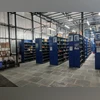 "darkstore quick commerce")
Dark stores are expanding rapidly across India's cities. (File)
Listen to This Article
Quick commerce has changed the way millions shop. From groceries and dairy products to medicines and electronics, consumers can now get them at their doorstep in 10 to 15 minutes. Behind this convenience lies a rapidly expanding network of dark stores—small warehouses that are the backbone of the sector.
However, recent action by the Food Safety and Standards Authority of India (FSSAI) and state food safety authorities against several quick-commerce facilities has raised questions about hygiene, food storage and regulatory oversight. The government has also announced plans to step up inspections of dark stores amid concerns over food safety.
The scrutiny comes at a time when the sector is witnessing explosive growth. India had over 2,500 operational dark stores by October 2025, with most of them concentrated in Tier-I cities. These are now rapidly expanding into Tier-II and Tier-III markets.
So, who is responsible for checking these facilities and how often are they inspected?
No separate rulebook for dark stores
According to Professor Manish Gangwar of the Indian School of Business (ISB), dark stores are not a separate category under Indian food law. "Any facility involved in the storage, distribution, or sale of food falls within the ambit of the Food Safety and Standards Act, 2006 and is regulated as a food business operator," he said.
Also Read

 "retirement homes, senior citizens")
 "Strait of Hormuz, vessel, oil tanker")
 "Coal, Coal India")
 "Credit card scam")
 "Emergency 1975")
While FSSAI formulates food safety standards and inspection frameworks at the national level, enforcement largely rests with state food safety departments through Designated Officers and Food Safety Officers. Depending on the issue, municipal bodies, labour departments, fire authorities and legal metrology officials may also become involved, creating a fragmented oversight structure.
Sameer Varma, executive director at ColdStar Logistics, echoed this view, noting that nearly 98 per cent of food business operators are regulated through state licensing regimes.
"The standards and advisories are issued by FSSAI, but action is largely state-driven," he added.
How often are dark stores inspected?
Unlike restaurants or other businesses where consumers may assume periodic inspections are mandatory, there is no fixed inspection schedule for dark stores.
Professor Gangwar said inspection frequency varies across states and is increasingly based on risk factors, including the type of products stored, a facility's compliance history, business size and potential public health risks.
"Consumer complaints continue to play an important role and often trigger targeted inspections, particularly where allegations involve unsafe food, expired products, poor storage conditions or hygiene failures," he said.
Subarna Mukherjee, founder and global CEO of Shop Culture, a marketplace growth consultancy, believes this reactive approach remains one of the biggest challenges.
"FSSAI sets food safety standards nationally, but the actual inspection—checking storage, sampling and raiding warehouses—falls to state food safety departments. Dark stores don't get their own rulebook, and there's no fixed inspection schedule," she said.
Varma added: "The 2026 regulatory changes indicate a sincere effort to move towards a risk-based inspection framework where facilities with poor compliance histories are inspected more frequently."
One framework for all food businesses
Experts also point out that India's food safety regulations have not evolved specifically for quick commerce.
Dark stores currently follow the same licensing, hygiene, storage and food-handling requirements as conventional food businesses under the Food Safety and Standards (Licensing and Registration of Food Businesses) Regulations, 2011. There is no separate inspection checklist designed for facilities processing thousands of rapid orders every day.
Mukherjee noted that while a 2020 rule requires food delivered through ecommerce platforms to have at least 30 per cent shelf life remaining or a minimum of 45 days before expiry, the broader regulatory approach remains largely reactive.
"There isn't a dedicated framework built for how these warehouses actually operate," she said.
Varma said inspection guidelines should be tailored to how dark stores operate, taking into account the large number of products they stock, proper cold storage for perishable items, staff hygiene, and systems that can track products throughout the supply chain.
Are existing penalties enough?
Under the Food Safety and Standards Act, regulators can issue improvement notices, impose monetary penalties, suspend or cancel licences, seize products, order recalls and prosecute serious offences.
However, experts question whether existing penalties act as an effective deterrent.
Mukherjee pointed out that fines typically range from ₹25,000 to ₹10 lakh depending on the severity of violations.
"When you compare those penalties with a quick-commerce market expected to be worth billions of dollars, a ₹5 lakh fine becomes almost a rounding error," she said.
She added that licence suspensions remain rare despite repeated instances of violations. "Zepto's licence in Dharavi was suspended after fungal contamination was found, but the suspension was later lifted after re-inspection. Blinkit, meanwhile, has received notices over issues such as spoiled curd and poor-quality eggs, with authorities typically seeking explanations rather than ordering prolonged closures. The pattern is notice, respond and move on. Suspension remains the exception," she said.
Gangwar said: "Whether these measures are sufficient depends less on the size of the penalty and more on the likelihood of detection and timely enforcement."
Supply chain adds another layer of complexity
As quick commerce expands into hundreds of cities, maintaining consistent food safety standards across thousands of dark stores is becoming increasingly complex.
Mukherjee said decentralisation presents one of the biggest operational risks.
"The core challenge is decentralisation at speed. Hundreds of dark stores mean cold-chain consistency, separating food from non-food items and shelf-life tracking all depend on local execution rather than central control," she shared.
Varma highlighted that food safety risks often begin much earlier in the supply chain.
"The first break may occur at the farm, during transport or at wholesale markets before products even reach regulated storage facilities. Downstream facilities (cold storage, warehouses) can slow deterioration but cannot reverse it," he said.
Varma added that India's fragmented food supply chain, with multiple transporters, aggregators, cold-storage operators and delivery partners, creates several potential points where temperature control, documentation and accountability can fail.
Technology may become the next inspector
With dark stores expected to continue expanding rapidly, experts believe traditional inspection models alone will struggle to keep pace.
Gangwar said stronger oversight will require technology-enabled monitoring, digital traceability, real-time temperature controls, third-party audits and wider adoption of compliance platforms.
"The key challenge is not the absence of regulatory powers but ensuring that inspection capacity, data transparency and technology-driven supervision keep pace with India's fast-growing quick-commerce ecosystem," he said.
Mukherjee also advocated making hygiene ratings visible to consumers.
"FSSAI already has a Hygiene Rating Scheme. The problem is that platforms are not required to display it. If consumers could see hygiene scores at checkout, compliance would become a competitive advantage rather than simply a regulatory obligation," she said.
Varma believes future regulation should go even further. He suggested internet-connected sensors that continuously record temperature and humidity, auditable digital records and third-party food safety audits, similar to systems already used in pharmaceutical cold chains. "Technology can help, but it needs to become a licence condition rather than an optional investment," he said.
The rapid expansion of quick commerce is testing not just supply chains but also India's food safety oversight, with experts saying enforcement mechanisms must evolve alongside the sector.
More From This Section
 "real-estate")
 "Cargo, trade")
 "Real estate, housing market")
 "power")
 "QR codes on drugs")
Don't miss the most important news and views of the day. Get them on our Telegram channel
First Published: Jun 25 2026 | 5:33 PM IST