


What split the Thackerays? Inside the feud that broke the Shiv Sena
Uddhav Thackeray and Raj Thackeray have reunited ahead of the January 15 BMC polls, ending a long feud over leadership and succession that split the Shiv Sena nearly two decades ago
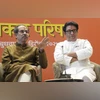 "Uddhav Thackeray, Uddhav, Thackeray, Raj Thackeray")
Shiv Sena (UBT) chief Uddhav Thackeray, left, and MNS chief Raj Thackeray (Photo: PTI)
Listen to This Article
Shiv Sena (UBT) Chief Uddhav Thackeray and Maharashtra Navnirman Sena (MNS) President Raj Thackeray on Wednesday formally announced an alliance ahead of the January 15 civic body elections, including the high-stakes Brihanmumbai Municipal Corporation (BMC) polls. The announcement ended months of speculation about a possible tie-up between the two cousins.
The leaders addressed a joint press conference in Mumbai, where Uddhav said the alliance was meant to last. “We have come together to stay together,” he said.
Raj Thackeray made it clear that the mayor of Mumbai would be Marathi. “Mumbai’s mayor will be Marathi and will be ours,” he said.
Uddhav also said that seat sharing has already been finalised for the Nashik Municipal Corporation, where polls will be held on the same day as Mumbai, along with elections to 27 other municipal corporations across Maharashtra.
From family ties to political rivalry
Uddhav and Raj Thackeray were once part of the same party, Shiv Sena, founded by Balasaheb Thackeray. Their relationship soured nearly two decades ago due to differences over leadership and the future direction of the party.
Also Read

 "penthouse, housing, hotels")
 "solar, solar power, solar panels, solar projects")
 "Delhi metro")
 "BJP Flag, BJP")
 "Donald Trump, Alexander Lukashenko")
The split became public in December 2005, when Raj Thackeray quit the Shiv Sena, saying he felt sidelined and humiliated. In March 2006, he formed the Maharashtra Navnirman Sena, marking a clear political break from Uddhav.
While Raj had earlier supported Uddhav’s rise within the Shiv Sena, disagreements grew over party functioning, election strategies and ticket distribution, especially during the 2004 Assembly polls.
For years, both parties competed for the Marathi nationalist vote. The MNS made a strong start in the 2009 Assembly elections, winning 13 seats and weakening the Shiv Sena-BJP alliance by splitting votes. However, the party’s influence declined sharply in later elections, winning just one seat in 2014 and none in the 2019 and 2024 polls.
At the same time, Shiv Sena faced its own crisis in 2022, when Eknath Shinde led a rebellion that split the party and brought down Uddhav Thackeray’s government.
Clashes marked the rivalry. MNS-Shiv Sena workers fought over posters in 2006, and violence erupted in 2008 over North Indian migrants, drawing national criticism.
Uddhav led Shiv Sena post Balasaheb Thackeray's death in 2012. He became the chief minister of Maharashtra in 2019 before the 2022 split.
The road to reconciliation
There were occasional signs of reconciliation over the years, including personal gestures during health emergencies and public statements hinting at unity, but nothing concrete emerged until recently.
The breakthrough came in 2025, when both leaders opposed the Maharashtra government’s proposal to make Hindi a compulsory third language in schools. Their joint appearance at the “Awaj Marathicha” rally in July sent a strong signal of unity, with both leaders stressing the need to protect Marathi identity.
During the rally, Uddhav said, “We have come together to stay together." Raj said that Maharashtra’s interests outweigh their past conflicts.
This stand paved the way for a formal alliance ahead of the civic polls. The two parties have agreed on seat-sharing arrangements, with Shiv Sena (UBT) set to contest around 145-150 seats and the MNS expected to field candidates in 65-70 wards in the BMC elections, The Times of India reported.
More From This Section
 "Supriya Sule, Supriya, Sule")
 "Uddhav Thackeray, Uddhav, Thackeray, Raj Thackeray")
 "Rahul Gandhi, Rahul, Congress leader")
 "Jairam Ramesh, Jairam")
 "Rahul Gandhi, Rahul, Congress leader")
Topics : Raj Thackeray Uddhav Thackeray Bal Thackeray Shiv Sena MNS Maharashtra BMC polls BS Web Reports
Don't miss the most important news and views of the day. Get them on our Telegram channel
First Published: Dec 24 2025 | 5:42 PM IST