


SBI's Setty discusses technology spending, talent retention and RBI reforms
Setty welcomed the 22 reforms announced by the Reserve Bank of India during its October Monetary Policy Committee meeting, calling them a 'vote of confidence'
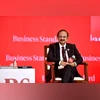 "cs setty, sbi chairperson, bfsi")
C S Setty said attrition in public sector banks remains extremely low due to strong employee development and a sense of purpose. Photo: Kamlesh Pednekar
Listen to This Article
State Bank of India (SBI) Chairperson C S Setty on Wednesday said India’s overall credit growth remains strong. In a conversation with Business Standard Consulting Editor Tamal Bandyopadhyay at the Business Standard BFSI Insight Summit 2025 in Mumbai, Setty said, "We are not lagging in overall credit growth. The issue is more about sectoral distribution."
He also commented on key issues such as technology investments, listing of subsidiaries, attrition, and attracting private-sector talent.
Corporate credit growth remains subdued
Setty said micro, small and medium enterprises (MSME) credit is growing strongly, driven by better data and clearer business models, with both MSME and agriculture sectors expanding 16-17 per cent annually, and retail mortgages also performing well.
However, corporate credit growth remains subdued due to high liquidity and access to non-bank funding. “Corporate credit growth is around 11-12 per cent, but equity raising is nearly three times higher,” he said, adding that firms holding ₹13-14 trillion in cash prefer using internal funds before borrowing.
Also Read

 "Anantha Nageswaran")
 "Business Standard BFSI Insight Summit")
 "Chief Economic Advisor (CEA) V. Anantha Nageswaran at BS BFSI summit")
 "Inflation targeting framework panel BS BFSI summit")
 "Poonam Gupta, RBI's Deputy Governor")
Private capex expected to revive
Setty said both the government and banks want to see a revival in private capital expenditure (capex) to sustain economic momentum. “We would definitely like private capex to return. Companies are now operating at higher capacities, up to 90 per cent with technology, compared to 70-75 per cent earlier,” he said.
He acknowledged that global uncertainties, such as supply-chain disruptions and tariff concerns, have slowed investment but remained confident that India’s strong domestic consumption base will trigger renewed private investment once demand stabilises.
RBI’s October reforms a 'vote of confidence'
Setty welcomed the 22 reforms announced by the Reserve Bank of India (RBI) during its October Monetary Policy Committee meeting, calling them a “vote of confidence” in the maturity and strength of India’s banking system.
He said the move to allow M&A financing gives Indian banks a level playing field, while maintaining adequate safeguards. “M&A financing will remain a small part of overall credit, but it expands what banks can do,” he said. Setty added that initiatives like the expected credit loss framework will improve early stress recognition and strengthen prudence within the sector.
Attracting private sector talent
On attracting private talent, Setty said there is now little difference between public and private banks apart from ownership. “If this enables lateral mobility, it’s a positive move,” he said.
However, he noted that pay and incentive structures remain a major hurdle. “If the government wants to attract private talent, compensation must be reviewed,” he said, adding that cultural adaptation will also be key. “The real attraction of public sector roles lies not just in pay, but in the opportunity to lead and learn from large, complex organisations.”
Low attrition driven by training and purpose
Setty said attrition in public sector banks remains extremely low, usually under 0.5 per cent at SBI, due to strong employee development and a sense of purpose.
SBI spends about ₹550 crore annually on training, with every employee receiving around 60 hours of training. “We invest in our people, not just for SBI, but for the entire banking system,” he said.
He added that vast opportunities also help retain staff. “In 37 years, I’ve handled over 20 different assignments, from small branches to our New York office. Such exposure keeps employees engaged,” he said.
Technology powers SBI’s growth
"Operating at scale has helped SBI consistently outperform nominal GDP growth. With compounded growth, the bank doubles its balance sheet every six to seven years," Setty said.
He stressed that technology and digitalisation have been central to this success. “SBI is among the largest technology investors in India,” he said, adding that its robust digital platforms handle over 220 million UPI transactions daily. Continuous investment in backend systems and process reimagination has enabled SBI to efficiently manage massive transaction volumes across its network, he said.
Listing of subsidiaries
Setty said that while the bank has several subsidiaries, two of its most valuable ones — SBI Mutual Fund and SBI General Insurance — are strong candidates for public listing in the future. “These two subsidiaries will definitely be listed,” Setty confirmed, adding, “The timing, however, is something I cannot predict at this stage.”
He emphasised that both companies are financially sound and do not require additional capital at present. “We will access the market for these subsidiaries at an appropriate time to create opportunities for general shareholders and unlock value for investors,” he said.
Deposit mobilisation challenges
Turning to the liability side, Setty said deposit growth has become a major challenge for banks. “Every banker admits that collecting deposits has become difficult. Current Account and Savings Account (CASA) ratios are declining every quarter,” he said.
He added that while theories of financialisation abound, “the reality is that money must eventually return to the banking system.”
More From This Section
 "Tuhin Kanta Pandey (left), chairman of the Securities and Exchange Board of India (Sebi) and C S Setty, chairman of State Bank of India (SBI)")
 "BS BFSI 2024")
 "Dr V Narayanan")
 "Rajesh Kumar Singh")
 "Kalyani Group, defence, Rajinder Singh Bhatia, blueprint")
Topics : Business Standard BFSI Summit sbi BS Web Reports Private capex Technology public sector banks
Don't miss the most important news and views of the day. Get them on our Telegram channel
First Published: Oct 29 2025 | 12:05 PM IST