


BS BFSI Summit: Tuhin Kanta Pandey to C S Setty, here are the key speakers
Tuhin Kanta Pandey took charge as the chairman of Sebi in March 2025 and has since then driven reforms to improve ease of doing business and reducing the compliance burden on market intermediaries
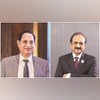 "Tuhin Kanta Pandey (left), chairman of the Securities and Exchange Board of India (Sebi) and C S Setty, chairman of State Bank of India (SBI)")
Tuhin Kanta Pandey (left), chairman of the Securities and Exchange Board of India (Sebi) and C S Setty, chairman of State Bank of India (SBI)


Listen to This Article
Tuhin Kanta Pandey
Chairman, Sebi
Tuhin Kanta Pandey took charge as the chairman of the Securities and Exchange Board of India (Sebi) in March 2025 and has since then driven reforms to improve ease of doing business and reducing the compliance burden on market intermediaries.
Pandey is a retired officer of the Indian Administrative Service and has more than three decades of administrative experience, having held several key positions in the Union and Odisha governments.
He has made four Ts — trust, transparency, teamwork, and technology — guiding principles of Sebi’s policies.
Also Read

 "BS BFSI 2024")
 "pharmaceutical sector, pharma")
 "Warner Bros Discovery, Warner Bros")
 "Farmers, Farmer, agriculture, fertilizers")
 "National Highways Authority of India, NHAI (Photo: X/@NHAI_Official)")
Pandey leads Sebi’s initiatives to strengthen investor trust by curbing misleading social media content and fraudulent market activity. He has also led awareness and investor education campaigns, working with market infrastructure institutions to promote safe and informed participation. These include measures such as verified UPI handles for registered intermediaries, the ‘Sebi Check’ facility to authenticate market players, and the ‘Sebi vs Scam’ outreach to educate investors.
From ‘Niveshak Shivir’ events for unclaimed assets to programmes promoting municipal bonds, Pandey is expanding Sebi’s relationship with investors beyond Tier-I cities.
For listed entities, he has championed reforms to streamline disclosures on related-party transactions and simplify norms for initial public offerings.
Pandey holds a master’s degree in Economics from Panjab University, Chandigarh, and an MBA from the University of Birmingham, United Kingdom.
Ajay Seth
Chairman, Irdai
Ajay Seth is a seasoned civil servant and an accomplished policy leader with over three decades of experience in public administration, economic policy, and financial governance. He was appointed chairman of the Insurance Regulatory and Development Authority of India (Irdai) in July 2025. He assumed office on September 1, succeeding Debasish Panda, for a three-year term.
Seth, an Indian Administrative Service officer of the 1987 batch, retired from the government after serving as secretary of the Department of Economic Affairs where he played a key role for four years in shaping India’s macroeconomic and fiscal policies. His government career spans over three decades and he has deep expertise in public finance, taxation, and social sector administration. He has a B. Tech in Mechanical Engineering from Indian Institute of Technology Roorkee and an MBA from Ateneo de Manila University. Seth is recognized for his reform-oriented leadership. He played a pivotal role in transforming Karnataka’s commercial tax administration — an achievement that earned him the Prime Minister’s Award for Excellence in Public Administration in 2013.
S Ramann
Chairperson, PFRDA
Sivasubramanian Ramann became the chairperson of the Pension Fund Regulatory and Development Authority (PFRDA) in June 2025. He took charge at a time when the government is doubling down on expanding insurance for the financially underserved and strengthening social security cover.
Under his leadership, PFRDA is working on new pension schemes for gig workers, MSMEs, and farmer producer organisations. Efforts are on to introduce more flexible withdrawal options for pension schemes.
Before becoming PFRDA’s chairperson, Ramann was the Deputy Comptroller & Auditor General and Chief Technology Officer in the Office of the Comptroller and Auditor General of India. Ramann served as an officer of the 1991 batch of the Indian Audit & Accounts Service.
With his vast experience in public finance, technology, and financial regulation, Ramann will guide PFRDA in its objective to strengthen the pension system.
He has previously held various leadership positions, including Chairman and Managing Director (MD) of the Small Industries Development Bank of India, MD and Chief Executive Officer of National E-Governance Services Ltd (NeSL), and Principal Accountant General of Jharkhand.
NeSL, between December 2016 and April 2021,-- was shaped up as the country’s first information utility, responsible for digitally storing financial information related to debts, defaults, and security interests. Ramann has a Bachelor’s degree in Economics and an MBA from the University of Delhi.
M Nagaraju
Secretary, Department of Financial Services
M Nagaraju, an Indian Administrative Service officer of the 1993 Tripura batch, is the Secretary of the Department of Financial Services in the Finance Ministry. He has built a diverse and impactful career in various domains, including public order, revenue and development, tribal welfare, finance, international economic relations, industries, commerce, healthcare, and state finances.
Colleagues describe him as a hands-on civil servant who encourages his team to do better. Nagaraju, in his current role, goes on on-the-ground inspections at state-owned bank branches to help drive a culture of improved service and accountability among bank employees. Former and serving government colleagues describe him as disciplined, punctual, and approachable — someone who values feedback from the ground and acts on it.
In his state government tenure, Nagaraju held key positions such as district magistrate and director of tribal welfare. He has served as secretary and principal secretary in critical departments, including health, women and child development, finance, and industries and commerce.
He was director in the Finance Ministry’s Department of Economic Affairs from 2004 to 2008, focusing on Japan, North America, and World Bank divisions. From 2008 to 2012, he was advisor to the executive director at the World Bank in Washington, D.C. Nagaraju has a post-graduate degree from the University of Hyderabad.
He is a visiting fellow at the University of Pennsylvania in 2012-13 and a visiting research scholar at Stonehill College in 2018-19.
V Anantha Nageswaran
Chief economic advisor, India
V Anantha Nageswaran, a writer and a teacher, became the Chief Economic Advisor (CEA) to the Indian government in January 2022. Nageswaran is one of the closest advisors to Finance Minister Nirmala Sitharaman on all things economic, including the Union Budget. He writes the country’s annual Economic Survey ahead of the Budget.
Nageswaran, in his last Economic Survey tabled before Parliament on January 31 this year, had presented a strong case for deregulation so as “to raise our game in a new level playing field when globalisation is no longer going to provide the tailwind”. Prime Minister Narendra Modi on February 16 announced the setting up of a deregulation commission to further reduce the role of the state in all spheres of governance.
Nageswaran was at the forefront of the finance track discussions, representing India its G20 presidency.
He has taught at several business schools in India and in Singapore and has published extensively. He was the dean of the Institute for Financial Management and Research Graduate School of Business and a distinguished visiting professor of economics at Krea University.
He was a part-time member of the Economic Advisory Council to the Prime Minister from 2019 to 2021. Nageswaran holds a post-graduate diploma in Management from the Indian Institute of Management, Ahmedabad, and a doctoral degree from the University of Massachusetts in Amherst.
T Rabi Sankar
Deputy Governor, RBI
T Rabi Sankar is a deputy governor at the Reserve Bank of India (RBI). He was appointed deputy governor in May 2021 for an initial three-year term. His tenure was extended for one year in April 2024 (with effect from May 2024), and again for one year in April 2025 (with effect from May 2025). Some of the departments he looks after include currency management, payment and settlement systems, financial markets regulation, and foreign exchange.
His career at the RBI spans over three decades, having joined the central bank in 1990 and holding various roles in multiple departments. Before becoming deputy governor, he served as executive director for the Department of Payment and Settlement Systems, Information Technology, Fintech, and Risk Monitoring Department.
In these roles, he contributed significantly to strengthening India’s financial system infrastructure, particularly in areas related to digital payments, technology, and risk management.
Sankar worked as a consultant for the International Monetary Fund from 2005 to 2011, focusing on developing government bond markets and debt management strategies.
Additionally, he is chairman of the Indian Financial Technology and Allied Services and serves on the Board of Directors of the Reserve Bank Information Technology Pvt Ltd and the Governing Council of the Institute for Development and Research in Banking Technology.
He has a Master of Philosophy in Economics from Jawaharlal Nehru University, New Delhi.
Poonam Gupta
Deputy Governor, RBI
Poonam Gupta took over as the deputy governor of the Reserve Bank of India on May 2 for a three-year term. She looks after the all-important Monetary Policy Department, in addition to the Department of Economic and Policy Research, Statistics and Information Management, Financial Markets Operations Department, Financial Stability Department, and International Department.
Before joining the central bank, she was the director general of the National Council of Applied Economic Research (NCAER), leading works on issues related to economic growth, international financial architecture, central banking, macroeconomic stability, public debt, and state finances. She was the first woman director general of the New Delhi-based prestigious think tank.
She was a member of the Economic Advisory Council to the Prime Minister and a convener of the advisory council to the 16th Finance Commission.
Before joining NCAER, Gupta worked at senior positions for nearly two decades at the International Monetary Fund and World Bank. Gupta has taught at the Delhi School of Economics, University of Maryland (USA) and was a visiting faculty at the Indian Statistical Institute, Delhi centre.
She has been the RBI Chair Professor at the National Institute of Public Finance and Policy and a Professor at the Indian Council for Research on International Economic Relations.
Gupta holds a Master’s degree and PhD in Economics from University of Maryland and a Master’s degree in Economics from Delhi School of Economics.
C S Setty
Chairman, State Bank of India
CS Setty, chairman of State Bank of India (SBI), moved to the corner office in August 2024. Prior to becoming chairman, he joined the board of SBI as managing director in January 2020 and headed retail & digital banking vertical from 2020 till 2022 and international banking, global markets & technology portfolio of the bank thereafter.
Setty started his career at SBI as a probationary officer in 1988 and has headed the stressed assets resolution group and worked in the corporate accounts group.
His career, spanning over 37 years in SBI, also includes an assignment as vice-president and head of syndications in the SBI New York branch.
While heading a state-owned and India’s largest financial conglomerate provides an edge, he is mindful of competition in the marketplace, both on liabilities and asset side. While garnering deposits, his emphasis has been on customer quality and not on interest rates and leveraging the branch network.
As for lending and services, his focus has been on product innovation. With digital platform based omni-channel services almost becoming a mainstay, he is particular about providing customers with quality.
As an extension, he has given primacy to feedback mechanisms across channels to gauge customer satisfaction.
Beyond SBI, Setty is spearheading the Indian Banks’ Association as its chairman. His recent initiative under the aegis of the industry body was a plea to allow banks to finance Indian corporates for acquisitions.
Setty is a Bachelor of Science in Agriculture and is certified associate of the Indian Institute of Bankers.
K V Kamath
Independent director & non-executive chairman, Jio Financial Services
Veteran banker K V Kamath is an independent director and non-executive chairman of Jio Financial Services. He started his career in 1971 with the project finance division of Industrial Credit and Investment Corporation of India (ICICI), which in the nineties transformed into a bank.
In 1988, he moved to the Asian Development Bank (ADB) and spent several years in South East Asia. He worked on various projects in India, China, Indonesia, Bangladesh, Vietnam, and the Philippines. He served as ADB’s representative on the boards of several companies.
He returned to ICICI as managing director and chief executive officer in 1996 and after its merger became the MD and CEO of ICICI Bank.
Under his leadership, ICICI Bank became a diversified and technology-driven financial services group spanning banking, insurance, and asset management in India with a global presence. He retired as MD and CEO in 2009 and was chairman of ICICI Bank until 2015.
In 2015, he became the first president of the New Development Bank set up by BRICS countries and retired in 2020. He has also been the chairman of IT services firm Infosys. Kamath was in 2008 awarded the Padma Bhushan, one of India’s highest civilian honours.
The finance industry veteran has a bachelor’s degree in mechanical engineering from National Institute of Technology, Karnataka, and a postgraduate diploma in management from Indian Institute of Management, Ahmedabad.
Arundhati Bhattacharya
Chairperson & CEO, Salesforce India
Arundhati Bhattacharya was the first woman to be chairperson of State Bank of India (SBI), the country’s largest bank, and led it from 2013 to 2017.
Bhattacharya is now chairperson and chief executive officer of Salesforce India, a global leader in customer relationship management software. She oversees growth strategy and plays an integral role in defining Salesforce’s relationship with customers, partners, and communities across India.
In her 40-plus years in the financial sector, she has earned several honours, including Forbes magazine’s list of ‘The World’s 100 Most Powerful Women’ and Fortune’s ‘Top 50 globally most powerful women in business’ and ‘World’s 50 Greatest Leaders’. She was this year awarded the Padma Shri, one of India’s highest civilian honours, for her “exceptional contribution” to trade and industry.
She is a postgraduate in English and an associate member of the Indian Institute of Bankers. Her experience in banking and its related technologies have enabled her to leave an imprint on the Indian financial world.
As chairperson of SBI, she introduced sabbatical leave for women bank employees. She has been nominated by the government to be a part of Lokpal Search Committee, Padma Awardees Selection Committee, Mutual Fund Advisory Committee of the Securities and Exchange Board of India, and National Coal Index Committee.
Bhattacharya is an author and a champion for women in leadership. In 2022, she released her autobiography, ‘Indomitable: A Working Woman's Notes on Work, Life and Leadership’.
Mark Mathews
MD & Head Of Research (Asia), Julius Baer
Mark Matthews is the managing director and head of research for Asia at Bank Julius Baer. With over 20 years of experience in finance and investment, Matthews has held senior positions in research and sales in various financial institutions, including ING Barings Securities, Standard & Poor’s, and Merrill Lynch.
Singapore-based Matthews holds an MBA (finance) from the Schulich School of Business, York University, and a BA (history) from Université Laval, Quebec City, Canada.
Bank Julius Baer & Co, a renowned Swiss private bank with origins dating back to 1890, is the principal operating company of Julius Baer Group Ltd., whose shares are listed on the SIX Swiss Exchange and are included in the Swiss Leader Index (SLI), comprising the 30 largest and most liquid Swiss stocks.
At the end of June 2025, Julius Baer had assets under management of CHF 483 billion. Julius Baer is present in 25 countries and 60 locations. Matthews is fluent in French and Chinese.
Matthews is a highly sought-after commentator on global and Asian markets, frequently sharing his strategic insights across various media platforms.
Shankar Sharma
Founder, G Quants
Shankar Sharma, founder of G Quants, is a maven in investing in stocks. He cofounded securities firm First Global early this century and was part of the core Investment Management team in First Global's Asset Management Business, worldwide.
In 2022, he founded GQuant Investech, a global fintech and asset management company.
Known for his contra bets and spotting major trends ahead of the market, he is lauded for recognising early potential in stocks like HDFC Bank, Amazon and Apple. Sharma is equally adept at spotting bubbles and market collapses, like the 2000 technology boom and the 2008 global financial crisis, well ahead of the street. He correctly predicted the stimulus-fuelled rally the global markets witnessed in the aftermath of the coronavirus pandemic.
Sharma has been widely quoted in the ‘Wall Street Journal’, ‘CNBC’ and ‘Financial Times’. He has featured on television shows like ‘The Mind of The Market’ on ‘NDTV Profit’, in addition to being a guest on several other shows on finance and markets.
Forbes magazine called him ‘The Alchemist of Dalal Street’. His investment mantra is “don’t be bullish or bearish; always be hare-ish” (meaning be nimble like the hare.)
Sharma views wealth creation as a "probabilistic game" and advocates for building a diversified portfolio with many smaller investments ("Series of Bets") rather than concentrating on a few, enhancing the overall return potential while mitigating risk. At GQuant Investech, the strategy relies heavily on data-driven models and advanced quantitative techniques, believing that a consistent, data-backed framework offers superior odds.
Lalit Kesre
Cofounder & CEO, Groww
Lalit Keshre is the cofounder and chief executive officer of Groww, a fintech platform that simplifies investing for millions of users.
Keshre grew up in a farming family in Madhya Pradesh and attended the only English-medium school in his district. He later secured admission to the prestigious Indian Institute of Technology Bombay, where he completed a dual degree in electrical engineering and microelectronics.
Before founding Groww in 2016, Keshre gained experience in e-commerce as a senior product manager at Flipkart. He led initiatives like Flipkart Quick, a logistics platform, and contributed to the launch and expansion of Flipkart Marketplace. His product leadership and engineering background helped him build robust consumer-focused technology solutions.
Groww, which he co-founded with three former Flipkart colleagues, was started with a vision to make investing accessible and easy for every Indian. The platform enables users to invest in mutual funds, stocks, ETFs, IPOs, US stocks, futures and options, fixed deposits, and gold with simplicity and transparency. Under Keshre’s leadership, Groww has grown rapidly, surpassing top competitors to become one of India's largest investment platforms with over 18 million active investors.
He is passionate about building customer-centric products that democratise financial services, helping people across India better manage and grow their wealth.
Ridham Desai
MD, Morgan Stanley India
Ridham Desai is managing director at Morgan Stanley India, where he has spent over 28 years leading the Indian Equity Research team, which is widely regarded as the top-ranked research team in the country. He is the company’s chief India equity strategist and heads the Indian Equity Research division, playing a critical role in shaping equity research and investment strategy in India.
With a career spanning almost 35 years, Desai is regarded as one of India’s foremost equity market strategists and analysts. He began his professional journey as a software engineer, before transitioning into equity research and investment. He holds an MBA in Finance from the Welingkar Institute of Management. His deep market insight and bullish stance on Indian equities have consistently earned him recognition among the country’s top strategists.
Desai is well known for his long-term investment philosophy, advocating disciplined stock picking based on fundamental strength and reasonable valuations. He regularly contributes to public discourse on Indian markets and the economy through media appearances, insightful reports, and participation in public debates. His expertise is sought after by investors and media globally.
Ananth Narayan G
Former whole-time member, Sebi
Ananth Narayan G completed his three-year tenure as a whole-time member of the Securities and Exchange Board of India (Sebi) on October 9. During his term, he played a key role in shaping policies for foreign portfolio investors (FPIs), alternative investment funds (AIFs), and market intermediaries. He also oversaw crucial functions in surveillance and investigations, including leading Sebi’s probe into the alleged market manipulation case involving the US-based high-frequency trading firm Jane Street.
Under his watch, several FPI regulations were streamlined, including simpler registration processes, greater transparency on ultimate beneficial ownership, and implementation of the T+1 settlement cycle for trade proceeds.
In his final year at Sebi, Narayan drove significant reforms in the derivatives segment to temper speculative excesses, introducing intraday position limits and tightening options trading norms—an area where there are concerns around mounting losses of individual investors.
He also supervised the regulator’s information technology division and the economic and policy analysis department, contributing to technology-driven oversight and data-led decision-making.
Narayan brings over two decades of experience in banking and finance, having worked with global institutions such as Citibank, Deutsche Bank, and Standard Chartered Bank. Before joining Sebi, he served as an associate professor at Mumbai’s SP Jain Institute of Management and Research for nearly five years and was part of several advisory committees constituted by Sebi and the Reserve Bank of India.
A graduate in Electrical Engineering from Indian Institute of Technology Bombay, Narayan earned his post-graduate diploma in management from the Indian Institute of Management Lucknow in 1993.
He is widely respected for his roles in the financial sector, regulatory landscape and academia in India's dynamic economic policy space.
More From This Section
 "Dr V Narayanan")
 "Rajesh Kumar Singh")
 "Kalyani Group, defence, Rajinder Singh Bhatia, blueprint")
 "Christoph Schnellmann, Videh Kumar Jaipuriar")
 "Kapil Mahajan (left), CITO, Allcargo Logistics, and Amit Singh, head of business, South Asia & Middle East, MOL, at Business Standard Infrastructure Summit in New Delhi on Thursday")
Don't miss the most important news and views of the day. Get them on our Telegram channel
First Published: Oct 29 2025 | 6:30 AM IST