


Google releases Emergency Live Video sharing feature for Android: Details
Google is rolling out Emergency Live Video for Android in select regions, allowing responders to request live footage during emergencies to speed up assessments and guide callers effectively
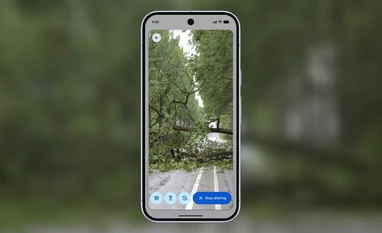 "Emergency Live Video on Android")
Emergency Live Video on Android
Listen to This Article
Google is rolling out a new safety feature for Android that allows emergency responders to request a live video feed during calls or texts for help. The feature, called Emergency Live Video, is designed to give dispatchers a real-time view of situations where a caller may be unable to explain what’s happening — such as car crashes, medical crises or fast-spreading fires. Google said that with clearer visual information, responders can make quicker decisions and send appropriate assistance without relying solely on verbal descriptions, which are often difficult during high-stress moments.
Emergency Live Video feature: How does it work
Under the new system, a dispatcher can send a video request to an Android device during an active emergency call or text conversation. Users will receive an on-screen prompt and can choose whether to share their camera feed. If they accept, the video begins streaming immediately with end-to-end encryption.
As per the company’s press release, users remain fully in control and can stop the stream with a single tap at any time. The feature requires no setup and works through Google Play services on devices running Android 8 or later.
Also Read

 "YouTube TV")
 "Google Pixel 9a")
 "Satya Nadella, Satya, Microsoft CEOSatya Nadella, Satya, Microsoft CEO")
 "Big Tech, artificial intelligence, California AI bill")
 "Gemini")
Google stated that the feature could help responders assess crash damage, identify hazards, verify medical symptoms or understand environmental dangers before arriving on scene. It also enables dispatchers to walk callers through time-critical instructions — including CPR or basic first aid — with more accuracy, since they can see what the caller is doing rather than relying solely on verbal feedback.
Emergency Live Video builds on Android’s growing suite of safety technologies, including Emergency Location Service, Car Crash Detection, Fall Detection and the recently introduced Satellite SOS for off-grid communication. Google said that these efforts are aimed at reducing the gap between an incident occurring and first responders getting the information they need to act.
The feature is launching today in the US, as well as select regions of Germany and Mexico. Google has partnered with public safety agencies in these regions to support the rollout and says it is working with additional agencies globally to expand availability.
More From This Section
 "OnePlus 15R")
 "Artificial Intelligence")
 "Spotify's Prompted Playlist feature")
 "OpenAI")
 "Instagram's Your Algorithm update")
Don't miss the most important news and views of the day. Get them on our Telegram channel
First Published: Dec 11 2025 | 4:42 PM IST