


India adopts techno legal route for AI safety, innovation, says Vaishnaw
Vaishnaw said, 'We have taken a techno legal approach, and our AI Safety Institute is a virtual institute, which basically is a network of institutes'
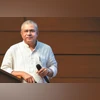 "Ashwini Vaishnaw")
"Tilt is more towards passing a law. Tilt is more towards creating a regulatory body. We believe that technology is something which will innovate, where people will use and we will evolve into getting the right regulatory structure rather than prescribing it through a law," he said.


Listen to This Article
Asserting that India has adopted techno legal approach for AI safety, Minister of Electronics and Information Technology Ashwini Vaishnaw on Monday said the tilt of the government is more toward innovation than regulation.
"We have taken a very different approach in AI safety, whereas the many parts of the world look at AI safety more as a legal challenge. They want to create a law, pass a law, and then believe that AI safety will come," he said here.
However, he said, "We have taken a techno legal approach, and our AI Safety Institute is a virtual institute, which basically is a network of institutes. And each of these nodes in the network have taken one problem to solve for." Speaking at the launch of two initiatives -- AI for Viksit Bharat Roadmap: Opportunity for Accelerated Economic Growth and NITI Frontier Tech Repository under its Frontier Tech Hub -- by Niti Aayog here, the minister said the government bias in technology is more towards innovation.
"When there is a trade off between regulation and innovation, we tend to tilt more towards innovation. That's very different from Europe and many other parts of the world, where the tilt is more towards regulation.
"Tilt is more towards passing a law. Tilt is more towards creating a regulatory body. We believe that technology is something which will innovate, where people will use and we will evolve into getting the right regulatory structure rather than prescribing it through a law," he said.
Also Read

 "Nirmala Sitharaman, Nirmala")
 "artificial intelligence machine learning")
 "Dhruv Gupta, Investor, Prosus India")
 "Technology, Startups, Space startup, Food delivery")
 "data centre")
He further said the approach has helped so far.
The approach will keep helping India, and especially the people living in far-flung areas of the country, which need the new technological solutions for fulfilling aspirations of people, he added.
Stressing that the growth is inclusive and robust, he said, it's driven by technology and technology is the fundamental base of this growth.
"Over a period of last few decades, the biggest change which has happened, and the biggest factor which has joined this constellation of technologies, is AI, because AI is now affecting practically everything that we do," he said.
Like internet, which changed everything that we did, he said, "AI is also going to fundamentally change the way we work the way we live, the way we consume, the way we teach our children, the way we do healthcare, practically everything is going to be impacted." That's why it's very important to make sure that India is frontrunners in AI technology or in the use of AI development of AI, he said, adding that the core of this part will be R&D on one hand, and getting a very, very strong and deep talent pipeline on the other.
With regard to Graphics Processing Unit (GPU), he said, against the target of 10,000, India has 38,000 GPUs available for everybody.
(Only the headline and picture of this report may have been reworked by the Business Standard staff; the rest of the content is auto-generated from a syndicated feed.)
More From This Section
 "Indus Appstore, PhonePe")
 "Tech Wrap September 15")
 "Google Gemini Nano Banana AI saree prompt")
 "WhatsApp")
 "Engineers' Day 2025")
Don't miss the most important news and views of the day. Get them on our Telegram channel
First Published: Sep 15 2025 | 9:28 PM IST