


Samsung Galaxy Z Flip 7 review: A mainstream-ready flip-style foldable?
The Galaxy Z Flip 7 refines the flip form factor with bigger screens and better software, but heating issues and weak battery hold it back
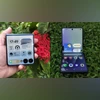 "Samsung Galaxy Z Flip 7")
Samsung Galaxy Z Flip 7
Listen to This Article
The Samsung Galaxy Z Flip 7 is the company’s latest effort to perfect the flip phone form factor. It arrives with a more refined design, larger cover screen, smarter software, and the decision to use Samsung’s own Exynos 2500 chip. On paper, these updates seem aimed at making the Flip 7 a more mainstream-ready foldable. But do they all come together to justify the over Rs one-lakh plus price tag? After two weeks of daily use, here’s what I found.
Design
Samsung has not overhauled the design, but the Flip 7 is the most polished version of the lineup so far. Compared to the Flip 6, it is marginally wider and thinner, with the flatter silhouette making it easier to pocket. It weighs just over 188 grams, and the hinge folds completely flat, eliminating the earlier gap.
The big design win is the nearly crease-free inner display. It is still visible under certain angles, but you can scroll past it without noticing much. The aluminium frame lends a premium feel. The IP48 rating means it is technically protected from dust and splashes, though I would recommend you not to test its durability.
The physical buttons feel clicky, but the placement can be disorienting, especially when the phone is folded. More than once, I found myself hitting volume buttons when I meant to unlock the phone. The fingerprint scanner embedded in the power button is quick but occasionally misses the first try.
Samsung sells it in Jet Black, Coral Red, and Blue Shadow. Our unit, in the subdued Blue Shadow, looked elegant and did not pick up too many smudges.
Also Read

 "Elon musk, musk, Elon")
 "Samsung Galaxy Z Fold 7")
 "Samsung Galaxy Watch Ultra (2025)")
 "Samsung Galaxy Watch 8 and Watch 8 Classic")
 "Samsung galaxy Buds 3 Pro")
Displays
The cover display has grown to 4.1-inch with a 120Hz refresh rate and little bezels. It offers ample brightness to make it comfortable to use even in harsh sunlight conditions.. Samsung has kept things minimal with widgets, however, due to the wider FlexWindow, I was able to accommodate four widgets on the cover screen. Being able to switch songs in Spotify and adjust the seek without having to open the main display adds to convenience.
The inner display has expanded to 6.9-inch, with a similar brightness level and adaptive 120Hz refresh rate. It is excellent for content consumption and social media scrolling. The AMOLED panel delivers rich contrast, sharp and vibrant colours. That said, it is still a reflective surface – bright indoor lighting or direct sun can introduce some glare.
You will not get the ultra-wide cinematic experience of a Fold, but for a flip phone, these are among the best displays you can get.
Cameras
The Flip 7 inherits a dual-camera setup from its predecessor, featuring a 50MP main camera and a 12MP ultra-wide camera. During the day, the main camera delivers impressive results. Photos are detailed, colour reproduction is accurate, and exposure control is mostly on point.
Samsung’s ProVisual Engine seems to improve post-processing by making the final output clearer and refined. Even digital zoom up to 4x remains usable, although anything beyond that loses clarity. The ultra-wide camera was not that impressive. The output was not consistent. Moreover, the habit of softening edges and introducing noise in low light is something that the ultra-wide camera does quite often.
Where the Flip 7 falters is after sunset. Indoor shots can be hit or miss, and the lack of a dedicated telephoto lens limits flexibility. Low-light shots often look smeared, especially with moving subjects.
Selfies taken using the cover display and main camera look great: easily among some of the best in recent times, but again, only in well-lit conditions. Low lighting makes it tough for the camera to give an output that one would like. The 10MP main display camera feels like an afterthought. It struggles in medium to low light and produces washed-out colours. For video calls, it gets the job done. Just do not expect Instagram-worthy selfies.
Software and AI
The Flip 7 runs One UI 8 based on Android 16. Samsung has tailored the software well for the folding form factor. Multitasking is smooth with split-screen and pop-up windows, and Flex Mode (using the phone half-folded like a mini laptop) still feels cool.
Galaxy AI is sprinkled across the UI – photo erasers, writing assistants, transcription tools, and the new Now Brief that gives you a daily summary. Some features, like Circle to Search, feel genuinely helpful. Others, like Drawing Assist or Audio Eraser, feel like they’re looking for a use case. Gemini Live integration is neat but limited by the cover screen’s app restrictions.
Overall, it’s a well-rounded software experience but not radically different from Samsung’s premium slab phones.
Performance
Here’s where the Flip 7 shows its cracks. Samsung ditched Qualcomm in favour of its own Exynos 2500 chip. The processor is paired with 12GB RAM, but it clearly struggles with thermal management.
Even basic tasks like watching YouTube or navigating Maps caused the phone to heat up noticeably, especially around the camera module. During a particularly long video call, I had to switch to my laptop because the phone became uncomfortably warm.
Gaming performance is acceptable but not ideal. Frame rates held steady in lighter games, but BGMI, Asphalt 9, and Call of Duty triggered thermal throttling within minutes. For a phone at this price, that is a highly disappointing compromise.
That said, day-to-day performance in tasks like messaging, app switching, and social media was fine. But if you push it, you will feel the heat.
Battery
Despite its slimmer build, Samsung managed to fit a 4,300mAh battery in the Flip 7. But real-world stamina is underwhelming. On a typical workday involving email, calls, Spotify, some YouTube, Instagram, and light photography, the phone was in need of a recharge in around 12 hours. If used continuously, the smartphone would last for around six hours.
Streaming a full-length movie on Netflix drained 40 per cent of the battery. With heavier use, especially involving videography or using maps for long hours, you will likely need a top-up before evening. Charging speed is another pain point. A full charge takes close to two hours.
Verdict
The Samsung Galaxy Z Flip 7 is remarkable in the Flip category. The design is sleeker, the cover display is functional and better than what was seen in the previous generation, and daytime camera performance is noticeable. On the software front, the One UI 8 understands the task well, and Galaxy AI features bring a few genuinely helpful tricks.
But some fundamental problems remain. The Exynos 2500 chip has thermal issues that impact even basic usage. Battery life is disappointing. And while the cameras work well in daylight, they fall short at night.
At Rs 109,999, this is a luxury device. If you are in it for the aesthetics and novelty of flipping your phone to hang up a call, you will love it. But if you’re seeking performance, battery reliability, or low-light camera magic, this is not the foldable for you.
Pricing and variants
- 12GB RAM + 256GB Storage: Rs 109,999
- 12GB RAM + 512GB Storage: Rs 121,999
Samsung Galaxy Z Flip 7: Hands-on
More From This Section
 "Sony WF-C710N")
 "Samsung Galaxy Z Fold 7")
 "Vivo X Fold 5 running Origin Workbench platform")
 "OnePlus Buds 4")
 "Nothing Phone 3 with Glyph Matrix display")
Don't miss the most important news and views of the day. Get them on our Telegram channel
First Published: Jul 28 2025 | 3:05 PM IST