


Harvard visa ban could disrupt fall admissions and set college precedent
President Trump's proclamation empowers the Secretary of State to revoke visas of international students at Harvard, raising concerns for fall admissions and international education policies
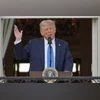 "Donald Trump, Trump")
This was followed by the US State Department ordering all its consular missions and embassies overseas to begin social media vetting of visa applicants looking to travel to Harvard University for any purpose. (Photo: PTI)
Listen to This Article
Donald Trump’s 4 June proclamation suspending the entry of foreign nationals seeking to study or participate in exchange programmes at Harvard University has raised alarm among education experts, who fear it may set a precedent for action against other Ivy League institutions.
The move comes amid escalating tensions between the Trump administration and higher education institutions, especially Harvard. The administration had last month banned foreign students’ admission to the university, an order that was blocked by a court.
This was followed by the US State Department instructing all consular missions and embassies overseas to begin social media vetting of visa applicants intending to travel to Harvard University for any purpose.
The 4 June presidential proclamation invokes authority under sections 212(f) and 215(a) of the Immigration and Nationality Act (INA), granting the president broad powers to suspend entry of any class of people deemed "detrimental to the interests of the United States." The order halts new international admissions to Harvard but also grants the Secretary of State discretionary power to revoke existing F, M, or J visas of international students already at Harvard.
Abhijit Zaveri, founder and director of Ahmedabad-based education consultancy Career Mosaic, said the move raises concerns not only for incoming students but also for the broader international student community in the US.
Also Read

 "Donald Trump")
 "Donald Trump, US President")
 "RCB event, Bengaluru stampede")
 "Russian oil")
 "Abortion")
Harvard currently hosts 10,158 international students and scholars across its schools. Of these, 788 — the second-largest cohort — are from India, according to university data. China tops the list with 2,126 students.
Commenting on the situation, Kajal Dave, co-founder of LaunchEd, said the move affects thousands of international students currently applying or planning to study in the US, casting uncertainty over their academic futures.
“While the order specifically targets Harvard, it may set a troubling precedent, raising fears among students and universities nationwide about the stability of international education policies,” she added.
However, according to the US Department of Homeland Security (DHS), the move follows Harvard allegedly refusing to provide information on certain foreign students involved in protest activities.
“Admission into the United States to attend, conduct research, or teach at our nation’s institutions of higher education is a privilege granted by our Government, not a guarantee,” the proclamation signed by President Trump stated.
It added that this privilege is necessarily tied to the host institution’s compliance and commitment to following federal law. “Harvard University has failed in this respect, among many others,” it alleged.
While the suspension of visas applies to foreigners wanting to attend Harvard through the Student and Exchange Visitor Programme (SEVP) after the date of the proclamation, the Secretary of State has discretion to revoke visas of foreign nationals currently attending Harvard on F, M, or J visas.
Highlighting concerns about fairness and due process, Dave said the move could abruptly disrupt the lives and studies of students already residing in the US.
Zaveri added that the possibility of reviewing and revoking existing academic or exchange visas adds to the uncertainty for those already enrolled.
“However, students are being informed in advance and, in some cases, may be advised to consider transferring or seeking admission to alternate institutions, depending on guidance issued by relevant authorities,” he said.
Experts say the ongoing tension between the federal government and top academic institutions has created a climate of uncertainty for students planning to join US universities this fall.
Dave said the resulting uncertainty has understandably affected students preparing for the upcoming fall session.
She added that despite past court interventions blocking similar actions, repeated policy shifts are prompting many students to reconsider or delay their plans, with some now looking to alternative destinations with clearer, more student-friendly visa policies.
The continuous and growing uncertainty has led Indian students to seek new academic destinations, with Germany, Ireland, New Zealand and even Russia gaining favour—despite language barriers—for their easier immigration policies and promise of work opportunities after courses end.
According to education ministry data, Germany saw a 68 per cent increase in Indian students — to 34,702 in 2024 from 20,684 in 2022. New Zealand witnessed a 354 per cent jump from 1,605 to 7,297 during the same period. Russia saw a 59 per cent rise in Indian students, and Ireland 49 per cent.
More From This Section
 "What are the challenges before India going by the recent IPCC report?")
 "European Central Bank, ECB")
 "The ADB on Tuesday approved an $800 million programme to strengthen fiscal sustainability and improve public financial management in Pakistan. | Photo: Shutterstock")
 "detain, arrest, NYPD, Columbia")
 "China's J-10 fighter jets")
Topics : Donald Trump Harvard
Don't miss the most important news and views of the day. Get them on our Telegram channel
First Published: Jun 05 2025 | 8:24 PM IST