


GenZs lead protest in Nepal against govt's ban on all social media apps
Army deployed in Kathmandu after Gen-Z demonstrators stormed Parliament, leaving over 80 injured in clashes with police
 "protest, nepal, social media ban")
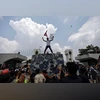
A demonstrator waves a flag as he stands atop a vehicle near the entrance of the Parliament during a protest against corruption and government’s decision to block several social media platforms, in Kathmandu, Nepal September 8. Photo: Reuters
Listen to This Article
Thousands of youth took to the streets of Nepal, protesting against the social media ban that came into effect on September 4. Last week, the Nepalese government banned social media firms that were not registered in the country, including Facebook, Instagram, WhatsApp, X, and YouTube.
According to media reports, Gen-Z demonstrators stormed Nepal’s Parliament to oppose the ban and denounce corruption within the government. As the protests escalated, authorities deployed the army and imposed curfews in Kathmandu.
The unrest sparked violent clashes between young protesters and police, leaving more than 80 demonstrators injured. Police responded with water cannons, teargas, and rubber bullets after demonstrators threw tree branches and water bottles and shouted anti-government slogans, with some protesters reportedly managing to enter the Parliament compound.
Several social media leaflets and posts were distributed, calling people to join the protests in Baneshwor, near the federal parliament in the capital, to pressure the government to step back from its decision to shut down the social media platforms.
Also Read

 "nepal, kathmandu, protests, social media ban")
 "KP Sharma Oli, Oli, Nepal PM")
 "Social Media")
 "Nepal_Flag (Photo: Wikipedia)")
 "flood, Nepal Flood, Kathmandu Flood")
Social media sites have gone dark
In an effort to tax the revenue generated by the social media firms, the Nepalese government had issued an order to ban all companies that were not registered in the country. Following the order from the government, social media sites have gone dark past midnight on September 4, news agency ANI reported.
According to the report, some social media firms were already paying taxes even when they were not registered. Most of these firms have also been banned from operating in the country without a registered office.
Defending its move, the government said that it took the action after giving several warnings to these platforms for opening local offices. However, the Bill cited in the ban, 'The Operation, Use, and Regulation of Social Media in Nepal', has not yet been passed by Parliament.
Who is registered?
Some platforms, including Viber, TikTok, Wetalk, and Nimbuzz, are currently registered in the country. Meanwhile, Telegram and Global Diary are in the process of getting registered.
However, widely used platforms like Facebook, Instagram and WhatsApp have yet to initiate the process.
What are other countries doing?
Apart from Nepal, even Australia implemented a social media ban on November 29 last year. However, the ban only prohibited children under 16 from having accounts on social media platforms. The government's goal was to protect children's mental health and well-being from risks like cyberbullying and exposure to harmful content. The law requires platforms to take "reasonable steps" to prevent these accounts or face hefty fines of up to A$50 million for non-compliance.
(With inputs from ANI)
More From This Section
 "People inspect a bus with bullet holes in the windshield at the scene where a suspected shooting attack took place at the outskirts of Jerusalem, September 8, 2025 | REUTERS")
 "Afghanistan earthquake")
 "Singapore flag")
 "François Bayrou")
 "chips, semiconductors, semiconductor")
Topics : Nepal Kathmandu Social media apps BS Web Reports
Don't miss the most important news and views of the day. Get them on our Telegram channel
First Published: Sep 08 2025 | 3:22 PM IST