


What 'Save America Act' proposes for US voter registration rules
The proposed legislation has triggered debate in the US because it introduces documentary citizenship requirements for voter registration and sets out procedures for verifying eligibility
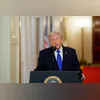 "US President Donald Trump")
US President Donald Trump (Image: Bloomberg)
Listen to This Article
US President Donald Trump last week said he would not sign any other legislation until the Congress passes the 'Save America Act', a proposal that seeks to change how voter registration works in federal elections.
The legislation, formally called the 'Safeguard American Voter Eligibility (Save) Act', proposes changes to the framework established under the National Voter Registration Act of 1993 (NVRA). The proposal focuses on verifying citizenship during voter registration and directing states to review voter rolls for non-citizens.
“It must be done immediately. It supersedes everything else. Must go to the front of the line,” Trump said in a Truth Social post. “I, as President, will not sign other Bills until this is passed."
The proposal has triggered debate because it introduces documentary citizenship requirements for voter registration and sets out procedures for verifying eligibility.
What was the existing system under the National Voter Registration Act?
The National Voter Registration Act of 1993 established the modern structure for voter registration in the US.
Also Read

 "indigo airlines, indigo")
 "Sharjeel Imam")
 "Netanyahu and Trump White House meeting")
 "Om Birla, Om, Birla")
 "rafale, defence, air force")
Under that system, individuals applying to register to vote generally declared their citizenship status through a signed statement. Registration forms required applicants to confirm that they were US citizens and eligible to vote, but documentary proof of citizenship was typically not required at the time of registration.
The law standardised voter registration procedures across states and expanded access through multiple channels, including mail registration forms and registration through motor vehicle agencies.
The Save America Act proposes to modify this system by introducing documentary citizenship verification during voter registration for federal elections.
What the Save America Act proposes
The proposed legislation states that a state cannot register an individual to vote in federal elections unless the applicant provides documentary proof of US citizenship at the time of registration.
The requirement would apply when individuals submit applications to register to vote in elections for federal office.
Documents that may serve as proof of citizenship include records such as a passport, birth certificate or other recognised documentation establishing United States citizenship.
The measure therefore alters the earlier approach that relied primarily on declarations made by applicants on voter registration forms.
Process for applicants without documentary proof
The proposal also establishes a process for applicants who do not immediately possess documentary proof of citizenship.
In such cases, the individual may sign an attestation under penalty of perjury stating that the applicant is a United States citizen and eligible to vote in federal elections.
The applicant may then provide other supporting evidence to state or local election officials to demonstrate citizenship.
Election officials must review the submitted material and decide whether the evidence sufficiently establishes United States citizenship for the purpose of voter registration.
If the official concludes that the applicant has adequately demonstrated citizenship, the decision must be documented through a formal affidavit confirming the determination.
Role of the Election Assistance Commission
The legislation assigns an important role to the Election Assistance Commission (EAC) in implementing the proposed procedures.
Under the proposal, the EAC must develop a uniform affidavit that state and local election officials will use when approving voter registration applications submitted without direct documentary proof of citizenship.
The affidavit must:
- Outline the minimum standards required for an official to accept alternative evidence of citizenship
- Require the official to explain the basis for determining that the applicant has sufficiently established United States citizenship.
This mechanism is intended to create consistent procedures across states when evaluating voter eligibility.
Handling discrepancies in documentation
The proposal also requires states to establish procedures for cases in which documentation submitted by applicants raises questions or inconsistencies.
Under these provisions, applicants may submit additional documents to election officials in order to demonstrate their citizenship status.
State election authorities must examine the materials and determine whether the evidence is sufficient to confirm eligibility for voter registration in federal elections.
Removal of non-citizens from voter rolls
The Save America Act also directs states to identify and remove individuals who are not US citizens from voter registration lists.
The proposal states that the objective of this provision is to ensure that only citizens appear on voter rolls used for federal elections.
Supporters argue that such verification measures strengthen election safeguards and ensure that participation in federal elections remains limited to eligible citizens.
Can Trump refuse to sign other Bills?
Trump’s statement that he will not sign other legislation until the Save America Act is approved could affect other Bills that require presidential approval.
Among them is legislation to fund the Department of Homeland Security for the remainder of the financial year. The department is currently without funding after its appropriations expired last month.
Under the US legislative process, the president has the authority to veto a Bill passed by Congress and return it to lawmakers. Congress can override such a veto if two-thirds of members in both the House of Representatives and the Senate vote in favour of the legislation.
Another procedure available to the president is the "pocket veto". If Congress adjourns and the president does not sign a Bill within ten days, the legislation does not become law.
However, if Congress remains in session and the president does not sign a Bill within 10 days, the legislation automatically becomes law. In such circumstances, lawmakers could bypass a signature blockade by keeping Congress in session.
The timing of the legislative debate is also politically significant. Republicans face midterm elections scheduled for November, and a shift in control of either chamber could limit the party’s ability to advance its legislative priorities. Opinion surveys have also suggested that voter sentiment regarding Trump and the economic outlook has weakened ahead of the elections.
Debate over the legislation
The Save America Act has triggered debate in the US Congress. The House of Representatives approved the Bill last month. However, the proposal currently lacks the 60 votes required in the Senate to overcome a filibuster.
Republicans hold a 53-47 majority in the Senate, while Democratic lawmakers have said they will oppose the legislation.
Some Republican members have suggested bypassing the filibuster rule in order to move the Bill forward, although Senate Majority Leader John Thune has not supported such a step.
Senate Minority Leader Chuck Schumer also said the possibility of legislative gridlock would not change the Democratic position.
“If Trump is saying he won’t sign any Bills until the Save Act is passed, then so be it: there will be total gridlock in the Senate,” Schumer wrote on X. “Senate Democrats will not help pass the Save Act under any circumstances.”
Trump has also urged Congress to send him a stronger version of the proposal, stating that lawmakers should deliver “NOT THE WATERED DOWN VERSION".
More From This Section
 "Trade, ports, export")
 "Balendra Shah, Balendra")
 "crude oil, oil sector")
 "Kristalina Georgieva, Kristalina")
 "Asian markets")
Don't miss the most important news and views of the day. Get them on our Telegram channel
First Published: Mar 09 2026 | 5:04 PM IST