


Susumu Kitagawa, Richard Robson, Omar Yaghi win Nobel Prize in Chemistry
The Nobel Prize laureates created molecular constructions with large spaces through which gases and other chemicals can flow
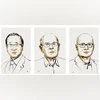 "chemistry nobel prize 2025")
The total prize amount of 11 million Swedish kronor will be shared equally between the laureates.5


Listen to This Article
The Royal Swedish Academy of Sciences awarded the Nobel Prize in Chemistry 2025 to Susumu Kitagawa, Richard Robson, and Omar M Yaghi for the development of metal-organic frameworks.
According to the Academy, the Nobel Prize laureates created molecular constructions with large spaces through which gases and other chemicals can flow. These constructions, metal-organic frameworks, can be used to harvest water from desert air, capture carbon dioxide, store toxic gases, or catalyse chemical reactions.
“Metal-organic frameworks (MOFs) have enormous potential, bringing previously unforeseen opportunities for custom-made materials with new functions,” says Heiner Linke, Chair of the Nobel Committee for Chemistry.
The total prize amount of 11 million Swedish kronor will be shared equally between the laureates.
About the winners
- Susumu Kitagawa: He was born in 1951 in Kyoto, Japan, and secured a PhD in 1979 from Kyoto University. He is currently a professor at Kyoto University, Japan.
- Richard Robson: He was born in 1937 in Glusburn, United Kingdom, and got a PhD in 1962 from the University of Oxford. He's a professor at the University of Melbourne, Australia.
- Omar M Yaghi: Born in 1965 in Amman, Jordan, he has a PhD from the University of Illinois Urbana-Champaign, US. He's a professor at the University of California, Berkeley, US.
Discoveries may solve major challenges
Following the laureates’ groundbreaking discoveries, chemists have built tens of thousands of different MOFs. According to the Academy, some of these discoveries may contribute to solving humankind’s greatest challenges, with applications that include separating PFAS from water, breaking down traces of pharmaceuticals in the environment, capturing carbon dioxide, or harvesting water from desert air.
More From This Section

 "US reciprocal tariffs' fallout: Supply chains brace for disruption")
 "Softbank")
 "Jaguar land rover/JLR")
 "pakistan Flag")
 "European Union, EU")
Don't miss the most important news and views of the day. Get them on our Telegram channel
First Published: Oct 08 2025 | 4:06 PM IST