


Taiwan says TSMC's move to invest $100 bn in US not due to Trump's pressure
TSMC CEO CC Wei said that he had spoken with the firm's customers and realised that TSMC's current expansion plans in the US were insufficient to meet current demand
 "Taiwan, Taiwan's President Lai Ching-te")
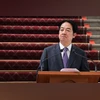
Taiwan President Lai Ching-te denied that TSMC's investment decision was due to political pressure by the United States


Listen to This Article
Taiwan's president and top chipmaker TSMC held a joint news conference Thursday to defend the company's decision to invest $100 billion in the US, saying it stemmed from customer demand and not pressure from the Trump administration.
Taiwan Semiconductor Manufacturing Company (TSMC), the world's largest chipmaker, said earlier this week it would invest $100 billion in three more chip manufacturing plants, along with two packaging facilities in Arizona.
The decision sparked concerns that Taiwan would gain little in return for moving some of its most advanced manufacturing processes to the US.
Taiwan President Lai Ching-te denied that TSMC's investment decision was due to political pressure by the United States. US President Donald Trump had previously said that Taiwan had taken away the US chip business and that he wanted it back.
"TSMC's decision is necessary for its future development. The government did not face pressure from the United States during TSMC's investment process in the US," said Lai on Thursday.
Also Read

 "C.C Wei, Chairman and CEO of TSMC")
 "TSMC")
 "Kalyani Powertrain Ltd")
 "AI Chips, artifical intelligence chips")
TSMC CEO CC Wei said that he had spoken with the firm's customers and realised that TSMC's current expansion plans in the US were insufficient to meet current demand.
"Customer demand has been steadily increasing. For TSMC, our investment plans are based on customer needs, and we are very cautious," Wei said.
"The amount of investment in the US may seem large, but it is still not enough to meet demand," he added.
He also said that the development plans in the US would not affect TSMC's plans in Taiwan, and that the company currently had 10,000 employees researching and developing 1.0 nanometer chips.
While Taiwan is a self-ruled island, Beijing sees Taiwan as a renegade province to be taken back by force if necessary.
The US does not recognise Taiwan as a country, but is its strongest backer and biggest arms provider.
But the continued support of the US appears increasingly fragile under the Trump administration, who has contended that Taiwan relies too much on the US and needs to spend more on defence.
A Pentagon nominee earlier this week said Taiwan should be spending about 10 per cent of its gross domestic product on defence to deter a war with China.
Taiwan's Lai last month pledged to increase defence spending to over 3 per cent of its gross domestic product, up from less than 2.5 per cent.
(Only the headline and picture of this report may have been reworked by the Business Standard staff; the rest of the content is auto-generated from a syndicated feed.)
More From This Section
 "Kash Patel")
 "Donald Trump, Trump")
 "US President Donald Trump")
 "Donald Trump, Trump")
 "US police, Baton Rouge")
Don't miss the most important news and views of the day. Get them on our Telegram channel
First Published: Mar 07 2025 | 6:48 AM IST