


The fleeting fantasy of a monarch who would return to save Nepal
That turned out to be a brief royalist dream. It is a former chief justice, Sushil Karki who now leads Nepal after last week's protests and arson attacks
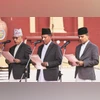 "Rameshore Khanal")
Newly appointed Finance Minister Rameshore Khanal, Energy Minister Kulman Ghising, and Home Minister Om Prakash Aryal take oath of office after being named to the interim cabinet. Photo: Reuters
Listen to This Article
Nepal’s days of rage, when its young people won the ouster of the prime minister, left the door open to the most unthinkable outcomes — even rumours about the restoration of a dethroned king.
That turned out to be a brief royalist dream. It is a former chief justice, Sushil Karki who now leads Nepal after last week’s protests and arson attacks, not King Gyanendra, who ended his family’s 449-year-old dynasty by abdicating in 2008. And with that, the door swung shut on the fantasy of remaking Nepal as a kingdom.
But the so-called Gen Z protests disclosed something about the extremity of Nepal’s situation, once its army had restored order.
“The young people gave no sense that they wanted the monarchy back,” only that they were furious at the post-monarchical establishment, according to Amish Mulmi, 41, an author who writes about Nepal and its geopolitics. “They just didn’t want these parties back.”
While the Gen Zs lack a unifying figure, for now, there is another political idea waiting in the wings: an alliance of monarchists who want to replace the carousel of republican leaders with a uniform allegiance to the crown. Monarchist groups had risen up in March to hail the former king and demand his restitution, only to be put down forcibly by the state police.
Also Read

 "Sushila Karki")
 "Sudan Gurung, Nepal protest")
 "Nepal interim Prime Minister Sushila Karki arrives at a hospital to meet the victims of deadly anti-corruption protests on Saturday (Photo: Reuters)")
 "Nepal Protest")
In retrospect, their uprising looks like a harbinger of last week’s uprising.
The monarchists have at least some common ground with the gigantic Gen Z protest movement, including the will to rush the barricades. One pro-royalist protester was shot dead in the earlier violence, at least 70 people were injured, and others were taken into custody.
The ruling Shah dynasty had withstood challenges from all sides until a horrific explosion of rage from within the palace. In June 2001, the crown prince Dipendra took an AK-47 rifle into his family’s dining room and massacred the sitting King Birendra, the queen, seven other royals and then himself. Gyanendra, who was never popular, succeeded the slain king, and the monarchy itself began to crumble.
The three parties that emerged as dominant within the post-royal order — Nepali Congress, Maoist and Communist — each had waged armed struggle against the monarchy. Never a united front, they also competed with each other. After Nepal became a republic, though, they have mainly fought through elections, without gunfire.
The governments they formed were unstable. But a kind of stasis set in, usually with two sharing power and a third in opposition. That bred the corruption and impunity that frustrated the Gen Z protesters. Decentralization and social media made such problems more visible.
Dhawal Shumshere Rana, the general secretary of the Rashtriya Rajatantra Party, calls the king a “symbol of authority that was necessary to keep the country united.” His vision calls for a restored monarchy with Hinduism as a state religion.
The Gen Z protest organizers had asked their comrades not to carry any political flags. They explained later that Nepal’s distinctive pennants had become too associated with “ultranationalism” of the royalist kind.
As the chaos escalated last Tuesday, with almost every organ of state power — apart from the army — targeted by arsonists, many ordinary Nepalis wondered where the former monarchs stood.
The former king, now Gyanendra Shah, lives in a decommissioned palace, which protesters left alone. He issued a statement in support of Gen Z and its aspirations, with mild wishes for an end to the anarchy. His niece, the former princess Purnika Shah, went further on Facebook. She commended “the dreams and courage of the youth which will drive us forward” but said that “guidance, security and stability” were necessary, too.
“Only when heritage and youth are together will our country remain strong,” she posted.
More From This Section
 "china Flag, China")
 "World Trade Organisation, WTO")
 "Xi Jinping, Jinping, China President")
 "Tik Tok")
 "Trump, Tiktok")
Topics : Politics News Nepal
Don't miss the most important news and views of the day. Get them on our Telegram channel
First Published: Sep 15 2025 | 10:59 PM IST