


US strikes 3 nuclear sites in Iran, Tehran vows retaliation: What we know
American warplanes struck Iran's Fordow, Natanz and Isfahan nuclear facilities with 'bunker buster' bombs in coordination with Israel, sparking fears of wider regional conflict
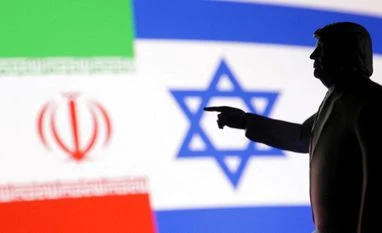 "A 3D printed miniature model of U.S. President Donald Trump, Israel and Iran flags are seen in this illustration")
Donald Trump said the strikes on Iranian nuclear facilities were a 'historic moment' and described them as 'the most difficult and perhaps the most lethal' action taken so far. (Photo: Reuters)


Listen to This Article
The United States has formally entered the Iran-Israel conflict, with President Donald Trump confirming that American warplanes struck three major Iranian nuclear facilities on Sunday. The move, aimed at weakening Tehran’s nuclear programme, marks Washington’s most direct intervention in the conflict so far. Iran has vowed to retaliate, warning of a potential regional war.
Three nuclear sites hit in precision strikes
The three sites struck—Fordow, Natanz and Isfahan—are central to Iran’s nuclear infrastructure. Fordow, a deeply buried uranium enrichment plant south of Tehran, has long been viewed as one of Iran’s most protected facilities. US officials confirmed the use of GBU-57 Massive Ordnance Penetrators, or 'bunker buster' bombs, each weighing over 13,000 kg and capable of penetrating reinforced underground structures.
Trump said the strikes were a “historic moment” and described them as “the most difficult and perhaps the most lethal” action taken so far. “We have completed our very successful attack… All planes are safely on their way home,” he said.
President Donald J. Trump's full remarks on the precision strikes against Iran's three key nuclear facilities pic.twitter.com/8rUB7BYOsS
— Rapid Response 47 (@RapidResponse47) June 22, 2025
Also Read

 "oil trade, Russia, Crude Oil, Vladimir Putin, US sanctions")
 "Iran")
 "Iran-Israel, Iran Israel flag")
 "Israel Iran conflict oil impact, Strait of Hormuz oil crisis, India crude oil imports 2025, Russia oil exports to India, India current account deficit 2025, global oil price surge, West Asia geopolitical risk, Indian economy oil dependence, oil shock")
While Trump claimed the facilities were “completely and totally obliterated", Iran’s Atomic Energy Organisation insisted that the sites had been evacuated earlier and that “no radioactive release” had been detected. A statement from Iran’s nuclear safety authority added that “there is no danger to residents living around the aforementioned sites".
Trump’s rationale behind ordering strikes
Trump said the intervention was necessary to prevent Iran from acquiring nuclear weapons, a stance he has maintained since withdrawing from the 2015 nuclear deal. The US administration contacted Iran through back channels before the strike, stating that regime change was “not planned” and that Sunday’s operation was intended as a standalone message.
In a post on Truth Social, Trump said: “This is an HISTORIC MOMENT FOR THE UNITED STATES OF AMERICA, ISRAEL, AND THE WORLD. IRAN MUST NOW AGREE TO END THIS WAR (sic).”
Israeli Prime Minister Benjamin Netanyahu praised the US move, calling it a “bold decision” and thanking Trump for acting with “righteous might.”
According to Israeli officials, the strikes were carried out in “full co-ordination” with the Israeli Defence Forces. The two allies have been conducting parallel operations since Israel launched surprise attacks on Iranian military and nuclear assets on June 13.
How the war began
The current conflict erupted when Israel accused Iran of nearing nuclear weapons capability and launched an extensive aerial campaign to destroy its facilities. In response, Iran fired hundreds of rockets and drones at Israeli targets, triggering an intense aerial exchange that has lasted more than a week.
While Iran insists its nuclear ambitions are peaceful, Netanyahu has said the country was weeks away from producing a nuclear bomb. Trump, long opposed to Iranian nuclear capability, had warned Tehran just days earlier to negotiate or face military action—a warning that was acted upon faster than expected.
Why did US decide to enter Iran-Israel conflict
US and Israeli officials say the strikes were necessary due to the depth and fortification of the targeted sites. Israel’s weaponry could not penetrate Fordow’s defences, prompting calls for US involvement. The GBU-57 bomb, which can reach depths of 60–90 metres, is believed to be the only conventional weapon capable of damaging Fordow.
In the aftermath of the strikes, Israel raised its security alert nationwide, closing airspace and banning public gatherings. The US has bolstered its military presence in the region, placing bases across Bahrain, Qatar and the UAE on high alert and deploying additional air defence systems.
Iran’s threats of retaliation
Iran has condemned the US strikes and vowed to respond. Officials have hinted at targeting US military bases across the region and disrupting key shipping lanes, including the Strait of Hormuz, which carries nearly a third of global oil traffic.
Tehran also warned it may target countries seen to be aiding the US, fuelling fears of a wider regional conflict. Iranian proxies such as Hezbollah and the Houthi rebels in Yemen may also be activated.
Supreme Leader Ayatollah Ali Khamenei earlier warned that any American intervention would bring “irreparable damage” and could spark “an all-out war.”
UN concerned over escalation
UN Secretary-General António Guterres expressed deep alarm over the US strikes, saying the situation risked spiralling out of control. “There is a growing risk that this conflict could rapidly get out of control—with catastrophic consequences for civilians, the region, and the world,” he said.
The International Atomic Energy Agency has confirmed that Iran had been enriching uranium at Fordow prior to the strike but said there were no signs of radioactive contamination in the surrounding area after the attack. (With inputs from Associated Press)
More From This Section
 "japan, Korea, South Korea")
 "Israel-Iran conflict, Israel, Iran")
 "Benjamin Netanyahu, Benjamin, Netanyahu, Israel PM")
 "US President Donald Trump")
 "Donald Trump, Trump")
Topics : Donald Trump Benjamin Netanyahu Israel Iran Conflict US-Iran tensions Ayatollah Ali Khamenei BS Web Reports
Don't miss the most important news and views of the day. Get them on our Telegram channel
First Published: Jun 22 2025 | 9:55 AM IST