


US blanket visa ban based on mistaken nationality, says South Sudan
The United States announced a blanket visa ban on South Sudan for failure to accept the return of its deported citizens. South Sudan responds
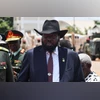 "South Sudan President Salva Kiir")
South Sudan President Salva Kiir | Photo: Reuters


Listen to This Article
The government of South Sudan strongly criticised the United States’ decision to revoke visas for all its passport holders, arguing that the measure was based on a case involving a foreign national misidentified as a South Sudanese citizen.
The controversy arose after US Secretary of State Marco Rubio announced a blanket visa ban on April 5, citing South Sudan’s alleged failure to accept the return of its citizens deported from the United States. However, South Sudan’s Ministry of Foreign Affairs and International Cooperation has rejected the claim, stating that the individual at the centre of the dispute is not a South Sudanese national, but a citizen of the Democratic Republic of Congo (DRC).
“The individual in question was not a South Sudanese national but rather a Congolese citizen. He was returned to the sending country for further processing,” the ministry said in a statement on Monday.
Deportation of a Congolese citizen
According to South Sudanese officials, the man in question, identified as Makula Kintu, arrived at Juba International Airport in South Sudan on April 5 and 6 using a South Sudanese travel document issued under the name Nimeri Garang. However, upon verification, authorities determined that Kintu is a citizen of DRC. He was subsequently denied entry and returned to the country that deported him.
“Records available to both governments confirm that Makula Kintu, born on April 2, 1977, is a Congolese national,” the ministry said in a statement. Officials further revealed that Kintu had previously entered the United States on August 21, 2003 and voluntarily departed for the DRC in 2009. He later re-entered the US illegally on July 10, 2016.
Also Read

 "apple, apple logo")
 "Donald Trump, Trump")
 "Nippon Steel")
 "JP Morgan")
 "Marco Rubio")
During his immigration interview in Juba, Kintu reportedly stated that he belonged to the Ema tribe from the North Kivu province of the DRC and claimed he had been forcibly sent to South Sudan. South Sudanese authorities state that they had shared video evidence of the interview with the US Ambassador in Juba and the US State Department in Washington.
US’ visa ban for South Sudan
This is the first instance of the US imposing a blanket visa ban on an entire country’s citizens. In his statement, Rubio asserted that the US would also deny entry to South Sudanese nationals arriving at its ports of entry.
“I am taking actions to revoke all visas held by South Sudanese passport holders and to restrict any further issuance to prevent entry into the United States, effective immediately, due to the failure of South Sudan's transitional government to accept the return of its repatriated citizens in a timely manner,” Rubio posted on X.
The US Embassy in South Sudan reinforced this stance, stating: “All visa interviews are canceled, and the Consular Section will not accept any Diplomatic or Official visa applications until further notice. These cancellations are due to the Government of South Sudan’s refusal to accept repatriation of its nationals from the United States. We will provide updates and further information as it becomes available.”
South Sudan’s response to visa ban
In response, South Sudan's foreign ministry called the action ‘unjustified’ and ‘regrettable’. “The government of South Sudan deeply regrets this decision, which has been taken based on an isolated case of identity misrepresentation by an individual who is not a South Sudanese national,” the statement read.
South Sudanese officials have emphasised their ongoing cooperation with the US on deportation matters, noting that emergency travel documents have been issued for 21 out of 23 individuals identified by American authorities. While most of these deportees were successfully repatriated, two Kintu and another individual from Sudan, were found not to be South Sudanese citizens.
US visa ban amid political tensions in South Sudan
The diplomatic fallout comes amid rising tensions in South Sudan, where fears of renewed conflict have grown following the house arrest of first Vice President Riek Machar. President Salva Kiir has accused Machar of inciting rebellion, raising concerns over the stability of the fragile 2018 peace agreement that ended a five-year civil war.
Last month, the US government ordered its non-emergency staff to leave South Sudan following violent clashes in certain regions.
South Sudanese nationals living in the US had previously been granted Temporary Protected Status (TPS), allowing them to stay legally for a specified period. However, TPS for South Sudan is set to expire on May 3, potentially leaving many in legal limbo.
Trump immigration crackdown
Since taking office, the Trump administration has intensified its immigration crackdown. US border officials have adopted more aggressive measures at ports of entry, scrutinising green card and visa holders who have expressed opposition to its policies.
Despite the growing diplomatic rift, South Sudan has called on the US to reconsider the blanket visa revocation, emphasising the need for a fair resolution to the dispute through diplomatic dialogue.
More From This Section
 "illegal immigration, immigrants in US, Indian immigrants, Dunki")
 "Binance founder, Changpeng Zhao")
 "singapore")
 "Ronald Reagan")
 "Gaza conflict, Hamas, Israel, Palestine")
Topics : United States Deportations US Deportation Law Deportation from US South Sudan trump visa ban BS Web Reports
Don't miss the most important news and views of the day. Get them on our Telegram channel
First Published: Apr 08 2025 | 3:23 PM IST