


Low value, high stakes: Why nations are racing to mine rare earth minerals
While rare earth mineral trading generates modest revenue, their strategic value far outweighs market price as governments move to mitigate geopolitical risk and secure defence-relevant supply
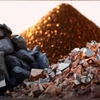 "Rare earth minerals")
China has intensified its strategic dominance over the global supply of rare earth elements by adding critical minerals to its export control list.
Listen to This Article
Even though the global rare earth elements (REE) market is relatively small, estimated at $3.5 billion in 2024, nations are racing to secure reserves and develop domestic supply chains. Prices for key elements like neodymium-praseodymium (NdPr) have been volatile and low, making purely commercial ventures unattractive without state support.
Still, governments view rare earths as critical to national security and high-tech industries like defense systems, wind turbines, EV motors, and consumer electronics rely on them. This explains why the Pentagon pledged $400 million investment in MP Materials and a 10-year price-floor guarantee of $110 per kg for NdPr, nearly double current rates, as reported by the Financial Times.
China’s rise to rare earth processing dominance
China’s position evolved through geological advantages and decades of strategy. With massive ion-adsorption clay deposits, easier and affordable to extract and process, the country targeted both mining and midstream refining from the 1980s onwards.
Deng Xiaoping declared in 1992: “While there is oil in the Middle East, China has rare earths.” That vision guided state-backed subsidies, lax environmental regulations, and vertical integration, from mining to finished magnets. Today, China controls 90–95 per cent of global REE refining and processing capacity.
The 2010 export restrictions to Japan highlighted the leverage China holds: prices spiked five- to seven-fold, even though rare earths are not geologically scarce, but economically rare.
Also Read

 "jsw steel")
 "AK-203 rifle")
 "Bahrain")
 "ITC Hotels")
 "Fraud, Scam")
Why were other countries slow to compete?
Mining and refining REEs involves high costs, environmental risks, and technical complexity. Western firms exited in the early 2000s; notably, the US’s Mountain Pass mine shut in 2002 due to stricter environmental rules. Processing facilities also generate 2,000 tonnes of toxic and radioactive waste per tonne of rare earths.
Mining and processing rare earths face three major constraints namely:
Low market value: Annual US import value stands at only $200 million.
High pollution: Processing leads to extreme pollution — generating toxic and radioactive waste.
Low return on investment: Investments in mining hard rock and ionic clay are significant but yield thin margins due to low prices.
With tight margins and low prices, only China was willing to absorb these costs. In contrast, Western miners focused on extraction but lacked downstream separation infrastructure.
Are rare earths worth more strategically?
In 2023, the United States imported approximately 400 tonnes of rare-earth metals, valued at $22.1 million. In addition, it imported around 10,530 tonnes of rare earth compounds, worth $186 million, according to Statista and the World Integrated Trade Solution database. In 2024, US imports of rare earth compounds remained around 10,530 tonnes, with their value estimated between $151.08 million and $170 million. Of this, approximately 74.5 per cent of the imports by value came from China.
In the European Union, 2023 imports of rare earth minerals stood at 18,300 tonnes, worth €123.6 million, with 39 per cent of the total volume supplied by China. In 2024, imports into the EU declined sharply to 12,900 tonnes, a 29 per cent decrease, with China’s share rising to 46.3 per cent. Russia and Malaysia also contributed significantly to Europe’s rare earth supply.
India eyes security in REE imports
India’s rare earth imports in 2023 were between 1,085 tonnes (narrower product category) and 2,270 tonnes (broader category), with the total value ranging between $4.9 million and $5.84 million. The majority of these imports originated from China. In 2024, India’s imports were around 2,270 tonnes, though the financial value for the year has not been specifically disclosed.
Though trade values are modest, the geo-political stakes are high. A single F-35 jet, for instance, contains hundreds of kilograms of rare earths. Export controls, such as China’s 2023–24 restrictions on seven heavy REEs, show how supply can be weaponised.
China has previously leveraged these restrictions as well: During 2010, global prices rose dramatically and Japan scrambled for alternatives. Similar patterns repeated in recent US-China tensions.
Why are govts backing projects like MP Materials?
State support is essential to offset the non-commercial nature of rare earth refining. In the US, the Pentagon’s $400 million stake in US rare-earth materials company MP Materials and guarantee of 7,000 tonnes of magnet purchases annually give the company financial viability, according to the Financial Times. Apple has committed up to $500 million for future magnet orders.
Additionally, the Pentagon will take 15 per cent equity in MP and underwrite a minimum $110 per kg floor price for NdPr (neodymium-praseodymium). These policies aim to spark magnet-grade rare earths production capacity and Vietnam, Australia, and Canada are following suit.
How are other countries responding to China’s monopoly?
The US is ramping up domestic projects (MP Materials, Fort Worth magnet plant, second facility for 10,000 tonnes per year capacity) according to The Wall Street Journal. Meanwhile, the EU, Japan, France, and South Korea are funding new separation plants. India, which is home to 6.9 million tonnes of REE reserves (third globally), has produced only 2,900 tonnes per year from 2012-2024, but is now aggressively investing in mining and refining partnerships through its National Critical Mineral Mission.
Australia, Vietnam, Brazil, and emerging players like Greenland are also positioned to diversify the supply chain, though most need 5-10 years and billions of dollars to establish full processing capabilities.
Challenges ahead in rare earth supply diversification
Building end-to-end rare earth supply chains remains time-consuming, capital-intensive, and environmentally fraught. Western nations face stricter environmental rules and higher energy costs. Even with state support, it may take years, estimated to be from five to 10 years, to reach China-level processing.
Furthermore, China’s ability to dump excess capacity, driving down prices and squeezing new entrants, remains a powerful barrier. Without coordinated policies, such as guaranteed offtake, subsidies, and strategic reserves, Western producers will struggle to compete.
Is the rare earth race driven by strategy, or profit?
While REE trading generates modest revenue, their strategic value far outweighs market price. Governments are investing not to chase profits, but to mitigate geopolitical risk, secure defence-relevant supply, and support green-tech independence.
As demand for high-performance magnets and critical defence components grows, countries will continue the strategic pursuit even when unit values remain low as it is not about immediate profits but about geo-political insurance in a world increasingly defined by high-tech competition and resource security.
More From This Section
 "Netflix")
 "deportation US border")
 "china, china flag, Politburo")
 "European Union, EU")
 "Felix Baumgartner")
Don't miss the most important news and views of the day. Get them on our Telegram channel
First Published: Jul 18 2025 | 5:30 PM IST