


Murder they wrote
Crime is fast becoming a favoured topic for writers, film makers and television networks
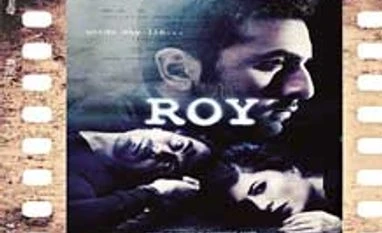 "ROY")
"I think crime pays. The hours are good, you meet a lot of interesting people, (and) you travel a lot": Woody Allen in Take The Money And Run
At the Crime Writers' Festival in New Delhi last month, almost 70 people, young and old, turned up for a workshop, called Killing for Attention, on writing crime scripts. It was conducted by film maker Dibakar Banerjee, whose crime thriller, Detective Byomkesh Bakshy!, will release in April. "Don't write. Scriptwriting is not writing, scriptwriting is structurally a series of actions, words, visuals and scenes that fit into an overall scheme of events," he advised the wannabe Arthur Conan Doyles and Agatha Christies. "You cannot describe it in dialogue, you have to show it." The audience read out scenarios they had thought up, and Banerjee gave his feedback to many.
For motivation, these men and women can look up to successful writers of crime thrillers like Ashwin Sanghi. His latest book, Private India: City on Fire, which he co-authored with James Patterson, has sold 250,000 copies globally. Even if he gets a royalty of Rs 10 for each copy sold, that's a cool Rs 25 lakh (pre-tax) in his account. They may also feel inspired by the success of Discovery's 24-hour high-definition crime channel, Investigation, which is dubbed in Hindi. Though it shows only foreign content, there are 8 million people, from 15 to 34 years of age, who are hooked to the channel. Or it could be the switch made by film maker Bhushan Kumar from candy floss musicals to crime. His T Series has invested Rs 90 crore in two crime thrillers: Baby and the upcoming Roy.
India's fascination with stories of crime has turned into serious business - it is, after all, the land of the Mahabharata, the original potboiler. Though it is entering the mainstream now, the genre has had strong regional traditions. Bangla literature, for instance, has seen a healthy crop of detectives in the last hundred years. In Hindi, crime magazines and books once sold in large numbers. Manohar Kahaniyan and Satyakatha, started by Mitra Prakashan of Allahabad and now owned by Delhi Press, used to sell in hundreds of thousands till the 1980s. They were racy and pulpy, an intoxicating mix of fact and drama, and hugely profitable. Today, Manohar Kahaniyan sells about 60,000, while Satyakatha is down to 40,000, and, according to Paresh Nath, publisher and editor-in-chief of Delhi Press, both are "marginally profitable".
Surendra Mohan Pathak, the Hindi version of James Hadley Chase, would write seven or eight books a year up to the 1990s and each would sell about 200,000 copies. Train journeys in the Hindi heartland were incomplete without a racy novel by the Meerut-based writer in your hand. Today, he writes not more than one or two books in a year and the circulation is down to 40,000 to 50,000. Pathak says his days are not yet over. "For publishers, I am guarantee of a good sale."
What is beyond dispute is that publishers are convinced crime is an idea whose time has come.
Swagat Sen Gupta, country head (operations and purchase) of Oxford Bookstores, says crime novels constitute 42 per cent of fiction sales in his stores and their sale is growing 8 per cent per annum. Thomas Abraham, managing director of Hachette India, says crime is fourth in the pecking order of genres after general non-fiction, business and general fiction.
To meet the growing demand for noir and "true crime" books, like the ones penned by S Hussain Zaidi on the Mumbai underworld, Penguin Random House launched a new imprint, Blue Salt, two years ago. Two of its bestsellers last year were non-fiction thrillers Bad Boys of Bokaro Jail by Chetan Mahajan (based on his experiences of being arrested and jailed for a crime he had not committed) and Quantum Siege by Mumbai policeman Brijesh Singh. Caroline Newbury, vice-president (marketing), Penguin Random House India, says, "This is a growing popular market for true crime where crime fiction meets fact." Across top publishers, at least two dozen crime thrillers are in various stages of completion right now.
With so much crime fiction in the works, there is serious danger of fatigue in the plots. As Pathak says, "There is one basic plot in all whodunits: a crime is committed, there are half a dozen suspects, and the hero, through elimination, identifies the culprit." Some publishers thus see a future for Indian writers in the territory where mythology melds with intrigue - something that Sanghi has done. The portly and bespectacled Yale-educated writer says that after he had finished his first novel, The Rozabal Line, a "theological thriller", no publisher entertained him: the idea of a thriller by an Indian didn't appeal to them. After 18 months of rejection, Sanghi published the book on his own. Since then, his five books have together sold over a million copies.
Television too has taken to crime thrillers like fish to water. Sanjay Gupta, COO of Star India, claims crime shows across Hindi general entertainment channels constitute 15 to 18 per cent of the viewership and about 10 per cent of the programming (in hours). Considering that Hindi general entert-ainment constitutes 50 per cent of all TV viewership, crime is clearly here to stay. In English general entertainment, it is still small - crime's share of viewership is just 5 per cent - and sitcoms, reality shows and comedy reign supreme. But with the advent of 24-hour crime channels like Fox Crime and AXN (a large chunk of its programming is crime) the numbers could change dramatically in the next few years.
Some think the transition is already under way. Saurabh Yagnik, executive vice-president and business head of Multi-Screen Media, who looks after AXN, says: "Forty per cent of our programming is about crime and so 40 per cent of our viewership comes from that genre." He finds it encouraging that Indian viewers have an appetite for the "grey zone" that is reflected in the fact that Dexter, the hit crime thriller based in the United States, did very well in the country despite all the blood and gore. Of course, these programmes are by and large focused on adults and are, therefore, telecast after 10 pm.
So how are broadcasters responding to the rising demand for crime shows? Sony TV has been ahead of the pack with three such shows on air at the moment. One of them, CID, despite being around for 15 long years, has a viewership of around four million every week, making it the most successful crime programme on TV. Sony's three shows boast of a combined viewership of over seven million a week and are among its top shows.
What is interesting is that viewers have increasingly started to prefer shows based on real crime: docudramas. Gupta of Star India says that these programmes appeal to audiences in towns and cities with a population of over a million. "They make us aware of the dangers we can face in life and also provide some answers," he says. Thus, Life OK, the mid-market Hindi general entertainment offering of Star, launched Saavdhan, which has become one among the three top shows on the channel with a viewership of around 2.6 million. With Saavdhan, crime's share in Star's portfolio, in terms of time, has reached almost 10 per cent. But that might not be enough: arch rival Colors is all set to launch Code Red, a crime-based docudrama.
MTV has leveraged the growing demand for crime-based shows to grow its connection with the youth. Its show, Webbed, tries to educate youngsters on cybercrime. According to Aditya Swami, channel head of MTV India, research showed that many viewers were first time Internet users in their pre-teens and teens, so they needed to be told about the dark spots on the cyber world. The format of the show is such that an expert is brought in to give legal advice or guidance if viewers face a cybercrime issue.
However, broadcasters point out that while crime provides variety to their menu, these shows will never be as big as the daily soap operas. Moreover, they cost 10 to 20 per cent more to produce, so coming up with newer shows is difficult. Also, Star's Gupta says, many of the programmes are targeted at men, and, therefore, advertisers who look for a family audience might not find them an attractive proposition.
Bollywood too has fallen for plots centred on crime. Last year, producers put in over Rs 600 crore to make such movies, which is over 40 per cent of the total money spent on movies with a budget of over Rs 5crore. And they did well on the box office, generating a return of around 30 per cent for their producers. This year, 13 or 14 crime films will be released, up from eight last year, says Kamal Gianchandani, president of PVR Pictures, who keeps a close tab on movie trends. The lineup includes films like Roy, Phantom, Jagga Jasoos, Badlapur, Rahasya and Detective Byomkesh Bakshy!. According to Suniel Wadhwa, who tracks Bollywood business, at least nine films for which data is available, producers are investing over Rs 436 crore.
The last film has been co-produced by Yashraj Films, which is synonymous with expansive romantic dramas, complete with songs shot in Switzerland. It is a shift that has got everybody talking: as Bollywood's biggest production house, every move it makes is followed by several others. "Yashraj Films started the trend of romance. In the last two years, we saw a lot of action films. But the action, complete with flying villains, was unreal," says Kumar of T Series. "Audiences are now bored with that and want change, so crime thrillers and real action is back".
Gianchandani adds that in the '80s and '90s, romance became the biggest genre as producers realised the potential of the NRI (non-resident Indian) market. NRIs in the United Kingdom and US were looking for family values and romance, so crime took a backseat. "That is changing now," he says. Indeed, producers today are not overly dependent on the international markets. With more multiplexes and more screens mushrooming all over India, domestic box office collections have grown exponentially. Also the television rights of films have risen sharply, which has reduced the criticality of the NRI market for a film's success. So much so, television rights are today the second-largest stream of revenue, ahead of overseas collections.
There are also new actors who are willing to experiment with unconventional themes and roles. Vikramjit Singh, director of Roy, which stars Ranbir Kapoor, says: "We are at the cusp of a generation shift in Bollywood. The new crop of actors like Ranbir, Sushant Singh Rajput and Varun Dhawan is willing to experiment and they are not so expensive in terms of fees."
Newer possibilities are opening up. The rush at the scriptwriting workshop in Delhi begins to make sense.
Urvi Malvania contributed to this report

Don't miss the most important news and views of the day. Get them on our Telegram channel
First Published: Feb 07 2015 | 12:20 AM IST