


Challenges in health care continue as before: Raja Venkataraman
Interview with Vice-Chairman and Managing Director, Philips India
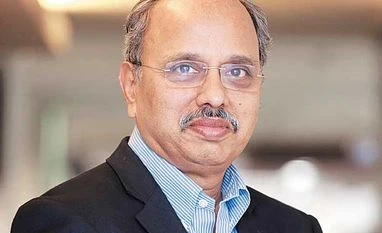 "Raja Venkataraman")
Raja Venkataraman
Dutch consumer electronics major Philips was present in India even before the country got its Independence, starting with selling lamps to selling electronics and health care products and subsequently using India as a hub for research and development (R&D). As the company has globally split into two entities, with focus on health care and lighting, Raja Venkataraman, vice-chairman and managing director of Philips India, tells Bibhu Ranjan Mishra why profitability continues to be a concern for global health care companies in India and why ‘Make in India’ does not make much sense for health care companies. Edited excerpts:
How has the global restructuring at Philips shaped up in India?
It was basically a separation. Globally, we decided to separate lighting business as a different entity, to bring a greater focus on health-tech. This also enables lighting (business) to pursue its own growth ambition, for which it needed to raise its own resources.

Now that Philips India is predominantly a health-tech company, how do you see the health care market evolving in India?
I’ve not seen any big changes here with regard to health care, over the past several years. The health care needs of the country — the affordability and accessibility — still remain a challenge. Even today, overall coverage of insurance is limited while the per-individual coverage is less. The government has not even increased the medical reimbursement limit, which continues to stand at Rs 15,000 per annum whereas the fact is, it is not even enough to buy medicines for one month. Third, there are a lot of poor patients whose ability to pay is very low and who invariably end up selling their properties or incurring debt, for meeting health care expenses. And, most hospitals insist on cash which aggravates this. Besides, when you look at health care availability, it is 70 per cent in urban areas and 30 per cent in rural area — I term this ‘inverse pyramid’, given that 66 per cent of the population still live in rural areas. The ratio of doctors and nurses, as compared to patients, is still awfully inadequate.
In such a scenario, where do you see growth coming from?
Growth is happening a lot in Tier-II and Tier-III towns. The good news is that health care is slowly getting into the smaller towns — whether it is the hospitals, diagnostic centres, or pathology labs. Of late, I also find that a lot of value segments are growing with people liking value products over high-end technology products. For instance, for MRI (magnetic resonance imaging), everybody in big cities wants Tesla MRI scan (a high-end imaging technology). So, the delivery providers are also realising that in that way, you are economical and viable. The other thing that is happening now is that a lot of digital technologies such as tele-health, tele-medicine and tele-radiology are being leveraged a lot more. Things like hub-and-spoke hospitals or satellite centres are seeing increasing acceptance. The government is also clearly improving the public-private partnership area in health care. So, it could be radiology outsourcing, pathology outsourcing or cardiac centre outsourcing. It could also be a full hospital outsourcing. For the delivery providers, it is a large installed base you get and since the volume is huge, they are able to cut costs.
With cost and affordability continuing to be a challenge, can we see models where health care providers can rent out machines to hospitals?
It’s happening. But, big hospitals won’t like to outsource because the money is there. The other big challenge that we still have in the sector is cost of funding. Since it still doesn’t have infrastructure status, the cost of funding is high. Besides, most of these guys have a high debt-equity ratio. It takes at least three years to pay back and become cash-positive, which hurts them. These are some of the nuances, which are not dramatically changing. If the government can ease the cost of funding, give long-term access to funding, and regularise some of the rates, then this trade will become much more regularised.
Of late, we are seeing Philips launching a lot more health care lifestyle products. How is the acceptance level?
There are reasons why we find a good fit between consumer health and professional health.Consumers want to maintain a healthy lifestyle and they know the causes that trigger diseases. For example, cold and damp weather and pollution worsens the condition of a chronic obstructive pulmonary disease (COPD patient). That’s why air purifiers are in demand. If you look at females, they also want to be well-groomed. Philips has a unique advantage in this space as someone who offers both health care and personal care.
How has been the growth of Philips in India?
We’ve been growing at double-digit rates. Suffice to say that growth has not been an issue and in each of the segments we operate in, we are growing ahead of the industry. But, the area where we should do better is profitability. It is a big issue for health-tech firms and most multinational players in India suffer because of that.
How beneficial has been the ‘Make in India’ initiative as driven by the Prime Minister of India, for healthtech companies like Philips?
‘Make in India’ in the health sector will not work unless and until they understand what we need. First of all, you have to
ensure that duty on imports (of components) is zero. The only thing they should charge is value added tax and only then will people invest. Because if my total cost is higher to manufacture in India, what is the difference between making in India and importing? Also, I don’t have the components for all the products. If you look at the components used in an MRI scanner — coils, generators, magnet — I don’t make any of these in India and thus I’ll have to import. So, how will I make in India?
For that matter, even the mobile phone companies that claim they are making in India are just assembling. You don’t even have a semiconductor chip here. Perhaps, the one thing you can do is design in India and develop the product. But even then, these multitudes of taxation will make it easier for me to design and bring it from China. The software industry enjoyed tax benefits, which benefited the growth of the sector. Another struggling industry is automotive for which the government is giving protection by increasing the import duty on second-hand cars and new cars. And, you think the same thing can apply in health care. How will it apply? That’s a consumer good and this is a health care need. So, you are comparing apples to oranges.
The biggest issue we have to understand is that, gone are the days when large-scale labour requirements to manufacture products will be the order of the day. Today, people are replacing it with robots and you are talking about employing labour paying them bonus. With these, who will do manufacturing in this country? By no way can it happen.
How does Philips India plan to improve on profitability?
Localisation is one area which we will have to continue to do. Because, if we can get products aligned to the local markets, that should help us take some costs out. It creates the value segment. It’s not that the more high-end products you sell, you make more money. When you are in value segment, the price may be low but the realisation is better and thus profitability is better. The third piece we’ll have to also look at is the personal health care segment as it focuses on consumers as opposed to businesses. A combination of these portfolios would help us.
Does local manufacturing lack economic sense?
Design & developing is where we have a competitive advantage in. I hope the government will enable us to make products in India because sooner or later, they would want to make health care available to the masses. So, they have to look at how to make it (local manufacturing) attractive. One of the most attractive things for that is goods and services tax. Once it is in place, a lot of anomalies in taxations will be a thing of the past. It will make a better level-playing field for us. So then, I can even start doing assembly and then explore how to make local substitutions. It’s like the Mauritius of the 1980s - from 100 per cent imports then, it has become 98 per cent local now.
Don't miss the most important news and views of the day. Get them on our Telegram channel
First Published: Jun 07 2016 | 12:42 AM IST