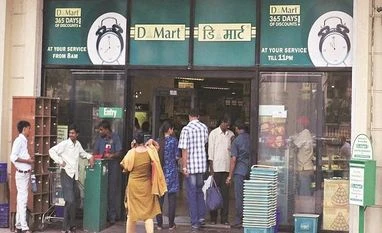
The near-term trigger for the company would be the expansion of its physical store network and improvement in margins. Given its cluster-based approach and the fact that it trumps peers across most operational metrics, its expansion shall give it scale while helping it achieve above-market margins.
With 96 per cent of the grocery market in the hands of the unorganised segment, the growth potential is immense, believe analysts.
Citing the example of Walmart, the US’ largest offline retailer, and its growth and market cap trajectory, IDBI Capital believes DMart has the potential to replicate Walmart’s success story by growing its net profit over 581 times and market cap by 100 times over the next 25 years.
Other brokerages, however, say that the company’s online growth will be a key factor for multiple expansions. Analysts at Edelweiss Research say if the company can expand its online presence aggressively, tapping metro cities, and the pricing scenario is stable, the stock shall rerate further irrespective of the initial losses the company will incur.
While there is little doubt about long-term growth potential, investors will have to await attractive entry points as near-term prospects are clouded by regional lockdowns, including in Maharashtra which accounts for 36 per cent of stores, and lack of aggressive intent in the e-commerce foray.
In addition to a sharp correction, factors that may tilt Morgan Stanley’s stance in favour of the company are the higher-than-expected ramp-up of its e-commerce business, DMart Ready, which now has a presence in five large cities and faster vaccination.


 "jiomart, Dmart")