


Green court's ban may impact used car demand
National Green Tribunal orders blanket ban on all diesel vehicles more than 10 years old plying in NCR
)
Prices of diesel cars, especially those more than eight years old, will take a hit if Tuesday's order from the National Green Tribunal (NGT) is implemented.
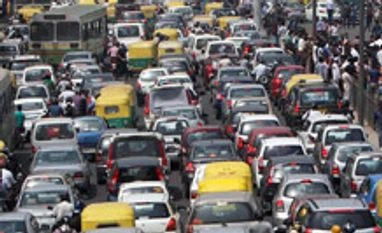
Upset about the deteriorating air quality in Delhi, the NGT ordered a blanket ban on all diesel vehicles more than 10 years old plying in (or passing through) the national capital. This comes on the back of a World Health Organization report that declared Delhi the world's most-polluted capital.
Manufacturers believe the impact will be clear only upon its effective implementation. It will certainly not have any significant influence on new car demand. The average vehicle replacement cycle in India is not more than six years and in Grade-I cities such as Delhi, even less.

| HIGHLIGHTS |
|
Former Maruti Suzuki managing director Jagdish Khattar said, "Even the earlier ban on 15-year vehicles has not been implemented. It is not as easy as it is made out to be. How will RTOs (regional transport offices) ascertain the age of a vehicle? Will they have checkpoints all over Delhi and the NCR (National Capital Region)? Most important, RTOs will not have the records of the age of the vehicles."
It is estimated there are between 70,000 and 100,000 diesel cars older than 10 years on Delhi roads. In addition, 30,000 to 40,000 commercial vehicles (trucks and buses) run on Delhi streets. All passenger three-wheelers are gas-powered.
Not only will it become difficult to find buyers for diesel vehicles older than eight years within Delhi; it will be difficult to sell the vehicles outside city limits, too, as this involves a lengthy and cumbersome process of re-registration of the vehicle in another state.
"The value of cars older than eight years was anyway low. Used car dealers do not stock such old inventory because demand for these cannot match that of cars which are two to five years old. Interstate sales have become very difficult. You have to re-register the vehicle in the state where it will be owned; plus, separate tests are carried out on such vehicles," added Khattar, also chairman and managing director of Carnation Auto, a multi-brand used car chain.
The automobile industry, in association with the Society of Indian Automobile Manufacturers, has been pressing the government for a scrappage incentive scheme to induce owners of older vehicles to give up their cars. Passenger and commercial vehicle manufacturers welcomed the NGT order, stating newer vehicles were both less polluting but more efficient.
"The need for replacement of older vehicles could facilitate increased market acceptance for efficient and greener vehicles with better technology. However the immediate effect of the regulation should not only be looked at from an OEM’s sales perspective, as this is beneficial for the entire ecosystem – from the environment, to the consumer, to the industry. More so, as the regulation has been announced only for the Delhi NCR region, it seems more likely to be implemented in phases, also given the expanse of the Indian geography and its population base. Hence, the sales of both passenger and commercial vehicles will be impacted accordingly. Moreover, with reference to your question on buses, only CNG powered buses are permitted to operate in Delhi for many years now,” a spokesperson from Tata Motors said.
Experts argue that modern diesel engines, especially in cars, are not the same as their ancestors. "It is surprising how diesel technology is viewed even today. Some modern-day diesel engines are less polluting than petrol but continue to face the ire of authorities because of the preconceived notion they carry," said one.
Analysts expect the ban to create a slight imbalance in petrol-diesel car sales. Puneet Gupta, associate director at automotive consultancy firm IHS India, said: "The Delhi NCR area commands a share of 13 per cent of total car sales in India. The ban will make buyers swing in favour of petrol cars rather than diesel. This is also a good time for OEMs to lure buyers with some exchange schemes. But the replacement cycle is higher in Delhi NCR than the other non-metro areas of the country."
Don't miss the most important news and views of the day. Get them on our Telegram channel
First Published: Apr 09 2015 | 12:19 AM IST