


Home / Companies / Interviews / We are determined to make fearless living a habit: Cipla's Umang Vohra
We are determined to make fearless living a habit: Cipla's Umang Vohra
'We are looking to provide end-to-end solutions in the area of disease management for Patients'
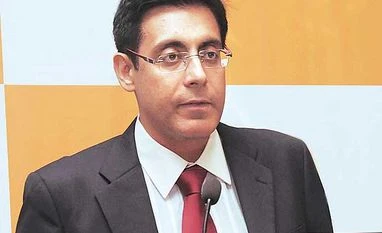 "Umang Vohra Global CEO, Cipla")
premium
Umang Vohra Global CEO, Cipla
Last Updated : Sep 30 2018 | 9:48 PM IST
Cipla is looking to make innovation an integral part of its business model. Can you explain what innovation entails for a pharma company?
Our innovation philosophy is all about going beyond the pill. Product innovation needs to happen and it has to be driven by the view to offer patients the best available medicine (course of treatment) coupled with a better lifestyle management regime. Moving beyond the pill, we are looking at the services that we can offer to patients and to doctors. We are actively looking to provide end-to-end solutions in the area of disease management for patients.
Can you elaborate on the issue of disease management as opposed to treatment?
Last year, we launched 80 products in the market. The reason we are able to launch so many products has to do with our deep understanding of what patients and doctors want. For example, we launched a couple of products on the diagnostics side. A few of these include machines for pulmonary tests and tabletop spirometre which is connected digitally. We have also introduced a breath actuated inhaler — a first of its kind in the industry. Innovation goals and challenges are determined by what we hear from the market. Our biggest challenge is to change the patients’ perception and change their ability to adhere and comply with their treatment. We are determined to make fearless living a habit.
The company is pushing ahead in the respiratory disease detection and cure area. How big is that market?
We live in a country where our environment does not help much; the growing pollution and dust is contributing to a rise in respiratory ailments. Look at the numbers. At present, about 90 million people are afflicted by respiratory diseases. Of this 90 million, only about 30 million people get diagnosed with respiratory ailments. To put things in perspective — 90 million is also the number of people who have diabetes. So that is the magnitude of the problem we are talking about. Unlike diabetes which is fairly well diagnosed, asthma is diagnosed only in 30 per cent of the population. What this means is that 60 per cent of people in India ignore their symptoms and their health worsens with the progression of the disease.
There is a lot of stigma associated with asthma. Is that a barrier to patients going for the right treatment. How are you tackling this challenge?
Looking at the respiratory space, we are focused on creating awareness, change attitudes into habits. And then we are moving down the entire funnel to look at diagnosis, compliance and see how people with asthma can lead more fulfiling and healthier lives.
Our experience shows the word ‘dama’ has a negative connotation to it. Our earlier pilot projects in two states — Andhra Pradesh and West Bengal — have been critical in reaching out to people and educating them about the right course of treatment for asthma, which is inhalation. When we looked at our data, we realised that affordability of treatment is not a concern, the actual issue is the stigma associated with the disease (asthma) itself and inhalation. People think inhalation therapy is expensive. Our campaign ‘Berok Zindagi’ dispels this myth. In reality, an inhalation therapy today is as expensive as a course that a diabetic would take for over a month. It’s not an overly expensive therapy. Most inhalation therapy cost less than Rs 500 per month.
The company has roped in actor Priyanka Chopra for its ‘BerokZindagi’ campaign. What are the key objectives of the campaign?
Cipla has 66.3 per cent market share in inhalation therapy. But we need to do more to continue leading the category and create awareness around inhalation therapy as being the best course of treatment for dealing with asthma. India has an inverted problem with inhalation. In the rest of the world and most developed markets inhalation therapy is the most preferred treatment for asthma. About 70 to 75 per cent of asthma patients go in for inhalation. In India, it is the other way round where inhalation as a mode of treatment makes up 20-25 per cent share. Most people ask their doctors for steroids which take away the symptoms in the short run. They do not get lasting cure.
We have made Priyanka Chopra — an asthmatic herself and an achiever — the face of our campaign to deliver the message that asthma is not bad, you can have a very normal life with asthma. In fact, there are people like Chopra who are leading super normal life and have achieved a lot even with asthma.