


Call for tolerance gets louder, diverse voices join appeal
Shah Rukh Khan latest in line to voice concern after Raghuram Rajan, Amjad Ali Khan, Narayana Murthy, Zubin Mehta and others
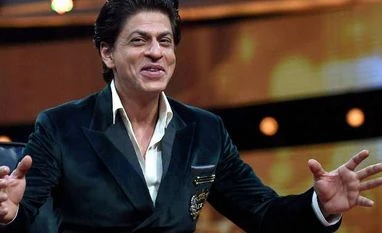 "Shahrukh Khan")
Bollywood Superstar, Shahrukh Khan during a press conference launching TV show, 'Poochega Sabse Shaana Kaun' in Mumbai.
Shah Rukh Khan’s willingness to return his awards if asked to has made it clear that the voices speaking against the prevailing atmosphere of ‘intolerance’ in the country are no longer confined to a group of writers, but has grown to a wider circle of scientists, global agencies, industry leaders, film stars and policymakers.
Policymakers
Last week, speaking at the IIT-Delhi convocation ceremony, Reserve Bank of India (RBI) Governor Raghuram Rajan said the idea of anyone imposing a particular view or ideology because of their power shouldn’t be the way ahead for India. He emphasised that a quick resort to bans of ideas or behaviour that hurt a particular intellectual position or group will chill all debate as everyone will be anguished by ideas they dislike. “India has always protected debate and the right to have different views...excessive political correctness stifles progress as much as excessive license and disrespect,” he said. “Tolerance means not being so insecure about one’s ideas that one cannot subject them to challenge – it implies a degree of detachment that is necessary for mature debate."
Industrialists
Industry captains Kiran Mazumdar Shaw, chairperson of Indian pharma major Biocon, and Infosys founder N R Narayana Murthy too have expressed their concerns over fringe elements not being reined in by ruling political forces. “I am very disturbed by fringe elements trying to disturb communal harmony. Communal harmony has to be preserved for economic progress to happen. When fringe elements disturb the peace, it leads to unexpected consequences. If we don’t deal with it, it has the potential of going out of control,’’ Shaw told The Indian Express.
“The reality today is that there is considerable fear in the minds of minorities in India,” Narayana Murthy told NDTV a day earlier. “There is considerable fear in the minds of people of one region living in another region, for example like we had in 1967, when South Indians were treated very badly by Shiv Sena in Mumbai — today there is a lot of that worry,” he said.
“The first priority of this government, or for that matter any government, both at the central level and state level, is to bring back the confidence, the energy, the enthusiasm, the trust in the minds of every Indian that this is our country, I have all the rights here, I am very safe here and therefore I will work towards the betterment of India,” he added.
Nobel Laureates
Another strong voice in the collective appeal for tolerance and free-thinking is that of Nobel laureate Kailash Satyarthi. "There is significant intolerance in our society. Not only intolerance but fear and apathy has also risen in the society at large which is dividing it,” he said.
“This situation is prevailing because there is dialogue deficit between the government and some sections of the society, which should be resolved as soon as possible," Satyarthi said on the sidelines of an event held at Tata Institute of Social Sciences (TISS) in Mumbai, the Times of India reported. "I wish the government soon breaks the monologue and starts dialogue with an open mind," Satyarthi was quoted as saying.
Musicians
Even the Indian music fraternity has felt the need to raise a cautionary finger. Two of India's most celebrated musicians globally – Western classical music conductor Zubin Mehta and sarod player Ustad Amjad Ali Khan – spoke about the rising intolerance in India.
"What is happening is very painful. I was watching Narayana Murthy's interview yesterday and he also felt very concerned. Perhaps the situation does not seem to be normal ... Modiji wants to do a lot of things, but there are some persons around him, who speak whatever comes on their tongue and do whatever they want," Khan said on Sunday. "Modiji will have to rein in such persons otherwise the peace may be under threat. There are lots of hope from Modiji."
"Our writers, our filmmakers do have a chance to speak their minds. Otherwise we will become a dictatorship, a cultural dictatorship and that is inadmissible," the 79-year-old India-born Zubin Mehta told NDTV.
Policymakers
Last week, speaking at the IIT-Delhi convocation ceremony, Reserve Bank of India (RBI) Governor Raghuram Rajan said the idea of anyone imposing a particular view or ideology because of their power shouldn’t be the way ahead for India. He emphasised that a quick resort to bans of ideas or behaviour that hurt a particular intellectual position or group will chill all debate as everyone will be anguished by ideas they dislike. “India has always protected debate and the right to have different views...excessive political correctness stifles progress as much as excessive license and disrespect,” he said. “Tolerance means not being so insecure about one’s ideas that one cannot subject them to challenge – it implies a degree of detachment that is necessary for mature debate."
Industrialists
Industry captains Kiran Mazumdar Shaw, chairperson of Indian pharma major Biocon, and Infosys founder N R Narayana Murthy too have expressed their concerns over fringe elements not being reined in by ruling political forces. “I am very disturbed by fringe elements trying to disturb communal harmony. Communal harmony has to be preserved for economic progress to happen. When fringe elements disturb the peace, it leads to unexpected consequences. If we don’t deal with it, it has the potential of going out of control,’’ Shaw told The Indian Express.
“The reality today is that there is considerable fear in the minds of minorities in India,” Narayana Murthy told NDTV a day earlier. “There is considerable fear in the minds of people of one region living in another region, for example like we had in 1967, when South Indians were treated very badly by Shiv Sena in Mumbai — today there is a lot of that worry,” he said.
“The first priority of this government, or for that matter any government, both at the central level and state level, is to bring back the confidence, the energy, the enthusiasm, the trust in the minds of every Indian that this is our country, I have all the rights here, I am very safe here and therefore I will work towards the betterment of India,” he added.
Nobel Laureates
Another strong voice in the collective appeal for tolerance and free-thinking is that of Nobel laureate Kailash Satyarthi. "There is significant intolerance in our society. Not only intolerance but fear and apathy has also risen in the society at large which is dividing it,” he said.
“This situation is prevailing because there is dialogue deficit between the government and some sections of the society, which should be resolved as soon as possible," Satyarthi said on the sidelines of an event held at Tata Institute of Social Sciences (TISS) in Mumbai, the Times of India reported. "I wish the government soon breaks the monologue and starts dialogue with an open mind," Satyarthi was quoted as saying.
Musicians
Even the Indian music fraternity has felt the need to raise a cautionary finger. Two of India's most celebrated musicians globally – Western classical music conductor Zubin Mehta and sarod player Ustad Amjad Ali Khan – spoke about the rising intolerance in India.
"What is happening is very painful. I was watching Narayana Murthy's interview yesterday and he also felt very concerned. Perhaps the situation does not seem to be normal ... Modiji wants to do a lot of things, but there are some persons around him, who speak whatever comes on their tongue and do whatever they want," Khan said on Sunday. "Modiji will have to rein in such persons otherwise the peace may be under threat. There are lots of hope from Modiji."
"Our writers, our filmmakers do have a chance to speak their minds. Otherwise we will become a dictatorship, a cultural dictatorship and that is inadmissible," the 79-year-old India-born Zubin Mehta told NDTV.

Don't miss the most important news and views of the day. Get them on our Telegram channel
First Published: Nov 02 2015 | 2:22 PM IST