


FDI shower to douse Rajan fire
FDI push for 9 sectors, 100% inflows in aviation & DTH; Easier sourcing norms for single-brand retail; Norms relaxed in defence, pharma via automatic route
 "FDI shower to douse Rajan fire")
The National Democratic Alliance (NDA) government on Monday morning swung into action to liberalise foreign investment rules in nine sectors - aviation, pharmaceutical, defence, food trading, retail and television broadcasting, animal husbandry, broadcasting carriage services and private security agencies, branding it as a gateway for job creation and Make in India.
The announcement came two days after Reserve Bank of India (RBI) Governor Raghuram Rajan's announced his decision not to seek a second term.
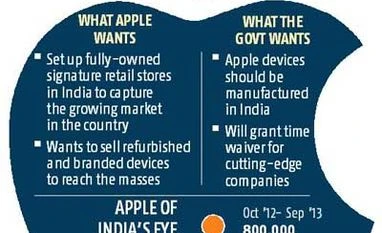
Prime Minister Narendra Modi met select Union ministers and secretaries soon after 10 am to discuss relaxation of foreign direct investment (FDI) caps. The way for Cupertino-based Apple Inc to open stores in India has also been cleared, to some extent.
Sources in the government indicated that liberalisation of FDI norms was on the cards but the high-level meeting was advanced by a few days to allay investors' sentiments following the news on Rajan's exit.
Soon after the meeting that lasted more than two hours, the Prime Minister's Office (PMO) posted a tweet from its official account saying India is now "the most open economy in the world for FDI". Ministers and secretaries got busy with back-to-back press conferences as well.
Among others, Apple would benefit from the easier sourcing norms. The existing norms had recently forced the iPhone-maker to drop its retail plans in India. As per the revised conditions, Apple could get a waiver from sourcing for eight years. This comes a month after Apple CEO Tim Cook met Modi during his India trip.
According to a government statement, local sourcing norms were relaxed for up to three years for all single-brand entities. There will be another five years' relaxation for products with 'state-of-art' and 'cutting-edge' technology.
In food processing, 100 per cent FDI has been permitted under government approval route for trading, including through e-commerce, of products manufactured or produced in India. This might help the likes of Walmart and Tesco to enter retailing through the food route as India doesn't allow FDI in multi-brand retail.
Civil aviation will see 100 per cent FDI in airlines, except by foreign carriers. Norms for overseas investment have also been relaxed in brownfield airports.
Under the present policy, foreign investment up to 49 per cent is allowed under automatic route in domestic airlines. It has now been decided to raise this limit to 100 per cent, with FDI up to 49 per cent under automatic route and beyond that through government approval.
In defence, the policy has been tweaked to allow 100 per cent FDI by doing away with the condition of access to 'state-of-the-art' technology. It has now been modified to 'modern' technology, a move that will widen the scope of investment by foreign players. Critics have, however, claimed this will result in a weakening of the security infrastructure as the description of 'modern' technology is very broad-based. The new defence FDI norms have also been made applicable to manufacturing of small arms and ammunitions covered under Arms Act, 1959. Under the current policy, FDI up to 49 per cent was allowed under automatic route and beyond that under the approval route.
The government also permitted 100 per cent FDI in teleports, direct-to-home and cable networks as well as mobile TV - without the need for government approval. Economic Affairs Secretary Shaktikanta Das said, "With this (FDI) liberalisation, we expect manufacturing activity to come in… more activity in defence products. The driving force behind the whole thing is that all this investment should facilitate creation of jobs".
"The decision on FDI liberalisation is a follow-up to the decisions which were taken last November when a whole lot of reforms were announced. In the Budget (the relaxation) was announced in stock exchanges and NBFCs," he added.
On Apple, Das said clarity would emerge in a few days. Apple is keen to tap the growing user base in India. Meanwhile, the sourcing norms have gone through many twists and turns. While all single-brand retail chains are mandated to source 30 per cent of their country sales from India, the condition was relaxed by three years after Sweden-based Ikea and then fashion chain H&M found the rules tough. In November 2015, Department of Industrial Policy & Promotion issued guidelines promising case-by-case sourcing exemption to 'cutting-edge' companies, something that never came into effect. Now, the NDA government has decided not to waive sourcing norms altogether but to relax the period.
If Apple does set up fully-owned retail stores in India, they will be large-format premium outlets. Such stores will come with a premium feel to attract buyers in big cities, said Vishal Tripathi, research director, Gartner. Initially, the company could set up 10 to 15 stores. While there may not be any change in the price of products, the user experience will improve with better after sales, he said.
"Liberalisation of the FDI regulations reflects the government's commitment to reforms and openness, and reassures investors that Ease of Doing Business remains high priority," according to Chandrajit Banerjee, director general, Confederation of Indian Industry.
'RADICALLY LIBERALISED'
-
FOOD TRADING: 100% FDI under government approval route for trading, including through e-commerce, for food products manufactured or produced in India
-
DEFENCE: Foreign investment beyond 49% permitted through government approval route, in cases resulting in access to modern technology, in lieu of state-of-the-art technology. FDI limit for defence sector applicable to manufacturing of small arms
-
MEDIA: Cable, DTH, teleports, Headend in the Sky can all have 100% FDI
-
PHARMA: 74% FDI under automatic route in brownfield pharmaceuticals
-
AVIATION: 100% FDI under automatic route in brownfield airport projects. Also, FDI in scheduled air transport service/domestic scheduled passenger airline and regional air transport service raised to 100%. But, restriction on investment by foreign airlines to continue
-
PRIVATE SECURITY AGENCY: FDI up to 49% under automatic route and up to 74% on government approval route
- SINGLE-BRAND RETAIL: Local sourcing norms relaxed up to three years for all single-brand entities. Another five years' relaxation for trading of products having 'state-of-the-art' and 'cutting-edge' technology
CLOCKING IN THE HOURS ON FDI BONANZA
-
10.15 AM: Prime Minister Modi HOLDS a high-level meeting on liberalising FDI
-
12 NOON: Top govt officials explain the follow-up action on the new RBI chief
-
2 PM: PMO tweets fdi move will make India the "most open economy in the world"
-
2.15 PM: DIPP Secretary abhishek ramesh briefs media on the new FDI regime
- 3.30 PM: Commerce Minister & Economic Affairs secretary address media on implications
(Additional reporting by Arup Roychoudhury in New Delhi)

Don't miss the most important news and views of the day. Get them on our Telegram channel
First Published: Jun 21 2016 | 12:59 AM IST