


Labour committee meet called to end plantation workers strike in Kerala
Management says not in a position to hike wages even as one group goes on hunger strike
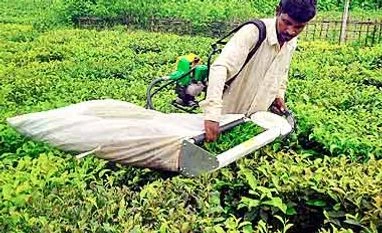 "Labour committee meet called to end plantation workers strike in Kerala")
A Plantation Labour Committee (PLC) meeting to resolve an ongoing strike by about 325,000 workers across plantations in Kerala remained inconclusive. According to a source privy to the talks, another round of discussions is scheduled for Wednesday.
The protesting workers have demanded their basic wages be increased from Rs 232 a day to Rs 500 a day. Plantation owners, however, say the workers get more than what they claim and as they are under pressure due to lower productivity, a fall in prices and competition from other countries, the wages cannot be increased.
Ahead of the labour committee meeting on Monday, a Pembilai Otrumai delegation met Kerala Chief Minister Oommen Chandy. The delegation, comprising workers from Munnar, said a decision by the chief minister on the issue would be acceptable.
The all women-Pengal Otrumai from Munnar, a rich plantation belt, was the first to protest, without the support of trade unions. Subsequently, the protests spread among plantation workers across the state. According to local media reports, 24 women from the Pengal Otrumai have begun a hunger strike. While the group has refused to join hands with unions, established unions are also engaged in a hunger strike.
All unions were demanding minimum wages of Rs 15,000 a month, said C A Kurian, a senior member of the All India Trade Union Congress. He added it was up to the government to come up with a decision on the matter.
After a meeting of the Association of Planters of Kerala (APK) on Sunday, APK Chairman C Vinayaraghavan told the media, “Conceding to demands without any rationale will be a death knell for the industry.” He added the actual wages received by worker was 45 per cent more than what was being projected.
Managements, he said, were willing to consider a reasonable increase in wages, provided there was a corresponding rise in productivity and a support mechanism from the government.
The plantation owners have demanded the government do away with the agriculture income and plantation tax, cut land tax to 2010 levels, implementation of the suggestions by as committee set up on plantations and extension of the rubber price support mechanism.
For the state administration, finding a resolution to the issue is crucial, as elections to local self government bodies are scheduled for November 2 and 5. The plantation sector is one of the largest employers in the state.
Local media reports have stated trade unions might have to climb down on their demands, adding in the past, with the PLC deciding wages, the unions could manage a rise of only Rs 82 in basic wages.
If the basic wages were to be raised to Rs 300-350 a day, it would be one of the steepest wage increases for workers in recent times.
The protesting workers have demanded their basic wages be increased from Rs 232 a day to Rs 500 a day. Plantation owners, however, say the workers get more than what they claim and as they are under pressure due to lower productivity, a fall in prices and competition from other countries, the wages cannot be increased.
Ahead of the labour committee meeting on Monday, a Pembilai Otrumai delegation met Kerala Chief Minister Oommen Chandy. The delegation, comprising workers from Munnar, said a decision by the chief minister on the issue would be acceptable.
The all women-Pengal Otrumai from Munnar, a rich plantation belt, was the first to protest, without the support of trade unions. Subsequently, the protests spread among plantation workers across the state. According to local media reports, 24 women from the Pengal Otrumai have begun a hunger strike. While the group has refused to join hands with unions, established unions are also engaged in a hunger strike.
All unions were demanding minimum wages of Rs 15,000 a month, said C A Kurian, a senior member of the All India Trade Union Congress. He added it was up to the government to come up with a decision on the matter.
After a meeting of the Association of Planters of Kerala (APK) on Sunday, APK Chairman C Vinayaraghavan told the media, “Conceding to demands without any rationale will be a death knell for the industry.” He added the actual wages received by worker was 45 per cent more than what was being projected.
Managements, he said, were willing to consider a reasonable increase in wages, provided there was a corresponding rise in productivity and a support mechanism from the government.
The plantation owners have demanded the government do away with the agriculture income and plantation tax, cut land tax to 2010 levels, implementation of the suggestions by as committee set up on plantations and extension of the rubber price support mechanism.
For the state administration, finding a resolution to the issue is crucial, as elections to local self government bodies are scheduled for November 2 and 5. The plantation sector is one of the largest employers in the state.
Local media reports have stated trade unions might have to climb down on their demands, adding in the past, with the PLC deciding wages, the unions could manage a rise of only Rs 82 in basic wages.
If the basic wages were to be raised to Rs 300-350 a day, it would be one of the steepest wage increases for workers in recent times.
Meanwhile, a six-member delegation of Pengal Otrumai (Women Unity) is to hold discussion with Labour Minister Shibu Baby John. The group from Munnar, one of the rich plantations belts in the state, was the first one to go on strike.
Local media reported that 24 women belonging to the group have gone on a hunger strike in place of the five who began the strike on Saturday.

Don't miss the most important news and views of the day. Get them on our Telegram channel
First Published: Oct 06 2015 | 12:25 AM IST