


Inflation cools in September, but inflationary pressure is building up
Crop damage, import constraints may cause vegetable inflation to spike; global commodity scenario is taking a toll on raw materials
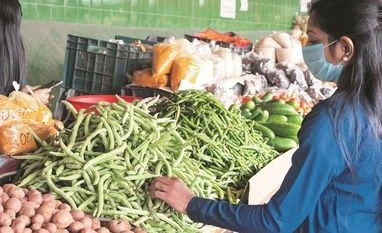 "Vegetable prices")
premium
The rates have risen sharply in October due to damage to standing kharif crops
4 min read Last Updated : Nov 08 2021 | 6:04 AM IST
Even though the retail inflation rate fell to a five-month low of 4.35 per cent in September, there was concern on the part of reputed agencies, from the International Monetary Fund (IMF) to Nomura, and companies over inflationary pressure.
The wholesale price inflation (WPI) rate came down in September to the level seen in April, but remained elevated at 10.7 per cent. The high rate was partly due to a low base effect of 1.3 per cent in September 2020.
The retail food inflation rate fell to just 0.68 per cent in September from 3.28 per cent the previous month. Within that, vegetable prices continued to drop, declining at 22.47 per cent against 11.68 per cent in August.
However, prices of staples such as tomatoes and onions had spurted in recent weeks before the latter cooled a bit because of aggressive measures by the government. The data showed tomato prices as on November 6 were, however, almost 24 per cent costlier than in the previous year.
Tomatoes: Tomato prices have risen sharply after standing crops were damaged in late rain in major growing states. According to an official assessment in late October, tomatoes were sown in about 247,000 hectares this kharif season. In that, the crop on about 4,000 hectares (less than 2 per cent) was damaged due to rain. Tomato prices are expected to be in the range Rs 30-80 per kg in retail markets during the next few weeks. But they may fall as new crops arrive.
Onion: The rates have risen sharply in October due to damage to standing kharif crops.
However, since then prices have cooled slightly as the Centre released its inventories of stored onions and as on November 6 prices were almost 38 per cent lower than in the same period last year in retail markets.
According to an official estimate done in October, kharif onion crops have been sown in around 385,000 hectares this year. Of that around 59,000 hectares (around 15 per cent) has been impacted by the recent rain.
An assessment by the Ministry of Food Processing a few weeks back shows onion prices are expected to be high, at Rs 30-60 per kg in retail markets.
Edible oils: The prices of all major edible oils have been on the boil for the past few months, particularly after February 2021, mainly due to a sharp rise in global rates (where part of the oilseed crop has been diverted towards bio-fuel) and also on account of low domestic stocks.
The Centre lowered import duties as many as five times since February to cool prices. In its latest move on October 13, it virtually abolished basic customs duty on crude varieties of palm, soybean, and sunflower oil, and also slashed the agri cess on them till March 2022.
The Centre lowered import duties as many as five times since February to cool prices. In its latest move on October 13, it virtually abolished basic customs duty on crude varieties of palm, soybean, and sunflower oil, and also slashed the agri cess on them till March 2022.
Even then, the data sourced from the Department of Consumer Affairs showed the retail price of groundnut oil as on November 6 was still higher by 18.44 per cent year-on-year, mustard oil 43 per cent, Vanaspati 45 per cent, soybean oil 45 per cent, sunflower oil 37 per cent, and RBD palmolein oil 37 per cent.
Pulses: Around the time when edible oil prices started moving up, pulses rates also hardened. To cool prices, the Centre has adopted a multi-pronged approach of first allowing easier imports and then imposing strict stock-holding limits.
The measures seem to have had some impact. The official data showed the prices of tur dal and moong dal were 1.32 per cent and 2.37 per cent lower as on November 6 year-on-year, but urad was up 0.33 per cent and masur 21 per cent. Gram dal was 4.21 per cent costlier year-on-year. The retail price of masur rose sharply due to lower imports, an official explanation showed.
Fuel prices: Fuel prices have been on the upswing for the past few months. However, the Centre’s recent move to cut excise duty on petrol by Rs 5 and on diesel by Rs 10 a litre would ease the retail price inflation by 0.30 percentage points, assuming consumption and global crude oil prices remain the same. However, global crude oil prices could be a spoilsport.
The Indian basket of crude oil rose to $82.11 a barrel in October against $73.3 a barrel in September. It stood at $63.40 in the first month of FY22. Rahul Bajoria, chief India economist at Barclays, said: “The mean reversion in prices of perishable food items is not uncommon, and given a spate of unseasonal weather-related shocks, prices have risen for key vegetables. We feel this will marginally add to inflation, but the real headwind for India remains in the form of imported price shocks, especially energy products.”
Topics : Inflation Indian Economy food inflation Fuel prices