Saturday, January 03, 2026 | 05:56 AM ISTहिंदी में पढें
Business Standard
Notification Icon
userprofile IconSearch

Note ban effect eases as industrial output rises 2.7% in Jan

IIP had contracted 0.1% in December; April-Jan IIP at 0.6% vs 2.7% y-o-y
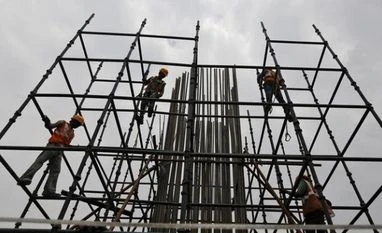
Workers erect scaffolding to build a pillar at the site of the metro railway flyover under construction in Ahmedabad (Pic: Reuters)
premium

Workers erect scaffolding to build a pillar at the site of the metro railway flyover under construction in Ahmedabad (Pic: Reuters)

Subhayan Chakraborty New Delhi
Two months after demonetisation was rolled out by the government, industrial output in January rose 2.7 per cent, pushed up by a growth in capital goods production as well as a rise in the manufacturing segment, government data showed on Friday.

Industrial output had missed growth by a sliver in the previous month of December, falling 0.1 per cent as compared to a year earlier, driven down by a contraction in consumer and capital goods production attributed to the demonetization drive.

For January, growth was expected in the IIP as it reflects the corporate sector which was not as badly hit as the informal parts of the industry as well as households, Devendra Pant, Chief Economist at India Ratings said.

The major push to the index was provided by the capital goods which rose by 10.7 per cent. Capital goods had declined by 3 per cent in the previous month of December, after a spurt of 15 per cent in November. The sector is considered highly volatile in IIP.

"The sharp turnaround in capital goods was led by its oft-volatile component, rubber insulated cables, which recorded a sharp spike in growth to 282.8per cent in January 2017 from an already substantial 55.5per cent in December 2016," Aditi Nayar, Principal Economist at ICRA said.

However, Nayar cautioned against pinning hopes on the sustainability of capital goods maintaining double digit growth in the future.

The consumer durables segment managed to make a comeback to the growth charts, rising 2.9 per cent. It had gone down by more than 10 per cent in December.

Also, the manufacturing sector - constituting three-fourth of the index - rose by 2.3 per cent as compared to the 2 per cent fall in December. Electricity generation was up by 3.9 per cent as compared to the 6.3 per cent rise in December. On the other hand, mining activity rose by 5.3 as against 5.2 per cent in December.

The cumulative growth of the country's factory output for the April-November period was 0.6 per cent, markedly lower as compared to the cumulative growth of 2.7 per cent during the corresponding period of the last fiscal.

Back in November, industrial production belied all expectations of huge adverse impact of demonetization with the index rising to a 13-month high of 5.7per cent in November against a contraction of 1.8per cent in the previous month.

Economists had blamed the high figures on the base year not being updated, arguing the data represented a "false positive". There has been widespread demand for introduction of the new series of data for calculating industrial production but the date of rollout has continuously moved back.

"It has become hard to predict the Index of Industrial Production (IIP) since the old series of data absolutely doesn't capture the full scale of the industrial sector in the country," Economist D K Joshi said.

On a high note

  • Electricity generation grows 3.9% against a rise of 6.3% in Dec
  • Manufacturing production up by 2.3% in Jan, against fall of 2% in Dec
  • Mining output rose by 5.3% as compared to 5.2% rise in Dec