“The Budget estimated freight loading for the next fiscal at 1,475 mt, which was a conservative estimate. Our freight loading for this year was 1,418 mt, where we also achieved the highest-ever annual growth at 15 per cent. Naturally, we have to go over and above the Budget if we want to fulfil our objectives under the National Rail Plan (NRP),” a senior ministry official told Business Standard.
The ministry’s internal estimates point to a sharp uptick in freight demand, majorly coming from its core basket of commodities. The national transporter recently floated a tender for the acquisition of 90,000 wagons over the next three financial years, along with a push for track development with respect to dedicated freight corridors (DFCs).
The Centre has completed 1,110 km of construction on two DFCs while three other corridors were also recently sanctioned, Railways minister Ashwini Vaishnaw told Parliament.
The freight target of 1,700 mt for this fiscal is about 20 per cent higher than the goods loaded in FY22. Railways has so far not achieved this level of increment in freight loading in a single year.
Under the National Rail Plan (NRP), the Centre wants to increase its modal freight share to 45 per cent by 2030. According to government estimates, consolidated demand for freight will be over 6,300 mt by 2026 and 8,220 mt by 2031.
According to these estimates, Railways would need to account for over 3,600 mt in 2031 to meet its modal freight share targets. In the medium term, it is targeting over 2,000 mt by 2024, the official said. Business Standard had previously reported that the national transporter launched an ambitious Rs 1-trillion-plan for various infrastructure projects, through which it wants to add Rs 79,000 crore to its freight revenue by 2024.
Sector experts have previously pointed out that the ambitious targets can only be achieved through a steady gain in modal freight share, as economic activity would have to scale up rapidly to be the sole factor influencing growth targets for the railways. “This year’s growth could have been attributed to pent-up demand in the economy, but it’s unlikely to be the case every year,” an analyst said.


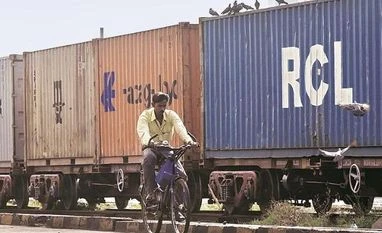 "freight operations, Indian Railways, IR")