


RBI's mid-quarter review: Measures and impact
What do the measures mean for the economy
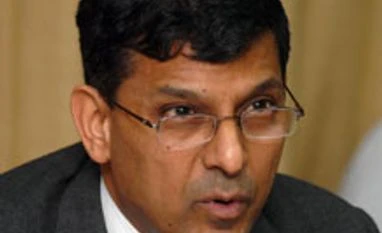)
Raghuram Rajan
Is this 'Raghuram Rajan 1.0' or 'Subbarao 2.0', quizzed a debt fund manager after RBI released its mid-quarter monetary policy review. He argued that the new Governor has continued with Subbarao's focus on controlling inflation and the rupee. Growth has once again taken the backseat, at least temporarily.
However, from his speech it is apparent that Rajan has rolled up his sleeve and wants to walk the talk. The policy, especially the repo rate hike clearly shows that he is not here to gather facebook ‘likes’, as he famously proclaimed after taking over. Further, swap measures announced nearly a fortnight back has already resulted in $1.4 billion entering the country.
Like a radio operator trying to get his signal right, Rajan has tweaked a number of knobs. But it is still not clear at the net level whether he has increased rates or reduced it.
Let's breakdown his recommendations to ascertain the net impact.
Let's breakdown his recommendations to ascertain the net impact.
Measure #1: Lowers marginal standing facility rate by 75 bps to 9.50 pct
Impact: We need to understand what a marginal standing facility (MSF) is. MSF is a relatively new concept introduced by the RBI in mid 2011. It allows banks to borrow overnight up to 1% of their net demand and time liabilities (NDTL). Demand liability comprises of all short term deposits like savings and current account deposits which a bank has to give when a customer demands and time liability is all time bound deposits like fixed deposits. Thus the rate at which a bank can borrow overnight (short term) has been reduced by 0.75%, which means the cost of funds for a bank comes down.

Measure # 2: Raises repo rate by 25 bps to 7.5%.
Impact: This was a bold measure taken by the Governor and undoubtedly signals he is willing to bite the bullet and go against the wishes of the finance ministry.
Repo rate is the rate at which the central bank lends money to commercial banks in case of a shortfall. Repo rates have been used by governors to control inflation. Hiking the rate would act as a disincentive for banks to borrow and thus prevent them from lending. This ends up squeezing money supply in the system in the medium term. This measure will result in higher interest rates for medium term requirements.
Measure #3: Relaxes minimum daily Cash reserve ratio balance to 95 percent from 99 percent.
Impact: Cash Reserve Ratio (CRR) is the amount of funds that a scheduled bank requires to maintain with the RBI with reference to their NDTL. Current CRR stands at 4%. Thus a bank needs to maintain 4% of their NDTL with the central bank which in effect does not give any return to the banks as well as sucks out liquidity from the system. By reducing minimum daily CRR, Rajan has given more money in the hands of the banks which they can meaningfully deploy. This measure will ease liquidity in the short term and bring down short term interest rates.
Rajan has utilized the opportunity given to him by Ben Bernanke by not stopping the liquidity flow. This ensures a stable rupee for the time being. Rajan used this to relax some of the measures announced by Subbarao to increase short term funding to control the currency. Rajan in his speech said that postponement of tapering must be used to create a bullet proof national balance sheet and growth agenda, which creates confidence in citizens and investors alike.
In short, Rajan has relaxed short term rates but increased repo rates signaling inflation and currency rates are his priorities. He has continued to walk on the same path as Subbarao but a little more vigorously, shaking things on the way.
Don't miss the most important news and views of the day. Get them on our Telegram channel
First Published: Sep 20 2013 | 4:23 PM IST