


Our pricing power helped in the overall tightening of liquidity: Arundhati Bhattacharya
Interview with MD & CFO, State Bank of India
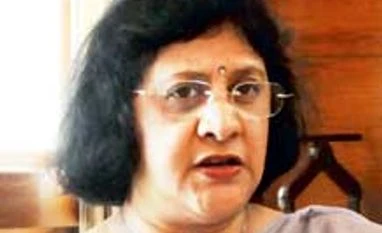)
Arundhati Bhattacharya – managing director and chief financial officer of State Bank of India says the bank is comfortable so far as liquidity is concerned and loan growth in second quarter will be driven by refinancing opportunities in an interview to Manojit Saha.
How has RBI’s liquidity tightening measures impacted SBI?
SBI is not dependent on wholesale deposits neither we issue certificate of deposits. We have a very strong retail deposit franchise with 15,000 branches in the country.
We are quite well positioned regarding liquidity, though once in a while we approach the marginal standing facility (MSF) window for balancing purposes.
Since RBI has mandated CRR to be kept at 99% on a daily basis which means you end up keeping above 100%, because you cannot afford to default. We keep (CRR balance) in the range of 102-107%. Due to the 99% mandate CRR requirement has gone up by 16-18 bps.
However, overall system liquidity is definitely tight. This was resulted in rise in marginal cost of funds, other than retail. All the short term rates have gone up to the 10.25% level (MSF rate).
Therefore, while in respect of SBI, we will continue with the same rate for a little while longer. If the situation continues beyond a particular point of time, then we will see what is required to be done.
How long do you thing the liquidity tightening measures will continue?
Very difficult to say, but we definitely hope before the close of the quarter, the situation will return to normalcy.
What is the impact on treasury operations due to hardening of bond yields?
So far as bond portfolio is concerned, it is merely a charge on the provisions and not a cash charge. Provisions made for mark-to-market loss could be reserved subsequently once the yields come down. What goes up have to come down at some point of time.
The second quarter results will be impacted if we have to take the losses on our books.
In a scenario when higher provisions are required for both non-performing assets and mark-to-market losses, what is going to drive profitability?
There will be a lot of things that will contribute to the income. One is that, since the commercial paper has become very costly -- which are normally issued by very highly rated corporate entities – they will now come back to the banking fold as CP rates have now gone above the base rate. So, that will help our loan growth. Increase in loan growth will help us to improve our net interest margins.
Also, this is the time we can extract as much efficiency from the system. This means, we have to raise productivity. For example, recently we have recruited clerical staff and empowered them to do passing of cheques and handling cheques at the frontline itself upto Rs 30,000 in cash and Rs 75,000 in transfer.
This will a large number of people will be able to be a one stop shop for customers. So, the productivity at the frontline is expected to go up.
We are also rationalising branch manning and processing centres. So, we are taking many steps to enhance the productivity at various levels.
In Q1, the bank’s domestic loan book came down on a sequential basis. What kind of loan growth you see in Q2?
In absolute terms loan growth in Q2 will be better than Q1. The Q1 loan growth was impacted because oil companies repaid their loans. Now, there is again a demand for loans from oil companies. Also, we may see loan limit which are not yet utilised, now getting utilised.
On an year-on-year basis, we see a 18-20% loan growth which will be mainly driven by refinancing. We have taken over loans of the other banks at lower rates because we still have the pricing power as we are driven by retail franchise. The project loan pipeline is still not robust.
Do you think the bank will be able to protect its margins?
Our cost of funds remained under control which enabled us to hold on the margins. However, in extra ordinary circumstances, it might get impacted.
We believe our loan book will see growth as borrowers are switching from CP to loans. If that happens, our net interest income will go up and margins will also improve.
What is the restructuring asset pipeline? Do you see increase in rate of restructuring?
We had given a guidance of Rs 8,000 crore – Rs 10,000 crore. At this point it is difficult to say whether there will be any increase. If the economic activity does not revive then there could be issues.
What are your priorities as the CFO?
One would be to ensure capital efficiency. Capital is scarce and we need to use it well. Capital requirement will depend on few things like profitability, and few activities like merger of subsidiary banks. We have communicated our requirements to the government.
Secondly, extracting efficiency and productivity from the system by costing products properly. We also have to ensure cost optimisation.
What are the challenges that the bank will face on the human resources front?
We will see retirement of 7,000 to 8,000 people over the next few years, so we will lose lot of old timers. The skill level of those people will be no longer available. We will get a lot of newcomers though which has both advantages and disadvantages.
The people who will be joining will come with a lot of energy. So, we need to develop the skills among the newcomers very fast so that they gather speed at the shortest possible time.
How has RBI’s liquidity tightening measures impacted SBI?
SBI is not dependent on wholesale deposits neither we issue certificate of deposits. We have a very strong retail deposit franchise with 15,000 branches in the country.

We are quite well positioned regarding liquidity, though once in a while we approach the marginal standing facility (MSF) window for balancing purposes.
Since RBI has mandated CRR to be kept at 99% on a daily basis which means you end up keeping above 100%, because you cannot afford to default. We keep (CRR balance) in the range of 102-107%. Due to the 99% mandate CRR requirement has gone up by 16-18 bps.
However, overall system liquidity is definitely tight. This was resulted in rise in marginal cost of funds, other than retail. All the short term rates have gone up to the 10.25% level (MSF rate).
Therefore, while in respect of SBI, we will continue with the same rate for a little while longer. If the situation continues beyond a particular point of time, then we will see what is required to be done.
How long do you thing the liquidity tightening measures will continue?
Very difficult to say, but we definitely hope before the close of the quarter, the situation will return to normalcy.
What is the impact on treasury operations due to hardening of bond yields?
So far as bond portfolio is concerned, it is merely a charge on the provisions and not a cash charge. Provisions made for mark-to-market loss could be reserved subsequently once the yields come down. What goes up have to come down at some point of time.
The second quarter results will be impacted if we have to take the losses on our books.
In a scenario when higher provisions are required for both non-performing assets and mark-to-market losses, what is going to drive profitability?
There will be a lot of things that will contribute to the income. One is that, since the commercial paper has become very costly -- which are normally issued by very highly rated corporate entities – they will now come back to the banking fold as CP rates have now gone above the base rate. So, that will help our loan growth. Increase in loan growth will help us to improve our net interest margins.
Also, this is the time we can extract as much efficiency from the system. This means, we have to raise productivity. For example, recently we have recruited clerical staff and empowered them to do passing of cheques and handling cheques at the frontline itself upto Rs 30,000 in cash and Rs 75,000 in transfer.
This will a large number of people will be able to be a one stop shop for customers. So, the productivity at the frontline is expected to go up.
We are also rationalising branch manning and processing centres. So, we are taking many steps to enhance the productivity at various levels.
In Q1, the bank’s domestic loan book came down on a sequential basis. What kind of loan growth you see in Q2?
In absolute terms loan growth in Q2 will be better than Q1. The Q1 loan growth was impacted because oil companies repaid their loans. Now, there is again a demand for loans from oil companies. Also, we may see loan limit which are not yet utilised, now getting utilised.
On an year-on-year basis, we see a 18-20% loan growth which will be mainly driven by refinancing. We have taken over loans of the other banks at lower rates because we still have the pricing power as we are driven by retail franchise. The project loan pipeline is still not robust.
Do you think the bank will be able to protect its margins?
Our cost of funds remained under control which enabled us to hold on the margins. However, in extra ordinary circumstances, it might get impacted.
We believe our loan book will see growth as borrowers are switching from CP to loans. If that happens, our net interest income will go up and margins will also improve.
What is the restructuring asset pipeline? Do you see increase in rate of restructuring?
We had given a guidance of Rs 8,000 crore – Rs 10,000 crore. At this point it is difficult to say whether there will be any increase. If the economic activity does not revive then there could be issues.
What are your priorities as the CFO?
One would be to ensure capital efficiency. Capital is scarce and we need to use it well. Capital requirement will depend on few things like profitability, and few activities like merger of subsidiary banks. We have communicated our requirements to the government.
Secondly, extracting efficiency and productivity from the system by costing products properly. We also have to ensure cost optimisation.
What are the challenges that the bank will face on the human resources front?
We will see retirement of 7,000 to 8,000 people over the next few years, so we will lose lot of old timers. The skill level of those people will be no longer available. We will get a lot of newcomers though which has both advantages and disadvantages.
The people who will be joining will come with a lot of energy. So, we need to develop the skills among the newcomers very fast so that they gather speed at the shortest possible time.
More From This Section
Don't miss the most important news and views of the day. Get them on our Telegram channel
First Published: Aug 20 2013 | 12:49 AM IST