


Why crude oil will not stay at $50
World markets in a tizzy on concerns that price below $50 per barrel would impact fresh investments
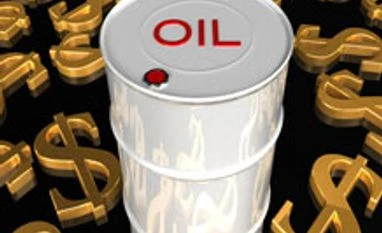)
<a href="http://http://www.shutterstock.com/pic-45597904/stock-photo-high-price-of-oil-barrel-d.html" target="_blank">Image</a> via Shutterstock
The crash in global crude oil prices has sent the world markets into a tizzy but there are at least four reasons why oil at $50 a barrel might not be sustainable.
The slide is a result of oversupply due to rising US shale oil production, the insistence of the Organization of the Petroleum Exporting Countries on maintaining market share, and a slump in demand from major importers like China.
But supply and demand are not significantly out of balance to justify the new normal of $50 a barrel of crude oil. Data from the International Energy Agency (IEA) show the demand-supply imbalance of the third and fourth quarters of calendar year 2014 at roughly 500,000 barrels a day is not out of line with previous quarters.

The imbalance was more in the second quarter of 2014 and even greater in the first and second quarters of 2012. “In fact, 500,000 barrels of overproduction (approximately 0.5 per cent of the total) is equal to OPEC overproduction versus its own quota. And, yet, we saw crude plunging in the last two quarters with no parallel when the world was similarly oversupplied in the past,” equity research firm Edelweiss said in a report.
“It is difficult to see how half a million or even a million barrels a day (around one per cent of the total production) justifies a 50 per cent drop in price.”
Analysts believe over-reaction to projected future oversupply has created fear. At a low price of oil, this projection is likely to be wrong. The IEA expects a growing imbalance of 1.5-2 million barrels a day in 2015, which could get worse. “But even if the Saudis do not intervene, will a 1.5-2 million barrel overcapacity really materialise?” the report said.
Another factor that may make low prices a short-lived phenomenon is that current prices are below costs. At $60 a barrel a large number of US shale projects do not meet the economic threshold. These projects may go ahead but similar projects in the pre-drill stage will not. Projects become more expensive with time as producers develop the easy stuff first. Analysts expect a 50 per cent drop in development projects that otherwise would have materialised.
Also, cash-strapped oil-producing countries will become more unstable at low prices, leading to fears of supply disruptions. Russia is hugely dependent on oil and gas production, with oil revenues making up 45 per cent of the government budget. Russia’s economy is expected to shrink 4.5 per cent next year if oil stays at an average $60 a barrel. There is growing concern the oil price crash could cause Venezuela, a major producer, to default. The nation’s economy was set to shrink by three per cent this year and inflation remained rampant, the Edelweiss report said.
Don't miss the most important news and views of the day. Get them on our Telegram channel
First Published: Jan 09 2015 | 12:26 AM IST