


Risk-reward ratio is getting unfavourable: Amar Ambani
Q&A with head of research, India Infoline Group
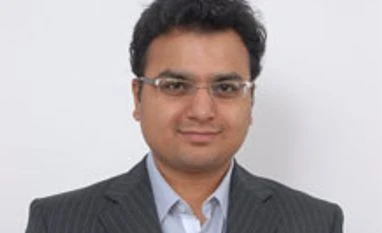)
Global equity markets, including India, have been rattled by fears of a pullback in US Fed’s stimulus. Amar Ambani, head of research, India Infoline Group tells Aastha Agnihotri in an interview that if the global flows remain supportive, a 5-7% upside in the markets may materialise. Edited excerpts:
What is your view on the Indian equities from a medium-term perspective?
The sharper-than-expected fall in inflation and the 75 basis points (bps) repo rate cuts since beginning of 2013 have been a welcome relief. However, we find the negatives weighing on any major index multiple expansions.

Revenue growth for India Inc has been noticeably slipping from mid-teens, four quarters ago to single digit presently. The on-going quarterly earnings season is turning out to be one of the worst since the global financial crisis in 2009 and as much as 50% of our coverage universe has disappointed.
On account of the perceptibly weak medium-term outlook for real GDP (gross domestic product) growth, as well as global commodity prices, we foresee a subdued corporate profit growth for the better part of FY14. Given this context, the current market multiple of over 15x is not cheap. If the global flows remain supportive, a 5-7% upside could well materialise but the risk-reward is getting distinctly unfavourable.
Do you foresee some consolidation in Nifty from current levels or are we headed for another bull run?
It’s premature to call a bull run at this point. The very expectation of a conventional bull run merely riding on the premise of a 5-year long subdued market would be an overtly-simplistic assumption. We have to face the global reality. The euro zone is still in a mess. The US unemployment is miles away from its comfort zone. China is slowing down. Just as one region stabilises, trouble erupts elsewhere.
Central banks are aware of the unpredictable situation and thus continue the regime of low interest rates and money printing. Global economy faces a huge challenge of deleveraging, which may take years to be addressed in full measure.
Having said this, it is certainly not the end of the world. I remain hopeful that we have lived through the major part of the global crisis. Unless anyone has good reason to believe otherwise, India is projected to be the fourth largest economy in the world by 2020 and it’s pretty plain that a future $4 trillion economy would not have an equity market capitalisation of 30-50% of GDP only.
Will you advise your clients to invest in equities at this point of time?
We would always recommend some exposure to equities for the simple reason that hindsight for us mortals is only for consequential introspection, it can’t help us take corrective action.
An asset allocation approach is the best strategy. Since these are not the best times for equities, investors should maintain a lower exposure of about 20-25% and gradually increase it when valuations are more appealing. At this stage, a higher weightage to fixed income instruments would be a sound strategy.
Do you expect any case for a re-rating for India or change in rating outlook?
For a visible change in outlook, India will have to take concrete measures on the policy front, Current Account Deficit (CAD) and the Fiscal Deficit. With state elections in November-December and General elections next year, there’s hardly any scope for decision-making. Although the government will try and push through some measures, progress on critical issues like land acquisition, action on mining and infra development is suspect before elections. All in all, the rating outlook change looks doubtful in the medium term. Post General elections, things will begin to look up.
What is your expectation from the Reserve Bank of India in terms of an interest rate cut?
The RBI may well announce another 25 basis points Repo cut in the next policy meet. But for more action, it will for one, look for correction in Current Account Deficit and two, evaluate monetary transmission of the cuts. Overall, we could see an additional 75 basis points rate cut till March 2014.
How do you see the rupee panning out going ahead?
We expect the Rupee to weaken for a possible target of 57-58 against the US Dollar by year end. For the near term, it may stay range bound or even attempt a minor recovery on hopes on more government action and resultant inflows by FIIs.
However, as we near the last quarter, uncertainty around elections may cause some weakening. The trading in US Dollar against major currencies may be choppy amidst global uncertainties in the near term but the broad trend will continue to be upwards for the Dollar index as other economies like China, Japan and the Euro zone deal with their crisis.
Which sectors are you recommending for investment in the current market conditions?
I believe the Indian Pharma space continues to be an attractive bet given the handsome growth and stronger balance sheets of large players. For the private Banking sector, modest industrial recovery, policy rate cuts and liquidity improvement should collectively script an overall improvement in performance.
In the Gas space, India’s demand growth will continue to increase the supply deficit. LNG imports will continue to be instrumental in bridging this gap as LNG prices are likely to fall owing to the US shale gas production surge.
Digitization is changing the dynamics of the Media industry. The Digital Addressable System will increase the revenue pie of Non-LCO players in the value chain (broadcasters, DTH and MSOs). Broadcasters will have an upper hand with dual advantage of rise in subscription revenues and drop in carriage & placement fees.
Don't miss the most important news and views of the day. Get them on our Telegram channel
First Published: Jun 01 2013 | 1:56 PM IST