


Should RBI cut rates after sharp contraction in IIP?
Some economists believe Rajan is already late in doing so but he has reasons to be careful
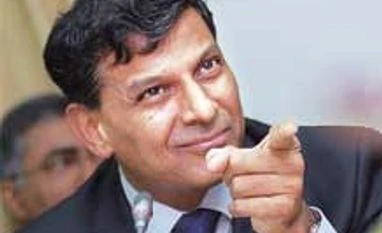)
It hasn’t been a good week for the markets. The risk-off trade, which has dragged the benchmark indices down, might continue next week, too, as industrial output for October contracted a shocking 4.2 per cent and the central bank isn’t in a mood to cut rates, even though retail inflation continued to soften to 4.38 per cent in November. The divergent trends are expected to create more confusion among economists, divided over Reserve Bank of India (RBI) governor Raghuram Rajan's inflation-targeting approach to monetary policy. After the weak industrial output, the clamour for rate cuts will be louder. In the process, strategists and equity experts will ignore the fact that the HSBC Manufacturing PMI hit a 21-month high in November to 53.3. In October, Manufacturing PMI was 51.6, suggesting an uptick. However, index of industrial production (IIP) data suggests manufacturing declined by 7.6 per cent in October.
The market and a handful of economists have been asking for a stimulus in the form of a rate cut ever since consumer price inflation (CPI) started softening earlier this year. Many believe RBI is already too late in acting on lowering the benchmark rates, as they believe by targeting inflation alone, Rajan is ignoring growth. Is Rajan behind the curve or plain prudent?
Those arguing for rate cuts believe the real interest rates have been positive since January and are now well above RBI’s 150-200 basis points territory. Those in favour of a prolonged pause believe once real interest rates are calculated by factoring in RBI’s policy rates and the retail inflation, the rates have turned positive only in the past few months. Samiran Chakraborty, economist at Standard Chartered Bank, says, “The governor has adopted an inflation-targeting approach and is acting on that premise. After so many years of high retail prices, just two months of low inflation might not be able to convince the central bank that the decline is sustainable. Real policy rates have turned positive only in the past two months and RBI governor is expected to wait for another couple of months to see a trend developing and also see how the government manages the fiscal side. Therefore, we have a call for a rate cut in February (2015).”
HSBC Global Research, too, has a similar view. It says in a note, “If the RBI is able to hold on to rates at this crucial juncture, it should get a clearer sense of whether the current softening in commodity prices is likely to persist. It should also allow some more time for the recent fall in prices to feed into inflation expectations.
These factors are critical if RBI wants to meet its target of six per cent CPI inflation by January 2016, and more importantly, remove excess inflation that has plagued the economy.”
These factors are critical if RBI wants to meet its target of six per cent CPI inflation by January 2016, and more importantly, remove excess inflation that has plagued the economy.”

Don't miss the most important news and views of the day. Get them on our Telegram channel
First Published: Dec 12 2014 | 10:36 PM IST