


Home / India News / Newsmaker: Mayawati, returning to ideology
Newsmaker: Mayawati, returning to ideology
If her resignation leads to relocating issues before the Dalits, BSP could get a new lease of life
 "Mayawati")
premium
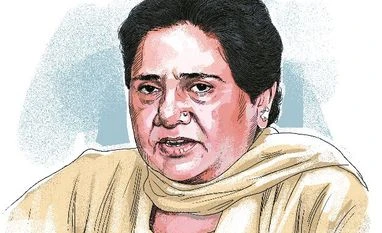
Illustration: Ajay Mohanty
Last Updated : Jul 20 2017 | 11:05 PM IST
It was the smartest thing she could have done. When the hubbub in the Rajya Sabha drowned out her voice while she was trying to raise the issue of attacks on Dalits all over India, Mayawati did the only thing under the circumstances. She announced she was resigning from the Rajya Sabha, because it had denied her the chance to raise her voice against the oppression of her people.
Anxious to be seen as a leader who would think nothing of chucking up a position to which she is unlikely to return to — after the Uttar Pradesh Assembly elections, her party does not have the numbers to renominate her to the upper house — Mayawati made good on the threat with a one-line handwritten resignation letter.
These past few elections have not been good to her. She managed to get 26 per cent of the vote and 80 out of 403 seats in the Assembly elections of 2012. But clocking zero seats in the Lok Sabha in 2014, despite the third largest vote share in UP, was her ‘all-is-lost’ moment. That was the Modi wave and few could hold their own. But the trend has endured in the Assembly elections of 2017. The Bahujan Samaj Party (BSP) won 19 seats in Uttar Pradesh, as compared to the 325 seats of the Bharatiya Janata Party and its allies and 54 seats of the Samajwadi Party (SP) and Congress alliance. The BSP got 22.2 per cent of the votes, winning 19 seats. On the other hand, SP got less votes (21.8 per cent) than the BSP but bagged a higher number of seats (47).
A similar pattern was observed in the 2014 Lok Sabha election. The BSP got 19.6 per cent votes in Uttar Pradesh, but failed to even open its account. On the other hand, SP got 22.2 per cent of votes, winning five seats. Congress got only 7.5 per cent of the votes and won two seats.
This means only one thing: that the BSP has a committed vote. But if the party doesn’t do something to consolidate it, it could drift away.
And what is more, the party has to provide faith, ideology and a working plan to its supporters — not just excuses (like her offering that electronic voting machines malfunctioned).
It is possible that Mayawati now believes it is time to go back to basics.
Social engineering experiments have to be negotiated. They cannot be extrapolated on a community mechanically. At first, Mayawati tried the famed experiment of a caste coalition of Brahmins and Dalits, going so far as to say that she would ensure job reservation for the poor among the upper caste. This baffled the Dalits, who thought that if they have to form an alliance with the upper castes, why do it via Mayawati? Why not directly with Narendra Modi himself? We now know that a large percentage of Dalits in Uttar Pradesh voted for the BJP in 2014.
And then, Mayawati simply did not heed the larger Dalit project: like protecting the rights of Dalit women (who are exploited thrice over — by men of their own caste, men of other castes and as Dalits). Even while in the government, the BSP had no cogent thoughts on reservation for Dalits in higher education and in the private sector. And there was no movement on giving Dalits the rights on the land they till. (Dalits hold titles to land but not its physical ownership.)
There is no evidence that her stint out of power has led to any thinking on these issues. Instead, an alliance with Muslims suggested the BSP’s continued belief that an alliance with the marginalised will ensure numbers (or turnout) and numbers will lead to power. Except that the Dalits rejected this.
Demonetisation has had the worst possible impact on Dalits, especially the weaver community of Uttar Pradesh But the focus of her attack is not on the impoverishment of these communities by cruel and unthinking policies of the Union government but the threats from gau rakshaks and love jihadists.
After the high drama of resignation on live television, if she launches an aggressive drive to reposition issues before the Dalits — and the non Dalits — it is possible that the BSP could get a new lease of life. For a leader who strongly believes in identity politics, with the overarching appeal of Hindutva, it cannot be business as usual.