


The Story of CO2: The story of human civilisation is a story of energy
Peter Brannen's sweeping book argues CO₂ is the hidden force behind evolution, civilisation, fossil fuels, and today's climate crisis - the story of everything
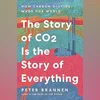 "THE STORY OF CO2 IS THE STORY OF EVERYTHING: How Carbon Dioxide Made Our World")
THE STORY OF CO2 IS THE STORY OF EVERYTHING: How Carbon Dioxide Made Our World


THE STORY OF CO2 IS THE STORY OF EVERYTHING: How Carbon Dioxide Made Our World
By Peter Brannen
Published by Ecco
512 pages $35
By Jaime GreenAlso Read

 "Formula 1")
 "Emission norms, Carbon tax, Climate Change, energy sector")
 "Microsoft logo, Microsoft")
 "Carbon Dioxide")
 "PM Modi, Xi Jinping")
The thesis of Peter Brannen’s new book is right there on the cover: The Story of CO2 Is the Story of Everything. But surely there’s no way he means everything, right?
Oh, does he ever.
This ambitious, absorbing book begins with the origins of life and stretches through the rise of human civilisation and technology, including all the modern woes associated now with the troublesome greenhouse gas.
By the end, the reader feels convinced: Evolution and human prehistory and wars and the Dutch East Indies Company and the attack on Pearl Harbour and Reagan and Thatcher and and and and and and. … All of it looks like the story of carbon dioxide, after all.
It could be seen as the story of energy as well, and one of the book’s many fascinating deep dives is its critique of economists, technocrats and futurists who, “overly impressed by the symbols of the synthetic world they’ve created,” fail to take energy into account. But here on Earth, with the peculiarities of geology and life, energy comes down to carbon.
Almost all of the energy that we have access to comes from the sun, and photosynthesis requires CO2.
In the usual processes, that energy trickles up through the food chain until it’s exhausted and released as waste heat. But the great luck of this planet is that rather than being consumed or rotted (same thing), reduced to waste and raw materials, some carbon stores — washes of plankton and heaps of swamp life — were instead entombed for millennia in stone.
Thus, fossil fuels are “fossilised sunlight”: solar energy on reserve. This buried carbon also acts, in one of Brannen’s running metaphors, as a giant capacitor. It was charged by geology; it is now being discharged by human workings “on a planetary scale.”
But as Brannen, a contributing writer at The Atlantic, described in his 2017 book on mass extinctions, The Ends of the World, geology has found ways to discharge similarly stored energy in the distant past. It did not go well.
While Brannen doesn’t shy away from the fearsome shape of our future, he finds ample joy in this deep-time journey, unafraid to puncture his expertise with gob-smacked wonder. And he takes great pleasure in language, always spry with a sentence (“Russia shared a meaty tundra handshake with Alaska”) even as the world literally burns.
At certain extremes, Brannen’s enthusiasm colours his claims. Take Pearl Harbour: Accepted wisdom may say that the attack was an attempt to draw America into war, or intimidate it into submission. But Brannen sees only CO2 — the bombing a safety measure so that oil-starved Japan could plunder Indonesian oil fields untroubled.
What could come across as bias, though, ultimately reads as passion instead. Brannen is an effusive, maximalist writer, a mind vividly alive on the page. He is never coy with an opinion, whether it’s which extinct animals he imagines were ugly (the “torpid little piglike Lystrosaurus” of 250 million years ago; the “phantasm-agoric ogres” of the middle Permian era) or how he feels about the Carboniferous period’s massive insects, supersized by abundant oxygen (“It was a horrifying time to be alive”).
And his arguments, like his writing, are hugely compelling. Entwined with his proselytising for the importance of CO2 is another, more meaningful assertion, one that gives the book both tenderness and gravity.
(The urgency of climate change is plenty grave, of course, but Brannen’s readers are likely well aware of it, and disinclined to dwell in that swamp of bad feeling.)
The story of CO2, he posits, extends through geology and biology to human civilisation precisely because the two can’t (and shouldn’t) be separated: “However much we privilege human history as distinct from the rest of the natural world… we are a
natural phenomenon.”
It is a blessing and a burden. We cannot escape the carbon math. Resources are finite, and our actions have impact, far beyond what hundred-year climate models can see. But we are not an anomaly on the Earth, not a cancer or a poison.
We are a manifestation of life, an island of order channelling energy toward entropy for a time. And that island, too, is a part of the story of CO2 — the story of our entire world.
The reviewer is the author of The Possibility of Life: Science, Imagination, and Our Quest for Kinship in the Cosmos and the series editor of the Best American Science and Nature Writing. ©2025 The New York Times News Service
More From This Section
 "The Mysterious World of Tigers: A Book of Discovery")
 "The Call of Music")
 "From Southeast Asia to Indo-Pacific: Culture, Identity, and the Return to Geopolitics")
 "The Hindi Heartland")
 "Secession of the successful: The Flight out of New India")
Don't miss the most important news and views of the day. Get them on our Telegram channel
First Published: Aug 31 2025 | 9:47 PM IST