


Why Strategic Partnerships Matter in the AI Era
As enterprise AI moves from experimentation to large-scale deployment, organisations are discovering that technology alone isn't enough. Long-term success depends on the right expertise, the right exe
 "cost")
Over the past two years, enterprises have made significant progress in their AI journeys. Pilot projects have demonstrated tangible business value; generative AI has become part of everyday conversations, and organisations across industries are preparing to embed AI into their core operations.
Yet deploying AI at enterprise scale is proving to be a far more complex undertaking than launching a successful pilot.
Building the infrastructure is only one part of the challenge. Integrating new technologies with existing environments, managing increasingly complex AI workloads and ensuring systems remain reliable over time require careful planning and specialised expertise. As AI becomes central to business strategy, organisations are recognising that successful deployment depends not only on the technology they choose, but also on the partners who help them implement and manage it.
Technology is only the starting point
The rapid evolution of AI infrastructure has given organisations access to increasingly powerful computing platforms capable of supporting demanding workloads. However, deploying enterprise AI involves much more than selecting servers or accelerators.
Every organisation has unique operational requirements, existing IT investments and business priorities. AI infrastructure must be integrated with current environments, aligned with governance and security requirements, and designed to support future growth without creating unnecessary operational complexity.
This is why infrastructure decisions have become business decisions. The objective is not just to deploy AI faster, but to create a platform that remains resilient, efficient and adaptable as business needs evolve.
Why expertise has become a competitive advantage
As AI infrastructure becomes more sophisticated, organisations increasingly value partners that bring practical deployment experience alongside technology.
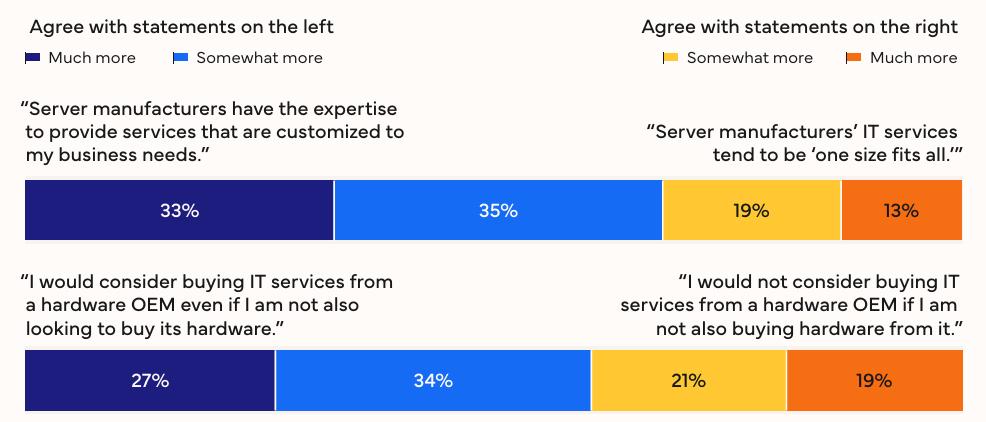
IDC's research highlights that enterprises view implementation complexity, integration challenges and operational readiness as some of the primary considerations when adopting advanced infrastructure technologies. These concerns extend well beyond the initial deployment. They influence ongoing operations, system optimisation and the organisation's ability to scale AI confidently over time.
This shift is changing expectations of technology providers. Enterprises are looking for partners that can help assess infrastructure requirements, simplify deployment, optimise performance and provide continued operational support throughout the lifecycle of an AI environment.
Turning infrastructure into business outcomes
A well-planned AI deployment is not measured by the number of servers installed or the speed of implementation. Its success is measured by the business outcomes it enables.
Reliable infrastructure helps organisations reduce operational risk, improve system availability and support increasingly demanding AI workloads. Ongoing optimisation ensures that infrastructure continues to perform efficiently as workloads evolve, while proactive management helps organisations adapt to changing business requirements without unnecessary disruption.
This lifecycle approach is becoming increasingly important as AI environments grow more distributed across on-premises infrastructure, cloud platforms and edge locations. Maintaining consistent performance across these environments requires coordinated planning, management and support rather than isolated technology investments.
Building confidence through partnership
This is where strategic partnerships become especially valuable.
Lenovo combines AI infrastructure with advisory, deployment and lifecycle services to help organisations manage the complexity of enterprise AI. Drawing on more than 13 years of expertise in liquid cooling, Lenovo Neptune® technology addresses the thermal demands of modern AI and HPC environments, while Lenovo Power and Cooling Services support planning, deployment, optimisation and ongoing operations.
Rather than approaching AI infrastructure as a one-time technology project, Lenovo works with organisations throughout the deployment lifecycle - from assessing requirements and integrating new infrastructure to supporting long-term operational performance. This integrated approach helps enterprises modernise with greater confidence while preparing for future AI growth.
The future of enterprise AI is collaborative
Enterprise AI has reached an important turning point.
The conversation is no longer centred on whether organisations should adopt AI. It is about how they can deploy it successfully, operate it efficiently and continue to evolve as technologies and business needs change.
That journey calls for more than advanced infrastructure. It requires experienced partners who understand the technical, operational and strategic realities of enterprise AI.
Disclaimer: No Business Standard Journalist was involved in creation of this content
Topics : Future of AI infrastructure
Don't miss the most important news and views of the day. Get them on our Telegram channel
First Published: Jul 23 2026 | 5:50 PM IST