


Here's why captain Shubman Gill was left fuming on Day 2 of the Lord's Test
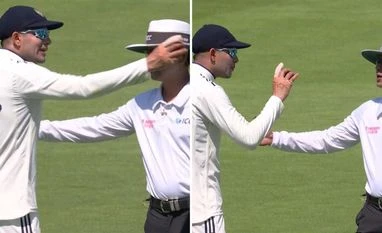
The incident took place during the 91st over of the match and 8th over of the day when India walked up to the umpires looking to change the ball
 "Gill with on-field umpire on day 2 of Lord's Test")
Gill with on-field umpire on day 2 of Lord's Test
Listen to This Article
The controversy around the Dukes ball used for the ongoing England vs India Test series added another chapter, as during the first hour of gameplay on Day 2 of the third Test at Lord's, the Indian team was once again seen to be unhappy with the quality of the ball and had an animated chat with the on-field umpires.
The incident took place during the 91st over of the match and 8th over of the day, when India walked up to the umpires looking to change the ball. The umpires accepted the request and handed India a replacement ball, but Gill and company were not happy with the condition of the replacement ball either. Notably, India were given a new ball after the 80-over mark in the innings, which means the new ball should be 10 overs old—but clearly, Gill did not see it that way and was seen engaging in an animated chat with the umpires.
Indian pacer Mohammed Siraj, who was bowling at the time, was also serious and was heard saying, “This is a 10-over-old ball? Seriously?” But the umpires refused to change the replacement ball, as the Indian skipper walked away in displeasure.
Early Ball Change Sparks India’s Displeasure
India were visibly unhappy when the second new ball had to be replaced only 10.3 overs into use. Bumrah had taken three wickets in just 14 deliveries with the original ball, but India went wicketless through the rest of the first session after the change, despite bowling to lower-order batters. A second ball change was made 48 balls later, further disrupting the flow.
Stark Difference in Swing and Seam
Data showed a dramatic drop in movement after the replacement. The original ball swung 1.869 degrees and seamed 0.579 degrees on average, while the replacement managed just 0.855 degrees of swing and 0.594 degrees of seam. More than the numbers, it was the softness and visibly older condition of the new ball that frustrated the Indian players.
Also Read

 "IND vs ENG 3rd Test Day 2 full scorecard")
 "Jasprit Bumrah")
 "Bumrah celebrating Root's wicket at Lord's")
 "Joe Root")
 "Ben Stokes, Rishabh Pant")
A Widening Pattern: Regular Complaints and Replacements
The Dukes ball has faced complaints throughout this series, often being replaced around the 43rd over, sometimes even earlier. The ECB’s experimental use of Kookaburra balls in the County Championship earlier this year has also put additional spotlight on Dukes’ declining standards.
Since 2020, fielding sides have repeatedly raised concerns about the ball going out of shape too soon and losing hardness, making it ineffective in longer spells.
Statistical Impact: Highest Averages in Overs 31–80
This series has seen a dramatic dip in wicket-taking between overs 31 and 80, with wickets falling at an average of 86.09 runs per wicket—the highest ever in England during that period since detailed ball-by-ball records began. Globally, it’s the third-highest such average across all Test series, behind only Sri Lanka’s 2008–09 tour of Pakistan and Zimbabwe’s 2000–01 tour of New Zealand.
More From This Section
 "Curtis Campher (In front) after Munster Reds vs North-West Warriors match (PIC: X)")

 "Team India")
 "Root vs India at Lord's")
 "Joe Root century in 4th Test")
Topics : Shubman Gill India vs England India cricket team England cricket team ICC World Test Championship Test Cricket
Don't miss the most important news and views of the day. Get them on our Telegram channel
First Published: Jul 11 2025 | 4:45 PM IST