


What is India's National Critical Mineral Stockpile and why it matters now?
The National Critical Mineral Stockpile (NCMS) will hold a two-month reserve of rare earths, protecting against supply disruptions and later covering other critical minerals
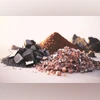 "rare earth magnet, magnet")
The government is designing NCMS with private sector participation to ensure adequate reserves.


Listen to This Article
India is set to launch the National Critical Mineral Stockpile (NCMS) to secure rare earth supplies vital for electric vehicles, wind energy, and green technologies amid global supply risks, according to a report by The Economic Times.
Why it matters
China’s export curbs on rare earth magnets, which is a key component for clean energy and high-tech industries, have disrupted global supply chains. India’s move aims to reduce dependence on imports and strengthen its mineral security, the news report said.
The NCMS will act as a buffer against supply disruptions by maintaining a two-month reserve of critical minerals. Initially, it will focus on rare earth elements, with plans to expand the scope later.
• The government is designing NCMS with private sector participation to ensure adequate reserves
• Rare earth elements (a group of 17 minerals) are vital for electric vehicles, wind turbines and electronics due to their unique magnetic and electrical properties
Also Read

 "rare earth magnets")
 "Rare earth minerals")
 "multivitamins, daily supplements")
 "Droupadi Murmu, Murmu, President")
 "(L-R) Rajesh Kumar Singh, Defence Secretary & V Narayanan, ISRO chairman")
• India has already approved a ₹7,300 crore incentive scheme to promote domestic rare earth magnet production, targeting 6,000 tonnes over five years
• Under the National Critical Minerals Mission, ₹500 crore has been allocated to prevent supply shocks and support domestic manufacturing
What are the hurdles?
While NCMS is a crucial step toward self-reliance, India still faces technological hurdles in extracting and processing rare earths from domestic reserves. Most supplies continue to be imported.
By the numbers
India holds an estimated 7.23 million tonnes of rare earth oxide within 13.15 million tonnes of monazite deposits found across Andhra Pradesh, Odisha, Tamil Nadu, Kerala, and other states.
What’s next
The Ministry of Mines has auctioned 55 critical and strategic mineral blocks so far, with 34 awarded. A sixth tranche of auctions has just been launched to expand domestic access to these essential resources, the news report said.
China tightens export rules on rare earth materials
China’s Ministry of Commerce has expanded export restrictions on rare earth materials and related technologies, citing “national security” concerns, news agency Reuters reported.
The new rules limit the export of processing technologies, ban unauthorised partnerships between Chinese and foreign companies, and make it mandatory to obtain licences for recycling equipment. The ministry also said that export licences will not be issued to overseas defence-related users. Applications linked to semiconductor production will be reviewed individually.
In April, Beijing had already required exporters to get licences and end-user certificates (EUCs) from buyers before shipping medium and heavy rare earths. While exports to Europe and Southeast Asia have since resumed, licences for Indian importers are still pending.
More From This Section
 "India-EU FTA, Free trade, European Union, India trade policy")
 "EPFO, EPF subscribers, formal jobs, payroll data, labour market, March hiring, Labour Ministry, social security, youth employment, women workforce, net payroll additions")
 "US Ambassador to India")
 "India UK TARDE, India, UK")
 "Renewable energy")
Topics : minerals BS Web Reports India china trade economy
Don't miss the most important news and views of the day. Get them on our Telegram channel
First Published: Oct 13 2025 | 9:48 AM IST