


India stopped buying Russian oil after Trump's 25% tariff, claims Bessent
The Trump administration is weighing a Russia sanctions bill by Senator Lindsey Graham that would allow the US to impose tariffs of at least 500 per cent on countries that continue buying Russian oil
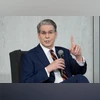 "US Treasury Secretary Scott Bessent")
US Treasury Secretary Scott Bessent (Image: Bloomberg)


Listen to This Article
US Treasury Secretary Scott Bessent has claimed that India has stopped buying Russian oil after US President Donald Trump imposed a 25 per cent tariff. His remarks come as the US considers much tougher penalties on countries that continue to buy Russian crude.
Speaking to Fox Business on the sidelines of the World Economic Forum, Bessent said that New Delhi reduced its purchases soon after the trade measure was announced.
“India started buying Russian oil after the conflict began,” Bessent said. “But President Trump put a 25 per cent tariff on them and India has geared down and has stopped buying Russian oil.”
VIDEO | Davos: “India stopped buying Russian oil after Trump imposed 25% tariffs,” says US Treasury Secretary Scott Bessent at World Economic Forum.#Davos2026WithPTI #WEF2026WithPTI #Davos2026 #WEF2026 (Source: Third Party) (Full video available on PTI Videos -… pic.twitter.com/A7aicX67V1
— Press Trust of India (@PTI_News) January 20, 2026
Also Read

 "Donald Trump")
 "Jens-Frederik Nielsen")
 "Donald Trump, Trump")
 "Sunita Williams, Sunita, Suni Williams")
 "Rain, Rainfall, monsoon")
Bessent’s comments come amid discussions in Washington on a proposed Russia Sanctions Bill introduced by Republican Senator Lindsey Graham. The bill would allow the US to impose tariffs of at least 500 per cent on countries that continue to purchase Russian oil.
While the legislation is still pending in the US Senate, Bessent said that Trump already has enough authority under existing laws to act.
“On the 500 per cent tariff on the buyers of Russian oil, that is a proposal that Senator Graham has in front of the Senate, and we will see whether that passes. We don’t believe that President Trump needs that authority, that he can do it under IEPA, but that the Senate wants to give him that authority,” he said.
Europe, China face sharp US criticism
The US Treasury Secretary criticised Europe and China for continuing to buy Russian energy. “We have Europe buying Russian oil, still, four years later,” Bessent said. “They are financing the war against themselves.”
China, one of Russia’s biggest energy buyers, remains the main target of the proposed sanctions. US officials argue that Beijing’s continued purchases are helping fund Russia’s war in Ukraine.
Repeating his criticism, Bessent said that Europe was still importing Russian oil, even as he claimed India had stopped. “We have Europe buying Russian oil, still, four years later, they are financing the war against themselves,” he said.
Graham on leverage over India, China and Brazil
On January 8, Senator Lindsey Graham made details of the proposed bill public, saying it would give Trump “tremendous leverage against countries like China, India and Brazil to incentivise them to stop buying the cheap Russian oil that provides the financing for Putin’s bloodbath against Ukraine".
In October last year, Bessent had also said that there was strong support in the US Senate for such measures. “85 US senators are willing to give President Trump the authority to put up to 500 per cent tariffs on China for the purchase of Russian oil,” he said.
What India has said on the 500 per cent tariff bill
Responding to the proposed bipartisan Russia Sanctions Bill, India’s Ministry of External Affairs said it was aware of the developments and was closely tracking the situation.
“We are fully aware of the proposed bill being discussed, and we are carefully monitoring all related issues and developments connected with it," MEA spokesperson Randhir Jaiswal said.
India has also reiterated its long-standing position on energy sourcing, stating that it considers global market conditions and prevailing circumstances while making decisions related to oil imports.
More From This Section
 "core sector")
 "tariff, trade")
 "Crude oil")
 "US India Trade")
 "Devendra Fadnavis, chief minister of Maharashtra while signing different MOUs.(PHOTO: X/@CMOMaharashtra)")
Don't miss the most important news and views of the day. Get them on our Telegram channel
First Published: Jan 21 2026 | 9:37 AM IST