


MP wants to quit decentralised procurement scheme amid financial strain
Madhya Pradesh CM Mohan Yadav tells Centre delays in clearing foodgrain stocks under DCP are causing major financial losses to the state government
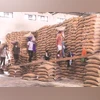 "foodgrain, food, output, production, coldstorage, FCI, warehouse, farmers, farm, agri, market, prices")
Out of the total wheat procured in India for the central pool, Madhya Pradesh’s share is around 26 per cent, while for paddy it stands at roughly 6 per cent.
Listen to This Article
One of the foremost food grains procuring states in the country, Madhya Pradesh has approached the Centre to opt out of the decentralised procurement system citing mounting financial challenges.
Chief Minister Mohan Yadav, in a letter written recently to the Union government, said that the state government has been suffering significant financial losses due to delay in clearing of food grains stocks purchased through the Decentralised Procurement System (DCP).
While, at the same time, loans taken from banks to make payment to farmers has risen to around ₹72,177 crore, Yadav said.
Due to all this, the state wants to opt out of the decentralised procurement system and wants the Centre to revert back to the old system of direct procurement by Food Corporation of India (FCI).
The decentralised procurement
Also Read

 "Gov. GeM")
 "tuberculosis")
 "Gold and Silver")
 "Fintech")
 "Vodafone")
Under the Decentralised Procurement System (DCP), the state government undertakes direct purchase of paddy or rice and wheat and also stores and distributes these food grains under the National Food Security Act (NFSA) and other welfare schemes.
If the stocks of the rice or wheat procured by the state government exceeds its allocation under TPDS and other Welfare Schemes, the excess stock is handed over to the Food Corporation of India (FCI) by the state government.
The economic cost for a decentralised procurement (DCP) state is the total of all incidentals incurred during both the acquisition and distribution stages.
The centralised procurement
Under the centralised procurement system, the procurement of food grains for Central pool is undertaken either by FCI directly
Or by state government agencies that handover the stocks to FCI for storage and subsequent issue against government of India allocations in the same state or movement of surplus stocks to other states.
The DCP scheme was put in place to ensure that greater number of farmers get the benefit of the minimum support price (MSP), efficiency of procurement is enhanced and to encourage procurement in non-traditional states, thereby extending the benefits of MSP to local farmers as well as to save on transit losses and costs.
It was also meant to enable procurement of food grains more suited to local taste for distribution. There are states that had adopted full DCP while in some states it was partially implemented with both Centre and states jointly doing procurement.
However, over time some states have opted out of the scheme due to mounting troubles. As of 2017, around 17 states had opted for the DCP scheme in varying proportions. This must have undergone a change till now.
Madhya Pradesh, meanwhile, in the letter said that the state has been following the decentralised procurement scheme for paddy since 1999-2000 and 2007-08 for wheat. Out of the total wheat procured in India for the Central pool, Madhya Pradesh’s share was around 26 per cent while it is around 6 per cent for paddy.
Wheat procurement in Madhya Pradesh has risen to almost 7.8 million tonnes and paddy to 4.4 million tonnes making it one of the major contributors of food grains to the Central pool.
More From This Section
 "electricity")
 "online payment, QR CODE, ONLINE TRANSACTIONS, UPI (Image: Shutterstock)")
 "white collar jobs")
 "Yogi Adityanath, yogi, UP CM")
 "gems, jewellery")
Don't miss the most important news and views of the day. Get them on our Telegram channel
First Published: Nov 03 2025 | 6:34 PM IST