


Inaccurate, misleading statements by Navarro; we obviously reject them: MEA
New Delhi termed Peter Navarro's comments misleading, highlighting the resilience of India-US ties built on shared interests, democracy and people-to-people links
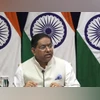 "MEA spokesperson Randhir Jaiswal")
MEA spokesperson Randhir Jaiswal
Listen to This Article
The Ministry of External Affairs (MEA) on Friday reacted to the statements made by White House Trade Advisor Peter Navarro and termed them as ‘inaccurate and misleading’.
“We have seen inaccurate and misleading statements made by Peter Navarro, and obviously reject them,” the MEA spokesperson Randhir Jaiswal said in a statement.
He further added, “We have also spoken about it earlier. This relationship between the United States and India is very important for us. Both our countries share a comprehensive global strategic partnership, which is anchored in our shared interests, democratic values and robust people-to-people ties.”
#WATCH | On the statement made by Peter Navarro (Senior Counsellor for Trade and Manufacturing to the US President), @MEAIndia Spokesperson Randhir Jaiswal says, "We have seen the inaccurate and misleading statements made by Mr. Navarro and obviously we reject them. We have also… pic.twitter.com/jE9psq5PoA
— DD India (@DDIndialive) September 5, 2025
He implied that the partnership between the two countries has weathered several transitions and challenges and hoped that the relationship will continue to move forward based on mutual respect and shared interests.
Also Read

 "Nirmala Sitharaman, Nirmala")
 "stock market live")
 "Dabur")
 "US President Donald Trump")
 "Piyush Goyal, Piyush")
What exactly did Navarro say?
Amid the 50 per cent tariffs put on by the US on imports from India, Navarro, in a discussion, had commented that “Brahmins are profiteering at the expense of the Indian people.”
The comment came as he was talking to Fox News: “India is the maharaja of tariffs. They have the highest tariffs in the world. They export a bunch of stuff. So, who gets hurt? Workers in America, taxpayers, Ukrainians. Modi is a great leader. I don’t understand why he is getting into bed with Putin and Xi Jinping when India is the biggest democracy in the world. I would simply say this to Indian people to understand what is going on here. You have got Brahmins profiteering at the expense of the Indian people, and we want that to stop.”
Why did Navarro use the term ‘Brahmins’?
The Varna system of India classifies various castes into four categories: Brahmin, Kshatriya, Vaishya and Shudra. It does not state Brahmins as the business community; however, they are at the top of the hierarchy. In the American context, the rich business class are called ‘Brahmins’, as the rich elites of Boston were once called ‘Boston Brahmins’.
More From This Section
 "Ukraine's Foreign Minister, Andrii Sybiha, Ukraine")
 "Ukraine")
 "Vladimir Putin, Putin")
 "S Jaishankar, Jaishankar")
 "Modi, Narendra Modi, Lawrence Wong, Lawrence, Singapore PM")
Don't miss the most important news and views of the day. Get them on our Telegram channel
First Published: Sep 05 2025 | 5:11 PM IST