


Trump lauds India, Pak on peace move, offers help on 'Kashmir solution'
US President Trump lauds leaders of India and Pakistan for agreeing to halt further escalation
 "US President Donald Trump")
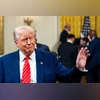
US President Donald Trump praised the leaders of India and Pakistan for agreeing to halt further escalation | Image: Bloomberg
Listen to This Article
US President Donald Trump on Sunday said he would work with India and Pakistan to help find a solution to the Kashmir dispute, calling it a challenge that has lasted “a thousand years.”
The remark, made through a post on his social media platform Truth Social, comes a day after India and Pakistan reached an informal ceasefire understanding. This understanding between the two nuclear-armed neighbours came after weeks of military tension triggered by the April 22 terror attack in Pahalgam.
“While not even discussed, I am going to increase trade, substantially, with both of these great Nations,” he wrote. “Additionally, I will work with you both to see if, after a ‘thousand years,’ a solution can be arrived at concerning Kashmir.”
Also Read

 "Amitabh Bachchan,Amitabh")
 "Operation Sindoor")
 "Srinagar, India-Pakistan war, conflict, army, security personnerl, vigil, ceasefire breach")
 "Vikram Misri, Vikram, Misri")
 "Foreign Secretary Vikram Misri")
US State Department confirms ceasefire understanding
Trump also praised the leaders of both nations for showing “strength, wisdom, and fortitude” in agreeing to halt further escalation. “Millions of good and innocent people could have died!” he wrote, calling the decision “historic and heroic.” Trump also hinted at increased US trade with both countries.
“I am proud that the USA was able to help you arrive at this historic and heroic decision. While not even discussed, I am going to increase trade, substantially, with both of these great Nations,” Trump wrote. The US President had been the first to announce the understanding of ceasefire talks between India and Pakistan.
India confirms agreement was reached via DGMO call
The Centre later confirmed this on Saturday afternoon, with Foreign Secretary Vikram Misri stating, “The DGMO of Pakistan called the DGMO of India at 1535 hours earlier this afternoon. It was agreed between them that both sides would stop all firing and military action on land, in the air and at sea, with effect from 1700 hours IST today. Instructions have been given on both sides to give effect to this understanding. The DGMOs will talk again on May 12 at 1200 hours.”
Both DGMOs are scheduled to talk again at 12 pm on May 12.
India reiterates no third-party role in bilateral issues
India has usually rejected external mediation, citing the 1972 Simla Agreement, which mandates bilateral resolution.
So far, neither New Delhi nor Islamabad has responded to the comment.
More From This Section
 "Rajnath Singh, Defence Minister")
 "chaos at Delhi airport")
 "Cabinet committee on security, bangladesh India, Indian government")
 "Sheikh Hasina, Sheikh, Hasina")
 "Donald Trump Vikram Misri")
Topics : Donald Trump Pahalgam attack US President Trump India-Pak conflict Operation Sindoor BS Web Reports
Don't miss the most important news and views of the day. Get them on our Telegram channel
First Published: May 11 2025 | 10:05 AM IST