


India now ranks 80 in Global Passport Index: What it means for travellers
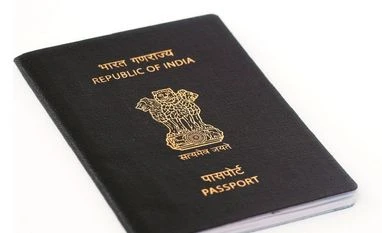
According to the Henley Passport Index 2026, India is now ranked 80th globally, with visa-free, visa-on-arrival or eTA ( electronic visa) access to 55 destinations.
 "India passport, Indian passport")
The good news, however is that India's rank has gone up by five places since last year when it ranked 85th globally.


Listen to This Article
If you’re an Indian passport holder planning international travel in 2026, the latest Henley Passport Index offers a reality check on how far your passport can take you—and where the limits still lie.
According to the Henley Passport Index 2026, India is now ranked 80th globally, with visa-free, visa-on-arrival or eTA ( electronic visa) access to 55 destinations. India shares this rank with Algeria and Niger, placing it firmly in the lower half of the global mobility table
The good news, however is that India's rank has gone up by five places since last year when it ranked 85th globally.
India's Historical Ranking on the Henley Passport Index
The Henley Passport Index compares the visa-free access of 199 different passports to 227 travel destinations. If no visa is required, then a score with value = 1 is created for that passport. The same applies if you can obtain a visa on arrival (VOA
Also Read

 "India passport, Indian passport")
 "Indian Passport, Passport")
 "passport")
 "passport")
The big global picture
The 2026 rankings underline just how unequal global travel freedom remains. At the top, Singapore continues to hold the world’s most powerful passport, giving its citizens access to 192 destinations without a prior visa. Japan follows with 188 destinations, while a cluster of European passports dominate the top 10, each offering access to more than 180 countries.
At the other end of the spectrum, Afghanistan remains the weakest passport globally, with access to just 24 destinations. The global average now stands at over 100 destinations, highlighting how far India still lags behind the world’s most mobile nations.
“Over the past 20 years, global mobility has expanded significantly, but the benefits have been distributed unevenly”, said Dr. Christian H. Kaelin, Chairman at Henley & Partners and creator of the Henley Passport Index. “Today, passport privilege plays a decisive role in shaping opportunity, security, and economic participation, with rising average access masking a reality in which mobility advantages are increasingly concentrated among the world’s most economically powerful and politically stable nations.”
UK Records the Steepest Year-on-Year Losses, US Back in the Top 10
Japan and South Korea rank joint 2nd in 2026, each offering visa-free access to 188 destinations, reinforcing Asia’s long-standing leadership at the top of the global mobility rankings. Denmark, Luxembourg, Spain, Sweden, and Switzerland follow in 3rd place with access to 186 destinations, ahead of an unprecedented group of 10 European countries tied for 4th.
The remainder of the upper-tier passports continue to underscore Europe’s dominance, with notable exceptions including UAE (5th), New Zealand (6th), Australia (7th), Canada (8th), and Malaysia (9th).
The US has returned to the Top 10 after briefly dropping out for the first time in late 2025, but this recovery masks a longer-term decline for both the US and the UK, which jointly held 1st place in 2014. The past year saw both countries record their steepest annual losses in visa-free access, shedding seven and eight destinations, respectively.
The US has suffered the third largest ranking decline over the past two decades — after Venezuela and Vanuatu — falling six places from 4th to 10th, while the UK ranks as the fourth-biggest faller, down four places from 3rd in 2006 to 7th in 2026.
“Passport power ultimately reflects political stability, diplomatic credibility, and the ability to shape international rules”, said Misha Glenny, award-winning journalist and Rector of the Institute for Human Sciences in Vienna. “As transatlantic relations strain and domestic politics grow more volatile, the erosion of mobility rights for countries like the US and UK is less a technical anomaly than a signal of deeper geopolitical recalibration.”
Biggest Risers and Fallers Over the Decades
The UAE stands out as the strongest performer on the Henley Passport Index over the past 20 years, adding 149 visa-free destinations since 2006 and climbing 57 places to 5th on the rankings with access to 184 destinations visa-free, driven by sustained diplomatic engagement and visa liberalization.
Countries across the Western Balkans and Eastern Europe have also made significant gains over the past two decades, led by Albania, which climbed 36 places to rank 43rd on the index. Ukraine has risen 34 places (to 30th), followed by Serbia (+30 to 34th), North Macedonia (+27 to 38th), and both Bosnia and Herzegovina (+29) and Georgia (+26), which now share 42nd place. Together, these advances highlight the impact of regional integration and closer alignment with key partners.
Where India stands—and why it matters
India’s rank of 80 and visa-free score of 55 means Indian travellers still need advance visas for most of Europe, the UK, the US, Canada and large parts of East Asia. While access exists across parts of Southeast Asia, Africa, the Caribbean and island nations, spontaneous travel remains limited compared to peers.
For context:
- China, ranked 59th, has access to 81 destinations
- Saudi Arabia, ranked 54th, offers 88 destinations
- South Africa, ranked 48th, allows access to 101 destinations
This gap has very real implications for Indian travellers—longer planning cycles, higher costs, and more documentation for both leisure and business trips.
The Henley Passport Index is based on real-time visa policy data from IATA, covering 199 passports and 227 destinations. It counts only destinations that don’t require a prior visa, making it a practical indicator of travel ease, not prestige.
Where Indians Can Travel Without a Prior Visa (2026)
As of January 2026, Indian passport holders have access to 55 destinations without needing a pre-approved visa. These are spread across Asia, Africa, the Caribbean, Oceania and island nations, with very limited access in Europe or North America.
These are among the most popular and practical options for Indian travellers:
Bhutan
Nepal
Maldives
Sri Lanka
Thailand
Indonesia
Malaysia
Laos
Cambodia
Myanmar
Timor-Leste
Iran
Jordan
Kazakhstan
Kyrgyzstan
Mongolia
Oman
Qatar
United Arab Emirates
Hong Kong (SAR China)
Macao (SAR China)
This region offers the highest concentration of easy-access destinations for Indians.
Island Nations & Holiday Destinations
Often visa-free or visa-on-arrival, these are ideal for leisure travel:
Mauritius
Seychelles
Fiji
Cook Islands
Niue
Samoa
Vanuatu
Palau
Marshall Islands
Micronesia
Nauru
Tuvalu
Solomon Islands
Kiribati
Tonga
Africa (Surprisingly Accessible)
Africa accounts for a large share of India’s visa-free access/ electronic visas, though awareness is still low:
Kenya
Tanzania
Rwanda
Uganda
Mozambique
Madagascar
Malawi
Zambia
Zimbabwe
Senegal
Sierra Leone
Gabon
Djibouti
Comoros
Cape Verde Islands
Benin
Botswana
Lesotho
Namibia
Mauritania
Caribbean & Americas (Limited but Valuable)
Access here is narrow but useful for leisure and cruise travel:
Barbados
Dominica
Grenada
Haiti
Jamaica
St. Kitts and Nevis
St. Lucia
St. Vincent and the Grenadines
Trinidad and Tobago
Guyana
Suriname
Nicaragua
Panama
Bolivia
El Salvador
Major regions where Indians still need visas in advance
Despite India’s growing global footprint, most major economies still require pre-approved visas, including:
Schengen Europe (France, Germany, Italy, Spain, etc.)
United Kingdom
United States
Canada
Japan
South Korea
Australia
New Zealand
This is the primary reason India ranks 80th globally, despite having strong outbound travel demand.
Open Borders, Closed Doors
While US passport holders can travel visa-free to 179 destinations, the United States itself allows only 46 nationalities to enter without a prior visa, placing it 78th out of 199 countries and territories worldwide on the Henley Openness Index. This disparity between outbound mobility and inbound openness is among the widest globally, second only to Australia and marginally ahead of Canada, New Zealand, and Japan.
By contrast, China has risen rapidly, granting visa-free access to over 40 additional countries over the past two years alone. Now ranked 62nd, China permits entry to 77 different nationalities — 31 more than the US — signaling a strategic pivot towards openness as a tool of diplomacy and economic engagement.
“There is a visible shift underway in the global balance of power, marked by China’s renewed openness and the USA’s retreat into nationalism”, said Dr. Tim Klatte, Partner at Grant Thornton China. “As countries increasingly compete for influence through mobility, openness is becoming a critical component of soft power.”
More From This Section
 "Air India express")
 "PFRDA Chairman S Ramann")
 "Loan, Home Loan, Money")
 "COURT, JUDGEMENT, HIGH COURT")
 "Jeetendra")
Topics : Indian passport
Don't miss the most important news and views of the day. Get them on our Telegram channel
First Published: Jan 14 2026 | 9:32 AM IST