


India-Pak tensions: Why market isn't panicking and what investors should do
Both nations, despite the heated rhetoric, have typically avoided escalation beyond tactical thresholds.
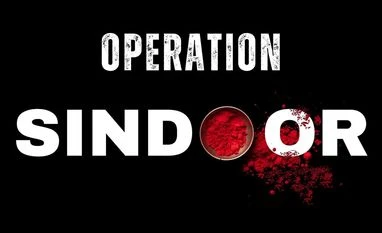 "Operation Sindoor")
Operation Sindoor. The image shared by Indian Army on X giving confirmation of the strikes carried out by India in Pakistan and Pakistan Occupied Kashmir in the wake of Pahalgam terror attacks.
Listen to This Article
Despite the deadly terrorist attack in Jammu & Kashmir's Pahalgam and India’s swift military retaliation, Indian equity markets have barely flinched.
On April 22, 2025, a brutal terrorist attack in the Baisaran Valley near Pahalgam left 26 people dead, including a foreign tourist. The incident triggered national outrage, prompted India’s cross-border military operation “Sindoor”, and led to the diplomatic breakdown of ties with Pakistan—including suspension of the Indus Water Treaty and visa services.
And yet, on 8 May, Indian equity benchmark indices, Nifty50 and BSE Sensex, opened in the green.While Nifty50 was above 24,400, BSE Sensex crossed 80,800.
This disconnect is not a fluke. It’s a pattern.
Markets Are Resilient to India–Pakistan Tensions
Also Read

 "Khawaja Asif")
 "Market, Stock market, NSE, National Stock Exchange")
 "Britain, UK, UK flag")
 "Operation Sindoor")
 "Indian army, security forces")
Brokerage Anand Rathi Research’s historical analysis of 11 major Indo-Pak escalation events since 1990 shows that Indian equity markets consistently recover quickly, often outperforming global peers. Of the 11 episodes in the past, two resulted in a war-like situation: Kargil War (full-scale localised war in Kargil; heavy air, land operations) and the Parliament Attack (largest peacetime mobilisation - Operation Parakram). There was no market correction during Kargil, and even during the Parliament Attack, India outperformed S&P 500 by a large margin. Major events leading to heightened tensions between India and Pakistan since 1990
Source: Press reports, Anand Rathi Research. Note: Casualty numbers are approximate.
Key Data Highlights from Past Conflicts:
Source: SEBI, BSE, CEIC Database, Press reports, Anand Rathi Research.
The report by Anand Rathi Research presents three key historical insights:
Equity markets recover quickly:
The average Sensex correction during such episodes was just 7.5% at its lowest point, with a median of 3.5%.
In most cases, declines were short-lived and driven by sentiment rather than fundamentals.
In the Kargil War, the Sensex rose by 1.6% during the period.
India outperforms global benchmarks:
Relative to the S&P 500, Indian equities showed positive returns in most conflict periods.
The mean relative outperformance was +21.1%, indicating strong investor confidence.
Foreign investors stay calm:
FPI flows remained positive or stable in 9 out of 10 episodes with available data.
This suggests global institutional investors view these events as transitory shocks, not long-term risks.
- Average correction across events: -7.5%
- Median correction: -3.5%
- Average relative outperformance vs S&P 500: +21.1%
Conclusion: Even in episodes involving war-like conditions, such as the Kargil War and Operation Parakram, markets rebounded fast and foreign portfolio investments remained net positive.
Why the market shrugs off terrorism headlines
1. Probability of Full-Scale War Is Low
Despite heated rhetoric, India and Pakistan have historically avoided full-scale wars. Military responses have been limited, tactical, and calibrated to avoid escalation. After Parliament was attacked in 2001, India mobilised 500,000 troops in Operation Parakram—yet no war occurred. The same pattern repeated post-Uri (2016) and Pulwama (2019).
The Pahalgam incident, while tragic, is unlikely to change this trajectory. India has launched precise military strikes (Operation Sindoor), and global powers have acknowledged India’s right to act in self-defence—reducing diplomatic constraints that would otherwise demand restraint.
Sector and company-wise impact, according to Anand Rathi
The recent terror attack in Jammu & Kashmir is likely to negatively impact the region’s tourism-driven economy, with trip cancellations already underway. However, the direct impact on listed companies appears limited, said Anand Rathi. Indian Hotels has minimal revenue exposure to J&K; Indigo’s network exposure to the region is small. While Ixigo may face near-term disruption, the overall financial impact remains uncertain.
Hotels (marginal impact)
Among listed hotel chains, only Indian Hotels has direct exposure to Jammu & Kashmir. The company operates three properties:
• Taj Srinagar (82 keys),
• Tree of Life Lakeside Cottage (4 suite-style rooms)
• Ginger Srinagar (64 keys).
Aviation: Slightly Negative
IndiGo’s exposure to Srinagar is small.
Pakistan’s airspace closure could force longer routes, but impact on traffic forecasts and margins is limited.
Defence: Short-Term Gains and Long-Term Upside
Solar Industries and Bharat Dynamics (ammunition and consumables): expected to benefit immediately from increased defence demand.
Bharat Forge and other platform suppliers: stand to gain in the medium to long term, though orders may take 8–9 months to convert into revenues.
What should investors do?
"Geopolitical tensions like the ongoing Indo-Pak standoff under Operation Sindoor tend to cause immediate market volatility, as seen with the Nifty and Sensex dropping 0.6–0.8% recently. Historically, such episodes trigger short-term dips—Kargil War (-4%), Parliament Attack (-3%), Mumbai Attacks (-4%), and Balakot Airstrike (-3%).
However, markets have consistently rebounded in the long term. After the Kargil War, the Sensex surged 63% within a year. Post-Parliament Attack, it rose over 20% the following year. Following the Mumbai Attacks, it gained 60% within 12 months, and after Balakot, it climbed 15% by year-end.
While short-term caution is reasonable, history shows that Indian markets demonstrate strong resilience once clarity returns. Unless accompanied by broader economic or global shocks, Indo-Pak tensions have not had a lasting negative impact. Investors should focus on fundamentals, not fear," said Pankaj Singh, smallcase manager and Founder and Principal Researcher at SmartWealth.ai.
"While the immediate market reaction to Operation Sindoor has been muted, investors should remain vigilant. The situation's evolution, particularly any potential escalation, could impact market sentiment.
However, India's strong economic indicators and historical market resilience suggest that any volatility may be short-lived. Investors are advised to monitor geopolitical developments closely while maintaining a long-term investment perspective," said Bazaar Bhardwaj of Value Research.
"Until there is more clarity on the fallout of Operation Sindoor, markets can trade sideways—with selective opportunities instead of broad-based gains. Remaining concentrated on domestic-facing and rate-sensitive sectors can provide relative safety in an otherwise cautious environment," said brokerage Prabhudas Liladhar in a note.
- History shows that selling in panic during geopolitical shocks leads to missed recoveries.
- If your investment thesis hasn’t changed—don’t change your allocation. Focus on earnings and macro signals, not news cycles.
- Consider accumulating defence stocks on dips.
- Avoid overexposure to travel aggregators or companies with concentrated J&K exposure.
- Regional conflicts have limited impact on diversified portfolios. Asset allocation remains the best defence.
More From This Section
 "mutual fund")
 "Bajaj Allianz Life Insurance Company Ltd")
 "car loan")
 "Income tax return")
 "Federal Bank net profit up 18%")
Topics : Operation Sindoor India-Pak conflict
Don't miss the most important news and views of the day. Get them on our Telegram channel
First Published: May 08 2025 | 9:36 AM IST