


Why HbA1c, India's most trusted diabetes test, may be getting it wrong
A Lancet Regional Health-Southeast Asia study warns that HbA1c, the gold-standard diabetes test, can misdiagnose or delay diabetes in Indians due to widespread anaemia and blood disorders
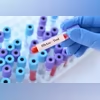 "HbA1c blood test, diabetes")
The widely used HbA1c blood test may misclassify diabetes in Indians a new study warns. (Photo: AdobeStock)
Listen to This Article
For years, HbA1c has been treated as the most reliable test to diagnose and monitor diabetes. A new study, however, suggests this confidence may be misplaced for a large section of the Indian population.
A new evidence-based study titled The limitations and fallacies of relying on glycosylated haemoglobin for diagnosing and monitoring diabetes in Indian populations, published in The Lancet Regional Health: Southeast Asia on Monday, finds that HbA1c may not accurately reflect blood sugar levels in people with anaemia, inherited blood disorders, or enzyme deficiencies, all of which are widespread in India.
The analysis warns that relying on HbA1c alone can lead to delayed diagnosis, misclassification of diabetes status, and an inaccurate picture of India’s true diabetes burden, the study authors said in a statement.
What is HbA1c and why is it widely used for diabetes diagnosis?
HbA1c, or glycated haemoglobin, estimates average blood glucose levels over the past two to three months by measuring how much glucose binds to haemoglobin in red blood cells. It is widely used because it does not require fasting and is considered stable and convenient.
Globally, HbA1c cut-offs define normal blood sugar (below 5.7 per cent), prediabetes (5.7 to 6.4 per cent), and diabetes (6.5 per cent or higher). Over time, this convenience has turned HbA1c into a near-unquestioned gold standard.
Also Read

 "Fatty liver disease")
 "India US textile trade deal, US tariff cut apparel exports, Indian textile exports growth, Tiruppur knitwear industry, cotton import duty relief, Make in India textiles, MSME apparel sector, US apparel market share India")
 "NEET-PG, NEET, Doctors, NEET PG")
 "UK, London")
 "Noida Pollution, Pollution, Smog")
Why does HbA1c behave differently in Indian populations?
According to the lead researcher, Anoop Misra, MD, Chairman, Fortis C-DOC Center of Excellence for Diabetes, Metabolic Diseases and Endocrinology, New Delhi, HbA1c depends entirely on haemoglobin levels and red blood cell lifespan. In India, both are frequently abnormal.
The Lancet review highlights that iron deficiency anaemia, which affects over half the population in some regions, can falsely raise HbA1c values. On the other hand, conditions such as haemoglobinopathies and G6PD deficiency shorten red blood cell lifespan, pushing HbA1c artificially lower even when blood glucose is high. The result is a test that can overestimate sugar levels in some people and dangerously underestimate them in others.
Can HbA1c delay or misclassify diabetes diagnosis?
The study points to evidence showing that men with undetected G6PD deficiency may experience a diagnostic delay of up to four years if HbA1c alone is used. During this period, complications such as nerve damage, kidney disease and eye problems can silently progress.
“Relying exclusively on HbA1c can result in misclassification of diabetes status,” says Prof Misra, warning that both late diagnosis and misdiagnosis are real risks.
The authors also flag inconsistent quality control and poor standardisation of HbA1c testing across Indian laboratories.
Which tests should complement or replace HbA1c in India?
The study does not discard HbA1c altogether. Instead, the authors argue for smarter combinations of tests.
In low-resource settings, they recommend oral glucose tolerance tests, using fasting and two-hour post-glucose values for diagnosis, along with self-monitoring of blood glucose two to three times a week and basic blood tests such as haemoglobin levels and blood smears.
In tertiary care settings, HbA1c should be paired with OGTT for diagnosis, while monitoring can include continuous glucose monitoring and alternative markers such as fructosamine. Where required, iron studies, haemoglobin electrophoresis and quantitative G6PD testing should also be added.
For individuals, the study authors stress that one test does not fit all. If HbA1c values do not align with glucose readings, clinicians should investigate further rather than adjust treatment blindly. Combining glucose-based tests with basic blood assessments, they argue, is safer, fairer and far more accurate for India’s diabetes fight.
More From This Section
 "Sleep")
 "Serena Williams")
 "cancer research")
 "flu, flu vaccine, influenza, sick person, illness, ill")
 "excessive mobile gaming")
Topics : Diabetes Health with BS BS Web Reports Diabetes in India anaemia health news Health Ministry
Don't miss the most important news and views of the day. Get them on our Telegram channel
First Published: Feb 10 2026 | 11:50 AM IST